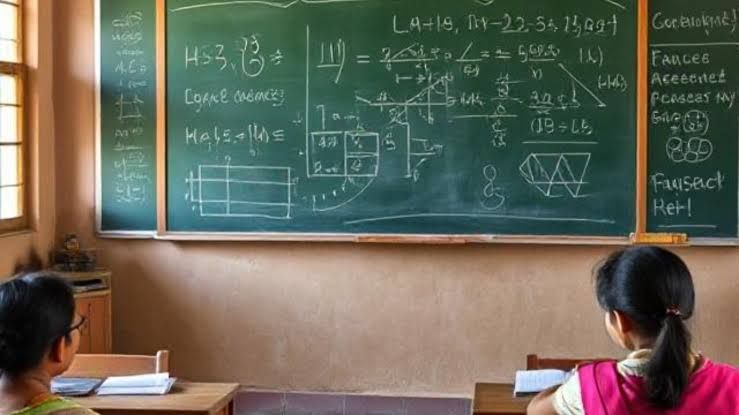
A study by the Tata Institute of Social Sciences (TISS) reveals that 35% of surveyed Indian schools face shortages of mathematics and science teachers. The report also flags widespread credential gaps with only 51% of math teachers having undergraduate degrees in the subject—alongside rising multi-grade classrooms and prolonged hiring delays.
MUMBAI — Approximately 35% of Indian schools face an acute shortage of specialized mathematics and science instructors, according to findings from the biennial "State of Teachers, Teaching and Teacher Education for India" (SoTTTER) report released by the Tata Institute of Social Sciences (TISS) on Tuesday.
The study, conducted by the Centre of Excellence in Teacher Education (CETE) at TISS in collaboration with the Language and Learning Foundation, highlights significant staffing bottlenecks and credential mismatches that undermine foundational learning. Despite an overall improvement in student-teacher ratios driven by the addition of roughly 600,000 instructors nationwide, subject-specific deficits persist, threatening classroom instruction in core technical disciplines.
Core Subject Deficits and Qualification Gaps
The executive summary of the SoTTTER report, which assessed 499 schools across 10 states—including Maharashtra, Uttar Pradesh, Karnataka, Telangana, Assam, Bihar, Chhattisgarh, Punjab, Odisha, and Mizoram—shows that subject-matter shortages are most severe in fundamental disciplines.
While 35% of surveyed institutions reported an inadequate supply of mathematics and science educators, 31% reported shortages in English instruction, and 30% struggled to deploy regional language educators.
Compounding the vacancy crisis is a widespread credential mismatch among active teaching staff. The research discovered that only 51% of secondary and middle-school mathematics teachers surveyed had formally studied mathematics at the undergraduate level. The remaining instructors were reallocated to mathematics from disparate academic disciplines to fulfill mandatory timetable obligations, raising concerns regarding instructional depth and pedagogical mastery in foundational STEM subjects.
Recruitment Delays and Multi-Grade Classrooms
The report outlines distinct operational challenges between public and private educational networks. In the public sector, roughly 33% of government schools surveyed reported persistent staffing difficulties, primarily caused by administrative delays in formal recruitment drives that can take several years to finalize. Conversely, private educational operators reported faster hiring processes but struggled with instructor retention, recording an overall annual attrition rate of 14%, which rose to 18% in rural areas.
These public sector recruitment backlogs have contributed to an increase in multi-grade classrooms. The study found that nearly half (50%) of government primary schools operated multi-grade teaching setups, where a single instructor teaches multiple grade cohorts simultaneously in one room. This marks a rise from 38% recorded in the previous 2023 edition of the report, complicating pedagogical delivery and placing heavy demands on remaining instructional personnel.
The structural shifts occur alongside demographic changes within the overall system. Between the 2021–22 and 2024–25 academic cycles, national student enrollment contracted from 26.5 crore to 23.2 crore—a decrease of approximately 1.55 crore pupils—while women grew to represent 54% of the total teaching workforce, though concentrated predominantly in urban centers (67%) compared to rural posts (47%).
Impact Across Students, Families, and the Labor Market
The structural deficiencies documented in the TISS study carry direct ramifications across the broader socioeconomic landscape:
Students and Foundational Learning: Insufficient subject-trained educators in mathematics and science degrade foundational numeracy and scientific inquiry, complicating future academic progression into engineering, medical, and applied science fields.
Households and Consumers: Parents in semi-urban and rural areas are increasingly forced to spend disposable household income on private remedial tutoring to compensate for vacant or unqualified teaching staff in daytime schools.
School Administrators: School principals must manage multi-grade environments and deploy non-specialist instructors across complex syllabi to maintain operational schedules.
Workforce and Industrial Economy: Long-term deficits in secondary mathematics and sciences threaten domestic human capital pipelines, impacting industrial innovation and high-technology manufacturing goals.
Official Sources
According to formal research documentation released by the Centre of Excellence in Teacher Education at the Tata Institute of Social Sciences (TISS), the SoTTTER study combines primary field surveys of 499 schools with secondary national data points from the Unified District Information System for Education Plus (UDISE+) and the Periodic Labour Force Survey (PLFS).
The research evaluates public implementation across three statutory milestones: 15 years of the Right to Education (RTE) Act, 10 years of the Rights of Persons with Disabilities Act, and five years under the National Education Policy (NEP) 2020 frameworks administered by the Ministry of Education and the National Council of Educational Research and Training (NCERT).
Official Statements
Lead researchers and academic directors stressed that structural delays in hiring pipelines discourage potential educators from pursuing public service careers.
Prof. Padma M. Sarangapani, former chairperson of CETE and principal investigator of the study, stated:
"Uncertainty around recruitment and employment opportunities acts as a serious disincentive for young aspirants. When state recruitment processes take several years to conclude, candidates face prolonged career uncertainty. While we see positive trends in basic infrastructure and local teacher connectivity, ensuring qualified teachers are deployed in their primary academic disciplines is essential to student learning outcomes."
Educational researchers also noted that nearly 50% of surveyed instructors reported feeling their professional responsibilities were misunderstood or undervalued by society.
Why It Matters
The findings of the SoTTTER report carry practical implications for national education reform:
Subject-Specific Deployment: Demonstrates that general student-teacher ratios can conceal structural gaps in specialized subject instruction.
Pedagogical Integrity: Emphasizes the need for dedicated recruitment boards to place subject-qualified candidates rather than reallocating untrained staff.
Policy Realization: Assesses progress toward NEP 2020 targets, underscoring that infrastructure expansion must be accompanied by investments in subject-qualified human capital.
Key Facts at a Glance
Maths & Science Deficit: 35% of surveyed schools report acute teacher shortages in mathematics and science.
Undergraduate Qualification Gap: Only 51% of mathematics teachers studied the discipline at the undergraduate level.
Rise in Multi-Grade Classrooms: 50% of government primary schools utilize multi-grade instruction, up from 38% in 2023.
Survey Coverage: 499 schools evaluated across 10 Indian states by TISS CETE.
Sector Differences: Government schools face procedural recruitment delays, while private schools face higher rural turnover (18%).
Frequently Asked Questions
What did the TISS study reveal about teacher shortages in India?
The report revealed that 35% of surveyed schools face shortages in mathematics and science teachers, 31% lack sufficient English instructors, and 30% report deficits in regional language teachers.
What is the qualification mismatch identified in the report?
The study found that only 51% of teachers instructing students in mathematics had studied the subject during their undergraduate education, with schools assigning educators from other fields to cover unfilled schedules.
What are multi-grade classrooms, and why are they increasing?
Multi-grade classrooms occur when a single educator instructs students across several grades in one room due to teacher vacancies. The share of government primary schools operating multi-grade classrooms rose to 50% in 2025, compared to 38% in 2023.
How do hiring dynamics differ between public and private schools?
Government schools face recruitment delays that can stretch over multiple years, while private schools hire more rapidly but experience higher teacher turnover, particularly in rural areas.
Source: Official findings from the "State of Teachers, Teaching and Teacher Education for India" (SoTTTER) report published by the Centre of Excellence in Teacher Education (CETE) at the Tata Institute of Social Sciences (TISS), with school education frameworks overseen by the Ministry of Education and the National Council of Educational Research and Training (NCERT).