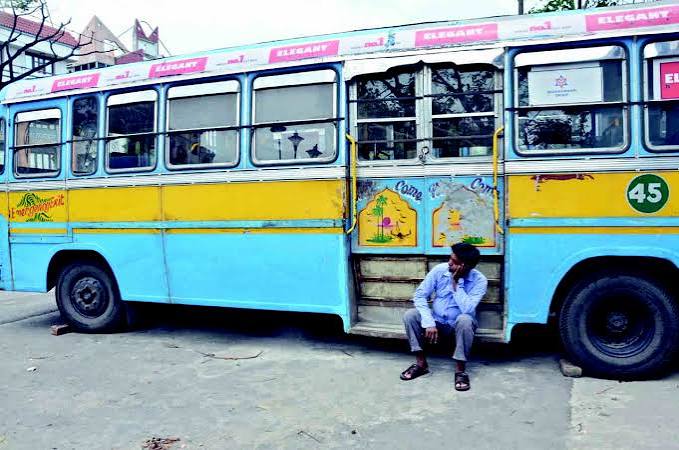
Private bus operators in West Bengal have appealed to the state transport department to halt plans to phase out 15-year-old commercial vehicles. The Joint Council of Bus Syndicates advocated for replacing older diesel engines with cleaner tech instead of full scrapping, citing valid fitness certificates and operational livelihoods.
KOLKATA, India — The Joint Council of Bus Syndicates, a primary representative body of private transit operators in West Bengal, officially appealed to the state government on Saturday, August 1, 2026, to halt the proposed mandatory phase-out of commercial buses that have reached 15 years of operational service. Addressing senior state officials, the industry group requested the formation of a specialized technical committee to review alternatives, including replacing older diesel engines with cleaner propulsion systems rather than enforcing complete vehicle destruction. The development comes amid heightened panic among commercial vehicle owners following social media reports suggesting an immediate blanket ban on older public transport fleets across West Bengal.
Bus Operators Urge Bengal Govt to Reconsider Scrapping of 15-Year-Old Vehicles
The formal representation submitted by the Joint Council of Bus Syndicates highlights growing friction between environmental fleet modernization directives and the financial viability of private public transit operators. In a press statement issued in Kolkata, Council Secretary Tapan Banerjee stressed that bus operators urge Bengal govt to reconsider scrapping of 15-year-old vehicles because structural chassis components, gearboxes, frames, and tires do not generate emissions.
The organization argued that removing intact commercial vehicles from service places an unsustainable financial burden on fleet owners who are still recovering from operational losses. The syndicate emphasized that mandatory fitness tests and Pollution Under Control (PUC) certifications issued by authorized testing centers serve as verified proof of roadworthiness. According to the association, as long as a commercial stage carriage satisfies statutory safety and emission parameters during periodic inspections, automatic deregistration based purely on chronological age remains unjustified.
Legal Jurisdictional Standing and Court Precedents
Highlighting regulatory and legal complexities, the Joint Council of Bus Syndicates pointed out that the statutory authority to issue overarching notifications regarding the deregistration and dismantling of commercial motor vehicles rests with the central government through the Union Ministry of Road Transport and Highways (MoRTH).
The industry group noted that the Supreme Court of India previously issued a stay on orders passed by the National Green Tribunal (NGT) concerning the mandatory scrapping of older commercial fleets. The Council remains an active party to ongoing apex court proceedings evaluating environmental regulations against economic livelihoods.
Historically, commercial buses and minibuses exceeding 15 years of age were phased out within the Kolkata Metropolitan Area (KMA) under a 2009 directive. However, subsequent legal proceedings before the Calcutta High Court resulted in modifications to permissible operational timelines. As transport department officials hold internal discussions regarding potential regulatory amendments, operators are urging state authorities to ensure that new blanket phase-out directives are avoided.
Financial Viability and Alternative Emission Solutions
Private bus operators account for over 70 percent of daily commuter transport across Kolkata, Howrah, North 24 Parganas, and South 24 Parganas districts. Fleet owners argue that purchasing new BS-VI compliant diesel or electric buses requires capital investments ranging between ₹35 lakh and ₹1 crore per unit, an expense out of reach for small operators without substantial state subsidies.
To address air quality standards without crippling public mobility, the syndicate proposed a structured engine retrofitting program. Under this alternative, existing commercial bus bodies would be fitted with new, low-emission engines or converted to Compressed Natural Gas (CNG) and electric drivelines. Operators maintain that retrofitting provides an environmentally responsible compromise that significantly reduces particulate matter without forcing fleet owners into liquidation or debt.
Commuter Impact and Urban Transport Operations
If a strict age-based phase-out is enforced without immediate replacement fleets, thousands of private buses and minibuses face withdrawal from active routes across West Bengal. Industry analysts warn that mass deregistrations could lead to severe suburban commuter shortages, longer wait times at transit hubs, and increased overcrowding on state-run surface transport services.
Commuters and daily workers relying on private bus networks across district corridors face potential fare increases if operators are forced to amortize the capital cost of brand-new vehicles over shorter operational periods. Transport workers, including drivers, conductors, and mechanics, have also expressed concern over potential job losses connected to fleet reductions.
Official Sources Section
According to official updates from the West Bengal Transport Department and public statements released by the Joint Council of Bus Syndicates, West Bengal, formal petitions regarding vehicle scrapping policy revisions have been submitted for departmental review. The state administration continues to evaluate legal guidelines framed by the Ministry of Road Transport and Highways alongside directives from the Supreme Court of India.
Quote Section
"According to officials from the Joint Council of Bus Syndicates, a valid fitness certificate establishes that a vehicle is roadworthy, and the state should examine engine replacement alternatives rather than scrapping entire buses."
Why It Matters
The outcome of discussions between private transit syndicates and the state government directly affects daily public transportation capacity across West Bengal. Finding a balance between urban emission reductions and vehicle operational lifespans impacts financial stability for thousands of transport workers while maintaining affordable transit options for millions of daily commuters.
Key Facts at a Glance
Industry Appeal: Bus operators urge Bengal govt to reconsider scrapping of 15-year-old vehicles and request a specialized technical committee.
Proposed Alternative: Replacing older engines with low-emission or clean-fuel powertrains while retaining reusable bus chassis and body structures.
Legal Precedent: Operators cited ongoing Supreme Court proceedings and a stay on National Green Tribunal orders regarding vehicle scrapping.
Roadworthiness Argument: Syndicates state that mandatory fitness certificates and PUC clearances verify a vehicle's operational safety.
Commuter Footprint: Private buses carry the majority of daily passengers across Kolkata Metropolitan Area and adjoining districts.
Frequently Asked Questions (FAQ)
Why are bus operators urging the Bengal government to reconsider scrapping 15-year-old vehicles?
Operators argue that commercial buses with valid fitness certificates and PUC clearances remain roadworthy, and that complete scrapping destroys usable chassis components, placing severe financial hardship on fleet owners.
What alternative solutions have West Bengal bus syndicates proposed?
The Joint Council of Bus Syndicates proposed constituting a government committee to explore replacing older diesel engines with cleaner engine technology or alternative fuels, rather than scrapping entire vehicles.
Which authority holds the legal jurisdiction to issue vehicle scrapping policies?
The Joint Council of Bus Syndicates noted that primary authority to issue notifications on commercial vehicle deregistration rests with the Union Ministry of Road Transport and Highways (MoRTH).
How does the 15-year rule affect daily commuters in Kolkata and West Bengal?
If a strict phase-out is executed without new vehicle subsidies, thousands of private buses could be removed from service, leading to reduced route coverage, longer wait times, and commuter transit delays.
Source: West Bengal Transport Department, Ministry of Road Transport and Highways, Supreme Court of India, Press Trust of India