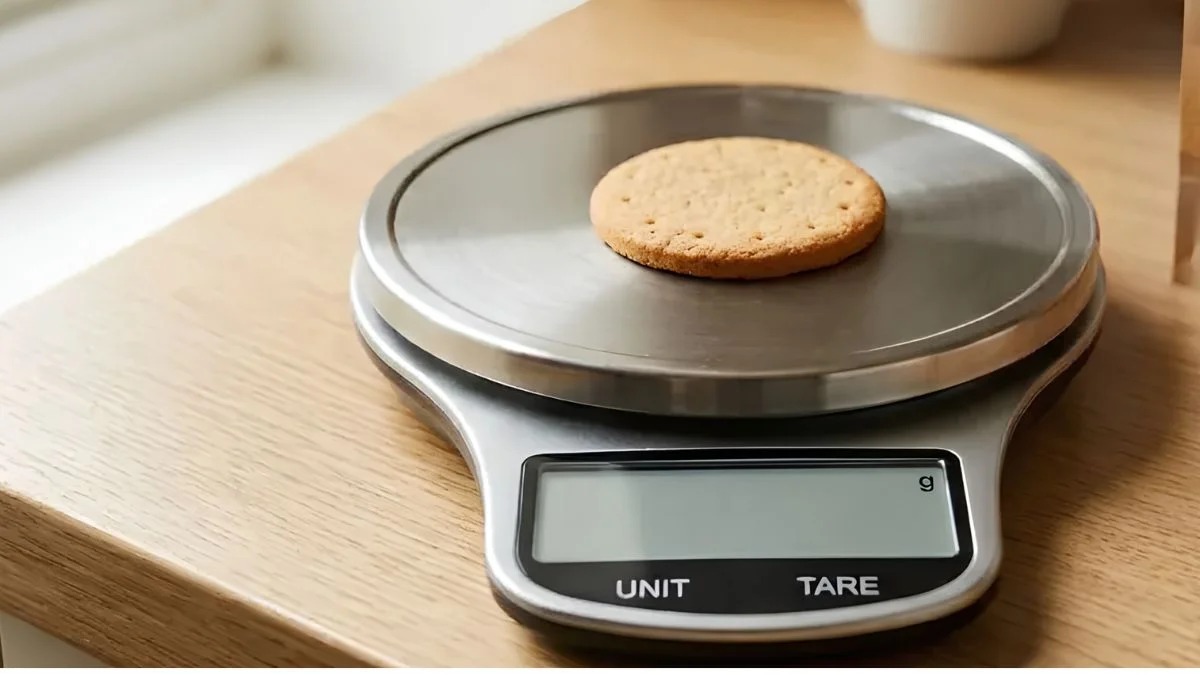
The District Consumer Disputes Redressal Commission in Thrissur, Kerala, ordered Parle Products Private Limited and a local retailer to pay ₹50,000 in compensation to consumer P.A. Shiju. The ruling followed findings that a ₹25 Parle biscuit packet labeled at 150 grams weighed only 125 grams, establishing trade deficiency.
THRISSUR — The District Consumer Disputes Redressal Commission in Thrissur, Kerala, ordered FMCG giant Parle Products Private Limited and a local retailer to pay ₹50,000 in compensation to a consumer after finding a ₹25 biscuit packet short of its printed net weight. According to court documents finalized on July 28, 2026, complainant P.A. Shiju purchased a 150-gram labeled Parle biscuit packet that actually contained only 125 grams—a 25-gram deficit representing a 16.6 percent product shortfall. The consumer forum ruled that selling packaged commodities below declared weights constitutes an unfair trade practice under statutory consumer protection laws, reinforcing mandatory compliance standards for fast-moving consumer goods (FMCG) manufacturers operating across India.
Consumer Complaint and Weighing Verification
The dispute originated when P.A. Shiju purchased a ₹25 Parle-G biscuit packet from a local supermarket in Thrissur. Suspecting a discrepancy in package volume upon opening the item, the consumer took the unopened batch to the local Legal Metrology Department for official verification.
Official inspections conducted by legal metrology officers confirmed that the sealed 150g biscuit package contained only 125g of baked product. Following the verification report, Shiju filed a formal complaint before the District Consumer Commission, citing trade deficiency and misrepresentation under the Consumer Protection Act, 2019.
Defense Arguments and Legal Commission Ruling
During proceedings, representatives for Parle Products argued that package weight variations can occasionally occur due to automated high-speed baking line discrepancies or environmental moisture loss during storage and transit.
However, the consumer commission, chaired by President Santhosh Kumar P. and members, rejected the defense, noting that statutory net weight rules under the Legal Metrology (Packaged Commodities) Rules, 2011, allow only minimal permissible error margins—significantly below the 25-gram deficit documented in this case.
The commission ruled that:
Manufacturer Responsibility: FMCG manufacturers must maintain strict automated quality assurance protocols to prevent non-compliant packages from leaving production facilities.
Financial Penalty: Parle Products and the retail seller are jointly liable to pay ₹50,000 in compensation for mental agony and unfair trade practices, along with ₹5,000 in litigation costs.
Compliance Directive: The manufacturer must audit batch packaging controls across regional manufacturing plants to enforce labeled weight accuracy.
Industry Impact on FMCG Packaging and Legal Metrology
The verdict highlights heightened judicial scrutiny surrounding packaged goods standards across India's consumer landscape. Under regulations enforced by the Department of Consumer Affairs, selling underweight packaged commodities violates mandatory labeling frameworks designed to safeguard buyer interests.
Industry analysts observe that consumer commissions are increasingly penalizing weight shortfalls, shrinkflation practices, and deceptive packaging. For consumer goods manufacturers, the ruling reinforces the necessity of calibrating automated packaging systems to prevent costly legal exposure and brand reputational damage.
Official Sources Section
Legal findings, metrology inspection reports, and compensation details in this report conform to the official judgment issued by the District Consumer Disputes Redressal Commission, Thrissur. Statutory packaging standards operate under the Legal Metrology Act, 2009, administered by the Department of Consumer Affairs and regional directives under the Government of Kerala.
Quote Section
"According to officials from the District Consumer Commission, selling packaged commodities below declared net weights constitutes a clear violation of statutory consumer rights and trade standards."
"Legal representatives stated that the compensation order underscores manufacturer accountability in maintaining accurate automated packaging line standards."
Why It Matters
This judgment establishes that individual consumers can successfully challenge corporate weight discrepancies in everyday packaged goods. For everyday buyers, the ruling confirms that statutory net weight declarations are legally binding obligations. For food manufacturing companies, it highlights the operational importance of rigorous quality checks on automated production lines to maintain compliance with national legal metrology rules.
Key Facts at a Glance
Case Location: District Consumer Disputes Redressal Commission, Thrissur, Kerala.
Product Deficit: A ₹25 Parle biscuit packet labeled at 150g contained only 125g (25g deficit).
Compensation Awarded: ₹50,000 compensation plus ₹5,000 in litigation costs awarded to complainant P.A. Shiju.
Governing Statute: Ruled as an unfair trade practice under the Consumer Protection Act, 2019, and Legal Metrology rules.
Frequently Asked Questions (FAQ)
Why was Parle fined by the Kerala Consumer Commission?
Parle Products was ordered to pay compensation because a ₹25 biscuit packet labeled at 150 grams was found to contain only 125 grams, violating legal metrology net weight rules.
How much compensation did the consumer receive?
The District Consumer Commission awarded complainant P.A. Shiju ₹50,000 in compensation for unfair trade practices along with ₹5,000 to cover legal costs.
What law regulates net weight declarations on packaged food in India?
Packaged food weights are governed by the Legal Metrology (Packaged Commodities) Rules, 2011, under the Legal Metrology Act, 2009, enforced by the Department of Consumer Affairs.
What should consumers do if they buy an underweight product?
Consumers can report weight discrepancies to the local Legal Metrology Department for official verification and file a formal claim before the District Consumer Disputes Redressal Commission.
Source: Official judgment records from the District Consumer Disputes Redressal Commission (Thrissur, Kerala), public metrology reports from the Department of Consumer Affairs, and regional administration disclosures from the Government of Kerala.