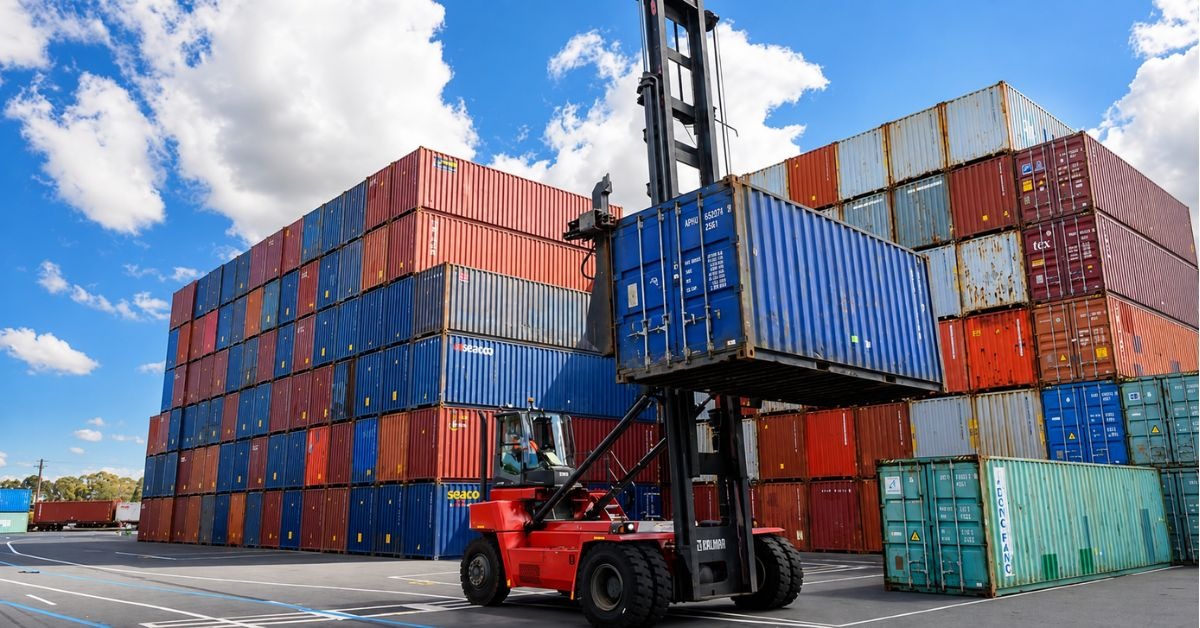
Adani Ports and Special Economic Zone Ltd (APSEZ) has launched a dedicated Empty Container Yard at Mundra Port to optimize container lifecycle management. Handling 1.6 million TEUs annually, the facility aims to slash turnaround times and reinforce logistics efficiency under the company's Ambition 2031 expansion strategy.
Ahmedabad — On September 4, 2026, Adani Ports and Special Economic Zone Ltd (APSEZ) announced the launch of a dedicated Empty Container Yard (ECY) with integrated warehousing inside the Mundra Port and Special Economic Zone (SEZ) in Gujarat. The new facility is designed to provide comprehensive services across the empty container lifecycle, including storage, maintenance, inspection, and direct coordination for exporters. The development comes at a critical juncture for India's maritime trade, as Mundra Port handles roughly 35 percent of the nation's total container traffic.
Operational Infrastructure and Scope
According to official company announcements, the newly established yard aims to centralize empty container handling within the port boundary rather than relying entirely on scattered external depots.
Lifecycle Services: Offers container storage, structural inspection, and repair services in a single integrated zone.
Capacity Context: Mundra Port processes approximately 1.6 million twenty-foot equivalent units (TEUs) of empty containers annually.
Strategic Growth: The launch supports APSEZ's broader "Ambition 2031" roadmap, which targets adding over 6 million TEUs of container handling capacity across its network over five years.
The internalization strategy is engineered to cut vessel turnaround times, curb redundant road transport movements, and reduce overall logistics overhead for cargo owners.
Background and Market Context
Mundra Port serves as India's largest commercial gateway, with APSEZ commanding a 45.5 percent share of the domestic container market. Traditionally, empty containers were managed through depots located outside the port premises. Bringing these operations inside the SEZ perimeter enables tighter coordination between Customs authorities, shipping lines, and terminal operators. However, the transition has encountered initial friction from external depot operators and transport unions, prompting industry stakeholders to monitor fluid supply chain movements closely.
Impact on Exporters and Businesses
For exporters, manufacturers, and logistics firms, an on-site container yard reduces transit bottlenecks and ensures predictable equipment availability. Minimizing transit delays between terminal gates and holding yards optimizes truck utilization and lowers freight expenses for companies moving goods through North and Northwest India's industrial corridors.
Official Sources Section
Information regarding this operational rollout is based on official corporate releases and regulatory disclosures issued by Adani Ports and Special Economic Zone Ltd (APSEZ).
Quote Section
"The dedicated Empty Container Yard at Mundra to be operated by APSEZ and/or partners (including CFS and shipping lines) will enhance efficiency across the container ecosystem by enabling faster turnaround times, reducing unnecessary container movements, and optimizing logistics costs," stated Ashwani Gupta, Whole-time Director and Chief Executive Officer of APSEZ.
Why It Matters
Centralizing empty container management inside major port zones reduces urban traffic congestion, eliminates intermediary transit steps, and enhances port productivity. These operational efficiencies directly support national competitiveness in global export markets.
Key Facts at a Glance
Facility: Dedicated Empty Container Yard (ECY) with integrated warehousing.
Location: Mundra Port and SEZ, Gujarat.
Annual Volume: Handles roughly 1.6 million TEUs of empty containers yearly.
Executing Entity: Adani Ports and Special Economic Zone Ltd (APSEZ).
Frequently Asked Questions
What is the purpose of the new empty container yard at Mundra Port?
The yard centralizes empty container storage, inspection, and maintenance to streamline export-import logistics and reduce turnaround times.
How many empty containers does Mundra Port handle annually?
Mundra Port manages approximately 1.6 million TEUs of empty containers each year.
How does this initiative align with APSEZ's long-term goals?
It forms part of the "Ambition 2031" framework, which aims to expand container handling capacity by over 6 million TEUs across five years.
Where can official updates regarding port operations be accessed?
Official notices and corporate updates are published directly through the Adani Ports and Special Economic Zone Ltd (APSEZ) portal.
Source: Adani Ports and Special Economic Zone Ltd (APSEZ)