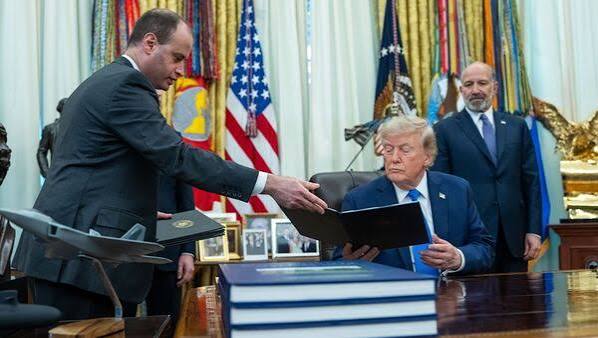
U.S. President Donald Trump signed two executive orders on August 6, 2026, aimed at restricting birthright citizenship and banning birth tourism. Coming weeks after the Supreme Court struck down his broader birthright ban in Trump v. Barbara, the new targeted orders face immediate legal challenges from civil rights groups.
WASHINGTON — U.S. President Donald Trump signed two new executive orders on August 6, 2026, aimed at narrowing eligibility for birthright citizenship and restricting "birth tourism". The executive action follows a major legal setback on June 30, 2026, when the U.S. Supreme Court ruled 6–3 in Trump v. Barbara that the Fourteenth Amendment's Citizenship Clause guarantees automatic citizenship to nearly all children born on American soil, including those of non-citizen parents. By focusing the new orders on narrower exceptions—such as children of designated foreign terrorist members, foreign government operatives, and temporary visitors entering the country explicitly to give birth—the administration seeks to test the limits of executive authority while attempting to bypass the Supreme Court's broader constitutional mandate.
Targeted Categories and Technical Provisions in the New Orders
The first new executive order, titled "Continuing to Protect the Meaning and Value of American Citizenship," directs federal agencies to withhold government documentation—such as U.S. passports and Social Security numbers—from children born on American soil under specific conditional scenarios. According to White House briefings, the restriction applies to children born to non-citizen parents where at least one parent is classified as an "alien enemy," affiliated with a foreign terrorist organization, or acting as an unregistered agent for a foreign government. The directive also targets individuals born in specific unincorporated U.S. territories where statutory citizenship is not automatically conferred, alongside children of parents who engaged in fraudulent activity to secure entry visas.
The second executive order explicitly targets "birth tourism" operations. It mandates that the Department of State and the Department of Homeland Security enhance vetting procedures for non-immigrant visitor visa applicants and penalize commercial agencies that market travel packages designed to help foreign nationals give birth on U.S. soil.
| Legal Framework | Supreme Court Ruling (Trump v. Barbara) | August 6, 2026 Executive Orders |
| Constitutional Basis | 14th Amendment guarantees birthright citizenship to nearly all U.S.-born children. | Targets narrow categories (e.g., terrorist affiliates, birth tourists). |
| Scope of Affected Population | Rejected broad restrictions covering undocumented & temporary visa holders. | Focuses on specific foreign operatives, fraudulent entries, and visa abuse. |
| Judicial Status | Invalidated Executive Order 14160 (June 30, 2026). | Signed August 6, 2026; faces immediate challenges from civil rights groups. |
Supreme Court Precedent and Civil Rights Pushback
The White House's renewed push directly confronts the legal precedent established in Trump v. Barbara. In that decision, Chief Justice John Roberts wrote for the majority that the Fourteenth Amendment's mandate—conferring citizenship on all persons "born or naturalized in the United States, and subject to the jurisdiction thereof"—cannot be altered or restricted through unilateral executive decrees or federal statutory changes.
Civil rights groups, including the American Civil Liberties Union (ACLU), condemned the newly signed orders and announced plans to challenge them in federal court. Legal scholars point out that historical exceptions to birthright citizenship under U.S. common law have been strictly limited to foreign diplomats with diplomatic immunity and invading enemy forces, arguing that expanding those exceptions via administrative order violates established constitutional law.
Impact on Federal Agencies, Travelers, and Immigrant Communities
The execution of the new executive directives places immediate operational demands on federal passport agencies, consular posts, and healthcare providers. Consular officers overseas have been instructed to apply heightened scrutiny to foreign applicants seeking short-term visitor visas if pregnancy is suspected, potentially leading to increased visa denials and procedural delays for international travelers.
For immigrant advocacy organizations and legal service providers, the orders introduce renewed operational confusion regarding document eligibility for newborn children. However, legal experts emphasize that until lower federal courts evaluate the new directives or issue preliminary injunctions, standard birth certificate issuance at the state level remains governed by prevailing constitutional protections affirmed by the Supreme Court.
Official Sources Section
Regulatory filings, judicial decisions, and official statements cited in this news report were compiled from public filings archived by the Supreme Court of the United States, executive releases published on the White House portal, and legal dockets accessible via the U.S. Department of Justice.
Official Quote Section
According to official briefings conducted in the Oval Office following the signing ceremony, executive leadership expressed dissatisfaction with the judicial ruling while defending the new administrative measures.
U.S. President Donald Trump stated: "We had a very unfortunate decision in the Supreme Court concerning birthright. It was close, but a very, very unfortunate decision. So we're making adjustments because it's very unfair. They've taken birthright citizenship and they've made a joke out of it."
Cody Wofsy, deputy director of the ACLU's Immigrants' Rights Project, responded in an official statement: "The Supreme Court already decided this issue: Birthright citizenship is guaranteed by the Constitution. No additional executive order can change the meaning of the Constitution. Any executive order that tries to rewrite birthright citizenship will meet the same fate as the last one."
Why It Matters
The issuance of fresh executive orders targeting birthright citizenship reopens a fundamental legal debate over the boundaries of presidential authority versus constitutional guarantees. Testing whether administrative decrees can carve out specific exceptions to the Fourteenth Amendment impacts federal documentation, international travel vetting, and legal protections for children born in the United States.
Key Facts at a Glance
Executive Action: President Donald Trump signed two new executive orders targeting birthright citizenship and birth tourism on August 6, 2026.
Judicial Context: Follows the Supreme Court's June 30, 2026 ruling in Trump v. Barbara that struck down his broader initial birthright ban.
Specific Targets: The new orders attempt to deny citizenship documentation to children of foreign terrorist affiliates, foreign government agents, and fraudulent visa holders.
Immediate Legal Resistance: Civil rights organizations and legal advocacy groups announced immediate litigation to block the implementation of the orders.
Frequently Asked Questions (FAQ)
What did the Supreme Court rule regarding birthright citizenship?
On June 30, 2026, the Supreme Court ruled 6–3 in Trump v. Barbara that the Fourteenth Amendment guarantees birthright citizenship to children born on U.S. soil, regardless of their parents' immigration status.
What do President Trump's new executive orders focus on?
The August 6, 2026 orders target specific narrow categories, including children of foreign terrorist affiliates, foreign agents, fraudulent entrants, and individuals engaging in commercial "birth tourism".
Are the new executive orders currently in effect?
While signed by the president, federal civil rights organizations have announced immediate court challenges, which are expected to lead to judicial reviews and potential preliminary injunctions.
Where can citizens inspect official court opinions and White House orders?
Official texts are available directly through the web portals of the Supreme Court of the United States and the White House.
Source: Official judicial opinions from the Supreme Court of the United States, executive order releases from the White House, and press updates from the U.S. Department of Justice.