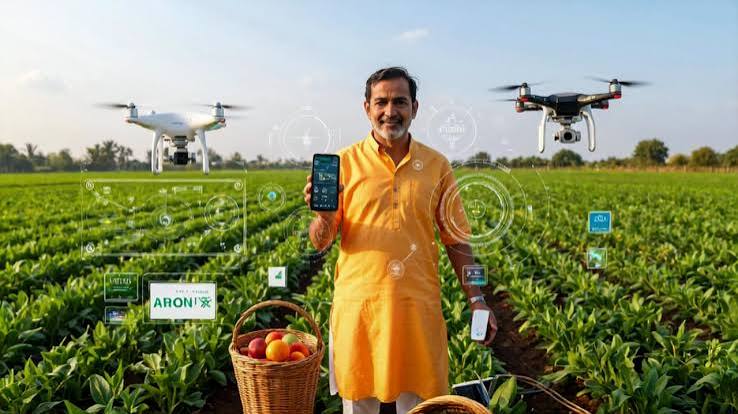
India is building a digitally-empowered farming ecosystem by integrating AI into its agricultural infrastructure, such as the AgriStack. These innovations allow for precision irrigation, automated pest detection, and improved market access. By enabling data-driven decision-making, AI is significantly enhancing crop yields and operational efficiency for the nation's farmers.
NEW DELHI — As India accelerates its digital transformation, the integration of artificial intelligence (AI) has emerged as a cornerstone for building a digitally-empowered farming ecosystem. By utilizing machine learning models, real-time satellite imagery, and predictive data analytics, the agricultural sector is shifting from traditional, labor-intensive methods to a precision-driven approach aimed at maximizing yields and minimizing resource wastage.
The Ministry of Agriculture and Farmers Welfare, in collaboration with various technology partners, has initiated the deployment of AI-based platforms designed to provide localized, actionable insights to farmers. These tools help in monitoring crop health, predicting pest outbreaks, and optimizing water usage—challenges that have historically hindered the sector's profitability.
Precision Agriculture via AI Analytics
The move toward a digitally-empowered farming ecosystem is largely driven by the need for site-specific crop management. AI algorithms process massive datasets, including soil moisture levels, weather patterns, and market price trends, to guide farmers in real-time. For instance, smart irrigation systems now automatically adjust water delivery based on soil moisture sensors and forecasted rainfall, significantly reducing water consumption in water-stressed regions like Punjab and Rajasthan.
Furthermore, AI-powered diagnostic tools are enabling farmers to identify plant diseases instantly using smartphone cameras. By analyzing leaf patterns against large databases of crop pathologies, these applications provide immediate management recommendations, effectively reducing reliance on broad-spectrum pesticides and lowering input costs for smallholder farmers.
Scaling Digital Access in Rural India
To ensure that AI benefits the entire agricultural value chain, the government is focusing on creating a "digital public infrastructure" for farming. This includes the development of the AgriStack, a unified platform that integrates land records, crop data, and farmer identities. According to the Ministry of Agriculture and Farmers Welfare, this infrastructure acts as the foundation upon which AI-driven financial, insurance, and market services can be built.
"According to officials, the integration of AI within the AgriStack will streamline credit access for farmers by providing lenders with accurate, data-backed insights into crop viability and historical farm performance," reducing the risk profiles of rural loans and encouraging institutional investment.
Impact on Agri-Tech and Market Access
The shift toward AI is also fostering a burgeoning agri-tech startup sector in India. Companies are now deploying drone-based surveillance that uses AI to map soil fertility and identify crop stress at a granular level. These services are becoming increasingly accessible through village-level cooperatives and farmer producer organizations (FPOs), which aggregate small farmers to share the costs of high-tech adoption.
Investors are taking note of this trend, with venture capital flows into Indian agri-tech reaching record levels in 2026. This financial interest is accelerating the rollout of AI-driven supply chain management tools, which optimize logistics, reduce post-harvest losses, and connect farmers directly to buyers, thereby increasing the farmer's share of the final consumer price.
Official Sources
Policy updates regarding the digital transformation of Indian agriculture are regularly issued by the Ministry of Agriculture and Farmers Welfare. Technical implementation strategies and research advancements are further documented by the Indian Council of Agricultural Research (ICAR), which serves as the primary body for scientific agricultural innovation in the country.
Why It Matters
A digitally-empowered farming ecosystem is crucial for India’s food security and economic stability. By harnessing AI, the nation can address climate-induced agricultural volatility, improve income levels for millions of smallholder farmers, and establish more efficient, data-transparent supply chains. The transition not only bolsters agricultural output but also aligns with the broader national goal of becoming a global leader in sustainable, tech-integrated food production.
Key Facts at a Glance
Precision Management: AI tools enable site-specific irrigation and fertilization, optimizing resource use.
Disease Identification: Mobile apps with AI vision are used to detect crop diseases in the field within seconds.
Infrastructure: The development of the AgriStack platform provides the foundation for digital service delivery.
Startup Growth: Agri-tech firms are increasingly focusing on drone surveillance and automated logistics to cut post-harvest losses.
Frequently Asked Questions
How does AI help a farmer with no internet access?
The digital ecosystem is designed to deliver insights through FPOs, village-level service centers, and voice-based interfaces, ensuring that information reaches farmers regardless of individual connectivity levels.
Is AI expensive for smallholder farmers?
While initial tech costs can be high, the sharing-economy model, where FPOs and cooperatives lease technology like drones and sensors, makes the benefits of AI affordable and scalable for small farmers.
What is the role of AgriStack?
AgriStack serves as the underlying digital database that connects various agricultural services—like credit, insurance, and weather advice—to a single farmer ID, enabling personalized and efficient service delivery.
Source: Ministry of Agriculture and Farmers Welfare, Indian Council of Agricultural Research (ICAR), NITI Aayog (Digital Agriculture Roadmap)