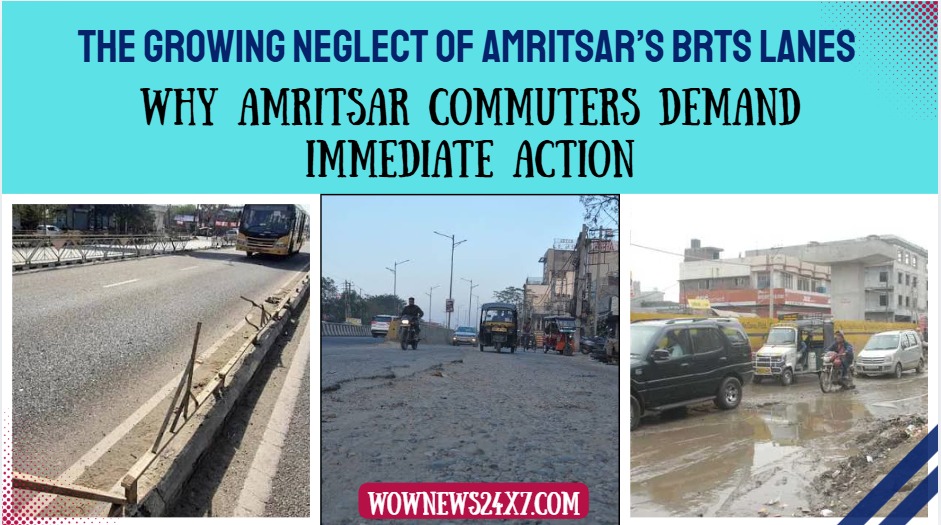
Stretches along the Bus Rapid Transit System corridor in Amritsar are facing mounting neglect, marked by broken safety grills and unauthorized vehicular intrusion. Commuters and local drivers confront daily traffic chaos and heightened accident risks, prompting urgent calls for better municipal intervention and stricter traffic management.
AMRITSAR — Critical stretches along the Bus Rapid Transit System (BRTS) corridor in Amritsar are grappling with severe infrastructural neglect, turning key transit routes into accident-prone zones for local commuters and travelers. Built to streamline public transportation, portions of the dedicated network suffer from missing security infrastructure, broken iron safety dividers, and unmonitored access points.
The deterioration has allowed unauthorized private vehicles to trespass into lanes designated strictly for MetroBuses, triggering daily traffic bottlenecks and disrupting public transport schedules across the city.
Infrastructure Breakdown and Traffic Hazards
According to local reports and commuters, the degradation of safety barriers along major segments has compromised the original utility of the rapid transit network. Unauthorized vehicles routinely jump into the dedicated lanes to bypass congestion, resulting in near-misses and frequent vehicular collisions.
While municipal bodies and transit operators have previously debated the operational viability and expansion of the network, daily users emphasize that basic upkeep—such as repairing security fences and enforcing lane discipline—remains an immediate necessity to protect pedestrians and motorists alike.
Official Sources Section
Observations regarding the state of the infrastructure and traffic management challenges have been documented through local governance reviews and civic monitoring reports.
"According to officials, municipal authorities and traffic enforcement units are coordinating periodic checks, while long-term maintenance frameworks continue to be evaluated by regional administrative bodies."
Further updates concerning civic maintenance budgets can be referenced through the Government of Punjab portal and municipal corporation filings.
Why It Matters
For citizens, daily commuters, and local businesses in Amritsar, the decline of corridor safety directly translates to heightened transit risks and unpredictable travel times. Unchecked lane trespassing not only slows down the public bus service but also endangers two-wheeler riders and pedestrians navigating intersecting roadways.
Addressing these maintenance lapses is crucial for restoring public confidence in urban mass transit solutions and ensuring safer roadways throughout the city.
Key Facts at a Glance
Location: Amritsar, Punjab along the designated BRTS corridor.
Core Issue: Infrastructure degradation, including missing safety grills and illegal lane driving.
Impact: Increased traffic congestion, disrupted bus schedules, and heightened accident risks.
Stakeholders Affected: Daily commuters, local motorists, pedestrians, and public transit operators.
Frequently Asked Questions
What are the main issues affecting the Amritsar BRTS corridor?
The primary issues include broken or missing safety grills, unauthorized private vehicles trespassing into dedicated bus lanes, and resulting traffic congestion.
How does the corridor neglect impact daily commuters?
Commuters face delayed bus schedules, unpredictable travel times, and an increased risk of road accidents due to mixed-lane chaos.
Are authorities taking steps to fix the corridor?
Traffic police and municipal bodies periodically run enforcement campaigns, while local stakeholders continue to push for comprehensive infrastructure repairs and better physical barriers.
Where can citizens report infrastructure damage?
Residents can log complaints regarding civic infrastructure through the local municipal corporation's grievance redressal channels or official state portals.
Source: Government of Punjab, Local Municipal Reports, Regional Transit Disclosures