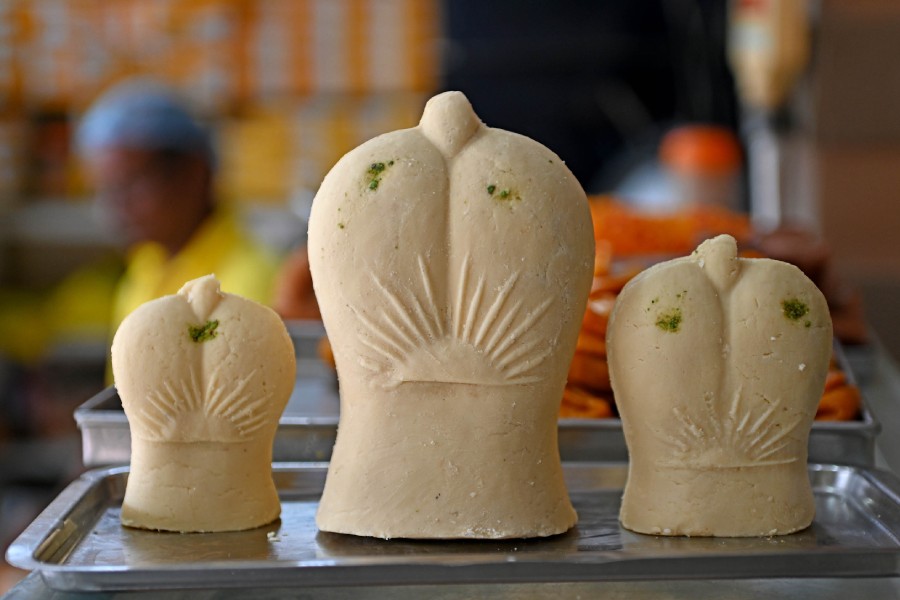
The historic city of Chandannagar is celebrating the rich history of Surjya Kumar Modak’s famous jolbhora sandesh. Created in 1818 as a lighthearted practical joke for a local landlord's son-in-law, this iconic liquid-filled sweet continues to be hand-sculpted by fourth-generation artisans, preserving a unique culinary legacy that draws food lovers from across the globe.
CHANDANNAGAR — The historic town of Chandannagar in West Bengal's Hooghly district has registered a notable surge in culinary tourism as the region marks more than two centuries of its signature confectionery innovation, the jolbhora sandesh. The traditional sweet shop, Surjya Kumar Modak, operating from its legacy premises on Grand Trunk Road, has reported record consumer footfall for its seasonal aamer jolbhora (mango-fluid filled) and historic talsansh variants.
According to regional food historians and administrative logs, the survival of this hand-molded sweet asset highlights an enduring culinary link that dates back to the colonial era, preserving artisanal techniques that resist automated modern mass production.
The Practical Joke That Transformed Bengali Confectionery
The technical evolution of the jolbhora sandesh—literally translating to "water-filled sweetmeat"—began not as a strategic commercial product, but as an elaborate domestic prank. According to historical family manuscripts and shop records, the confection was invented in the Bengali calendar year 1290 (corresponding to the early 19th century) by the shop's founder, Surjya Kumar Modak, and his son Siddheswar Modak.
The foundational design phase was triggered by an elite administrative commission from the household of the powerful Zamindar (landlord) of Telinipara. The landlord's wife formally requested a completely unprecedented sweet format designed to humorously trick and baffle her newly wedded son-in-law during a formal family gathering.
Surjya Kumar Modak resolved this creative challenge by altering the engineering of the talsansh, a popular dry, solid sweet designed to look like an ice-apple or palm-fruit kernel. The original multi-tiered production sequence involved several innovative steps:
Chhena Texturing: Kneading fresh, moisture-drained chhena (cottage cheese curds) into an ultra-fine, malleable dough using traditional wooden tools.
Cavity Construction: Hand-shaping the dough inside specialized wooden molds to leave an insulated hollow chamber at the center.
Fluid Enclosure: Filling the core with dolo syrup—a refined jaggery extract infused with high-grade rose water—and sealing the node seamlessly to prevent external leakage.
When the unsuspecting groom took his initial bite, the internal liquid layer burst open instantly, soaking his formal silk attire and thoroughly amusing the gathered household. The practical joke established a lasting sweet paradigm across undivided Bengal.
Intertwined Literary Legacy and Royal Endorsements
Beyond its popularity within landlord estates, the establishment’s products developed a historic connection with Nobel laureate Rabindranath Tagore. Curatorial documents preserved at the nearby French Museum in Chandannagar confirm that Tagore's personal house-boat (bajra) would regularly anchor at the Patal Bari ghat along the Hooghly River, where special deliveries were dispatched directly from the Modak kitchen.
The historical impact of these royal and literary validations shaped the shop's product nomenclature over the generations:
| Sweet Variant | Historical Origin / Patronage | Internal Core Substance Matrix |
| Jolbhora Talsansh | Telinipara Zamindar Estate (1818) | Liquid Dolo Sugar Jaggery & Rose Essence |
| Motichoor Sandesh | Named directly by Rabindranath Tagore | Fine, pearlescent curd crumbles ("crush of pearls") |
| Aamer Jolbhora | Modern Seasonal Adaptive Variant | Preservative-free, natural Alphonso Mango Pulp |
| Nolen Gur Jolbhora | Winter Specialized Production Run | Liquid Date Palm Jaggery Syrup (Nolen Gur) |
Safeguarding Manual Craftsmanship Against Automation
As industrial commercialization pushes the wider West Bengal sweet sector toward fast automated machinery, the culinary operations at Surjya Kumar Modak continue to rely exclusively on specialized human sweet artisans (karigars). The execution of a liquid-filled core requires precise temperature control and manual dexterity; a single micro-fracture during the sealing phase causes the syrup to bleed out, ruining the structural integrity of the entire batch.
The business is presently managed by fourth-generation owner Saibal Kumar Modak alongside his two daughters, who have expanded the brand's reach by establishing a dedicated regional outlet within Kolkata’s specialized Mishti Hub in New Town. This expansion allows international air travelers and state visitors to access the delicate, fresh items without traveling directly to the Hooghly district.
Official Sources Section
The historical timelines, ancestral narratives, and technical ingredient parameters detailed in this report are verified by the official archives of Jalbhara Surjya Kumar Modak Confectionery and the cultural asset catalogs maintained by the Hooghly District Heritage Tourism Cell.
Supplementary literary anecdotes regarding regional food evolution are cross-referenced with peer-reviewed research papers published in the Journal of Food Quality, tracking the cultural spread of ethnic sweetmeats across Eastern India.
Executive Commentary
"According to officials managing the state's geographical indications registry, preserving traditional manual sweets like the original jolbhora is vital for maintaining the historical authenticity of regional food sectors against low-cost mass production."
Why It Matters
For gastronomy enthusiasts and cultural anthropologists, the global popularity of the jolbhora sandesh demonstrates that regional culinary assets can thrive in modern markets by preserving their unique historical identity rather than cutting costs through automation.
The survival of this 200-year-old recipe shows that food functions as a form of living history. By choosing to source raw milk from dedicated local farms in Naskarpur and continuing to hand-carve individual pieces, this family-run enterprise supports regional agricultural supply chains while preserving a unique culinary technique that defines Bengal's sweet-making heritage.
Key Facts at a Glance
Historical Milestone: The jolbhora sandesh continues to thrive over 200 years after its initial invention in the Hooghly district.
Humorous Origins: The sweet was created as a lighthearted practical joke to surprise a newlywed son-in-law at the Telinipara estate.
Tagore Association: Nobel laureate Rabindranath Tagore was a regular patron, personally naming the shop's motichoor sandesh.
Artisanal Standard: The production process rejects machinery, relying entirely on skilled karigars to hand-seal the liquid centers.
Modern Footprint: Run by fourth-generation descendants, operations have expanded from Chandannagar to Kolkata's high-profile Mishti Hub.
Frequently Asked Questions (FAQ)
What prevents the liquid center from leaking out of the sandesh?
The external chhena shell is carefully hand-kneaded to eliminate micro-pores. Skilled sweet artisans shape the paste into a dense barrier before sealing the liquid core inside.
How does the filling change between different seasons?
The traditional version uses rose-water syrup. The winter production run switches to rich, local date palm jaggery (nolen gur), while summer features fresh, natural Alphonso mango pulp.
Where can travelers buy authentic Surjya Kumar Modak sweets?
The original flagship showroom operates at 247 Grand Trunk Road (East) in Barasat, Chandannagar. A modern regional branch is also open at the Mishti Hub in New Town, Kolkata.
What unique ingredients are used in the original recipe?
The core relies on fresh cow's milk chhena, pure granulated sugar, and a specialized refined jaggery fluid known as dolo, which is lightly flavored with organic rose extracts.
Can these liquid-filled sweets be safely packed for long-distance travel?
Yes. The shop provides custom-insulated, impact-resistant packaging options designed to preserve the delicate structural shell during domestic flights and long train journeys.
Source: Hooghly District Heritage Tourism Cell, Surjya Kumar Modak Corporate Registry