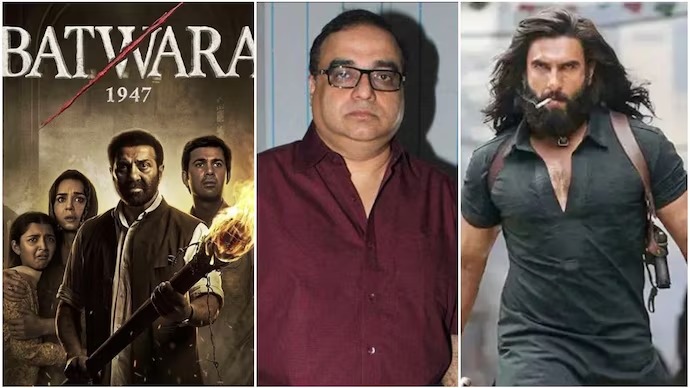
Director Rajkumar Santoshi has clarified that his period drama Batwara 1947 approaches masculinity and patriotism differently than modern action flicks like Dhurandhar. Highlighting Sunny Deol's performances, Santoshi noted that his protagonists navigate intense historical trauma with emotional depth and dignity rather than purely performative violence.
Acclaimed filmmaker explains how his period drama portrays masculinity and patriotism with restraint compared to modern action blockbusters.
MUMBAI: Following the theatrical release of his period drama Batwara 1947, director Rajkumar Santoshi has addressed ongoing public and critical comparisons between his film and Aditya Dhar's action juggernaut Dhurandhar. Speaking on the evolving cinematic definitions of patriotism and the modern action hero, Santoshi emphasized that his protagonist, played by veteran star Sunny Deol, stems from a distinct cinematic tradition that prioritizes moral dignity and emotional gravity over unbridled aggression.
Defining the Modern Alpha Male in Cinema
Released nationwide on August 14, 2026, during the Independence Day weekend, Batwara 1947 dives deep into the human cost of the 1947 Partition. As discussions mounted drawing parallels between Sunny Deol's intense portrayal and Ranveer Singh's hard-hitting role in Dhurandhar, Santoshi clarified that while he respects diverse directorial styles, his creative approach views heroism through a lens of profound restraint.
According to the filmmaker, the narrative weight of a character facing extreme socio-political torment naturally dictates their response. However, Santoshi underscored that Sunny Deol has historically embodied action heroes who maintain their internal code of honor and cultural dignity even in the face of chaos.
Contextualizing Cinematic Violence and Emotional Core
Santoshi noted that while he understands the visceral reactions depicted in contemporary high-octane action films like Dhurandhar, historical dramas demand a different emotional cadence. Set against the backdrop of a divided Punjab and centered around a displaced family in Lahore, Batwara 1947 focuses on human empathy and standing against communal fanaticism rather than stylized combat sequences.
The filmmaker pointed out that writing a protagonist who fights institutionalized hatred and social bigotry requires a unique kind of inner resilience, setting classic dramatic conflict apart from modern stylistic action.
Official Sources Section
Insights and direct statements regarding the cinematic differences between the two projects were detailed according to official media interactions and exclusive interviews granted by filmmaker Rajkumar Santoshi.
"According to officials and media statements from director Rajkumar Santoshi, his vision of an alpha male and action hero stems from a distinct school of cinema where characters navigate intense geopolitical and personal turmoil with inherent dignity and moral purpose."
Why It Matters
Discussions surrounding how contemporary Indian cinema handles masculinity, historical trauma, and patriotism directly shape cultural narratives. By contrasting traditional dramatic pacing with modern action aesthetics, industry leaders highlight how filmmakers choose to engage audiences with sensitive historical subjects like the Partition.
Key Facts at a Glance
Films Compared: Rajkumar Santoshi's Batwara 1947 and Aditya Dhar's Dhurandhar.
Lead Actor: Sunny Deol anchors Batwara 1947 alongside an ensemble cast including Preity Zinta and Shabana Azmi.
Core Theme: The film explores human displacement, empathy, and resilience during the 1947 Partition of British India.
Director's Stance: Santoshi emphasizes that his characters project action and patriotism rooted in emotional dignity rather than performative violence.
Frequently Asked Questions
Why is Rajkumar Santoshi's Batwara 1947 being compared to Dhurandhar?
Both films have sparked conversations around their distinct depictions of patriotism, masculinity, and the modern action hero archetype in contemporary Indian cinema.
What did Rajkumar Santoshi say about Sunny Deol's role?
Santoshi stated that Sunny Deol has consistently portrayed action heroes with deep-rooted dignity, anchoring their strength in moral purpose and emotional resilience.
What is the primary setting of Batwara 1947?
The film is set in Lahore against the turbulent backdrop of the 1947 Partition of British India and the division of Punjab.
Who are the key stars featured in Batwara 1947?
The period drama features an ensemble cast led by Sunny Deol, Preity Zinta, Shabana Azmi, Karan Deol, and Ali Fazal.
Summary:
Source: India Today Exclusive Interview