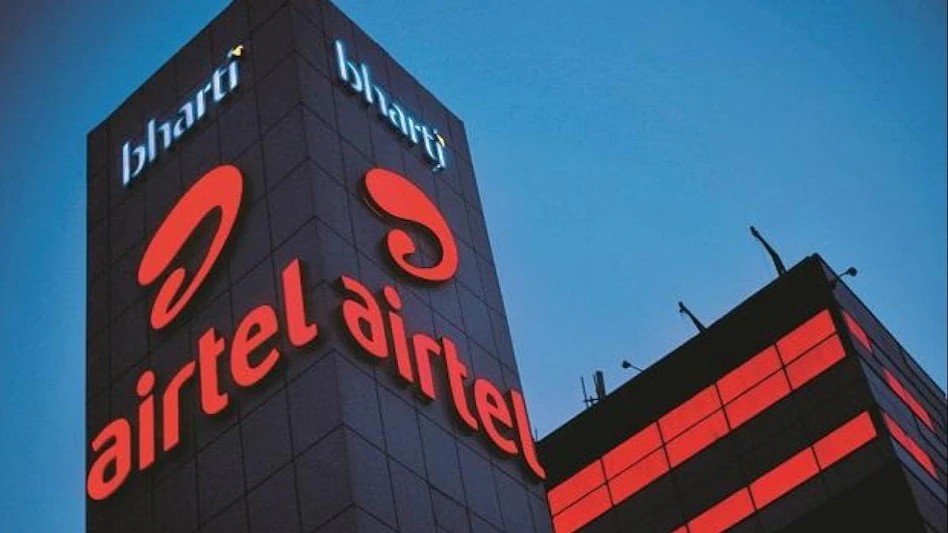
The Bombay High Court has ruled in favor of Bharti Airtel, quashing an ₹8,414 crore demand from the Department of Telecommunications over one-time spectrum charges. The judgment removes a 13-year liability for Airtel and its subsidiary Bharti Hexacom, significantly improving the company's financial outlook.
MUMBAI — The Hon’ble Bombay High Court has ruled in favor of Bharti Airtel Limited, setting aside a massive ₹8,414 crore Department of Telecommunications (DoT) demand notice related to one-time spectrum charges (OTSC).
The decision, delivered on June 8, 2026, brings an end to a highly monitored, thirteen-year regulatory litigation battle between India's premier telecom operator and the federal government. The judgment provides immediate balance sheet relief to Bharti Airtel and its listed subsidiary, Bharti Hexacom Limited, as the domestic telecom industry navigates capital-intensive infrastructure rollouts.
The Genesis of the ₹8,414 Crore OTSC Dispute
The legal battle originated over a decade ago when the Department of Telecommunications issued an initial demand notice on January 8, 2013. The authority originally sought ₹5,201.2 crore from the telecom major for holding spectrum beyond the conventional 6.2 MHz threshold up to a 4.4 MHz limit for GSM networks.
By 2018, the DoT revised this calculation upward to a consolidated sum of ₹8,414 crore, incorporating compounded interest and accumulated penalty parameters. This figure included a specific allocation of ₹473.7 crore levied against Bharti Airtel's subsidiary, Bharti Hexacom Limited, across its critical operational territories in Rajasthan and the North East and Assam (NESA) circles.
Bharti Airtel moved the Bombay High Court to challenge the constitutional validity and retrospective application of the pricing metrics used by the government, maintaining that the fee structure violated previous spectrum allocation conditions.
High Court Ruling Relieves Financial Pressure On Bharti Airtel
In an official corporate disclosure filed with the National Stock Exchange of India Limited and the BSE Limited on June 9, 2026, Bharti Airtel confirmed that the High Court allowed its petition. The bench completely quashed the impugned legacy demand, declaring the retrospective calculations legally unsustainable.
The company stated that the official judgment text was uploaded to the Bombay High Court's central depository at 17:56 hours IST on June 8, 2026.
Market Impact and Easing Sector Risks
The removal of this contingent liability significantly strengthens Bharti Airtel’s financial position. The capital that would have been reserved for this multi-crore payout can now be diverted toward network optimization and the expansion of next-generation cellular connectivity.
For telecom investors and equity markets, the verdict clears a major regulatory risk that has weighed on the telecom sector's valuations for years. Analysts note that removing these legacy litigation costs helps clean up the company's financial profile, making it a more attractive option for institutional investors.
Official Sources Section
The corporate updates and legal disclosures follow formal statutory filings:
Corporate Disclosure on Legal Development
The disclosure, authenticated by Rohit Krishan Puri, Company Secretary and Compliance Officer at Bharti Airtel Limited, emphasizes that the judgment provides a clean resolution to the long-standing dispute.
"The Hon'ble Bombay High Court, vide its judgment dated June 8, 2026, has allowed the petition filed by the Company and has set aside the impugned demand," the official company statement clarified.
Why It Matters to Consumers and Investors
For everyday consumers, this legal victory means Indian telecom operators can focus capital on improving service quality, expanding rural 5G coverage, and stabilizing data tariffs rather than funding historical litigations. For global investors, the ruling underscores a fairer regulatory environment in India's technology and communications sectors, proving that long-standing tax and fee disputes can find balanced resolutions within the judicial framework.
Key Facts at a Glance
Massive Relief: The Bombay High Court quashed a ₹8,414 crore government demand regarding retrospective one-time spectrum charges.
Subsidiary Impact: The ruling completely wipes out a ₹473.7 crore liability linked to Bharti Hexacom’s Rajasthan and NESA circles.
Long Legal Battle: The dispute dates back to an initial demand notice issued by the Department of Telecommunications in January 2013.
Regulatory Compliance: Bharti Airtel filed the update on June 9, 2026, under SEBI's updated disclosure requirements.
FAQ Section
What was the OTSC dispute between Bharti Airtel and the DoT?
The dispute involved a demand notice from the Department of Telecommunications, which claimed Bharti Airtel owed fees for holding mobile airwaves beyond standard caps on a retrospective basis.
How does this judgment affect Bharti Hexacom Limited?
Bharti Hexacom, a listed subsidiary of Bharti Airtel, is entirely freed from its ₹473.7 crore share of the OTSC demand, protecting its earnings in the Rajasthan and NESA regional markets.
Can the Department of Telecommunications appeal this verdict?
Yes, the DoT retains the statutory right to challenge the Bombay High Court's ruling by filing a Special Leave Petition (SLP) before the Supreme Court of India.
Source: National Stock Exchange of India Corporate Announcements Platform, Securities and Exchange Board of India Filing Portal, High Court of Bombay Case Status System