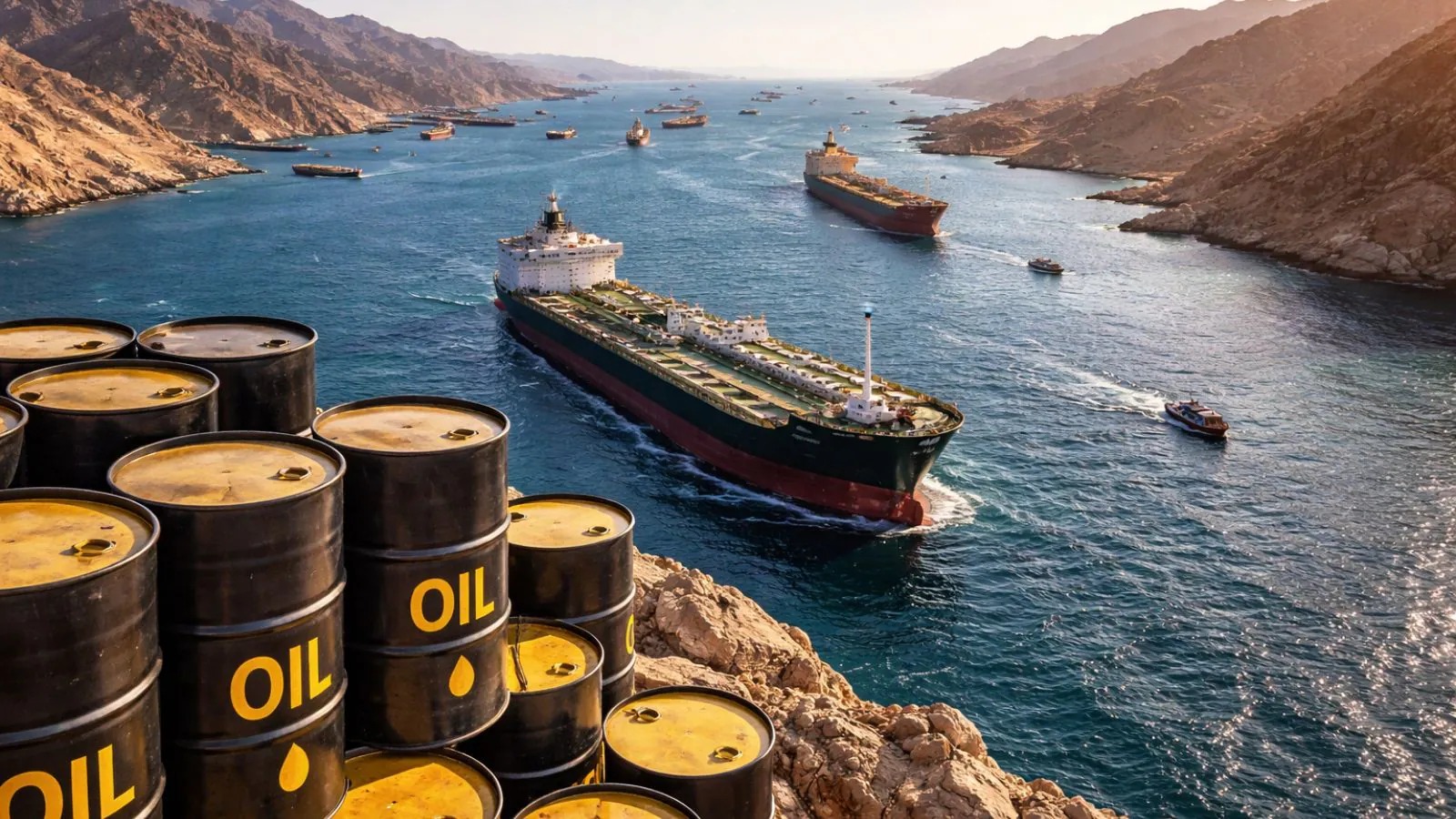
Brent crude futures surged past $99 a barrel and touched $100 during intra-day trading for the first time since May 26. The price spike follows drone and missile attacks on commercial oil tankers in the Red Sea and heightened naval friction across the Strait of Hormuz, forcing international shipping fleets to reroute around Africa and driving up maritime freight rates.
LONDON — Benchmark Brent crude futures crossed $99 per barrel on Thursday, July 23, 2026, touching $100 per barrel for the first time since late May. The price surge comes as expanding military conflicts and maritime strikes in critical Middle Eastern shipping corridors severely disrupt international crude supply logistics.
The rally was accelerated by fresh attacks on commercial crude tankers near the Bab el-Mandeb strait in the Red Sea, compounded by ongoing transit restrictions through the Strait of Hormuz. Energy commodity traders have priced in immediate geopolitical risk premiums as international shipping lines divert oil tankers away from short-haul transit routes, significantly extending voyage timelines and depleting available global tanker capacity.
The spike in Brent crude futures poses renewed inflation challenges for central banks worldwide, threatening to push up retail fuel costs, aviation jet fuel, and industrial manufacturing overheads just as global inflation rates had begun to stabilize.
Maritime Chokepoint Disruptions and Supply Chain Mechanics
The primary driver behind the rapid rise in Brent crude futures is the simultaneous disruption across two of the world's most critical maritime energy chokepoints: the Strait of Hormuz and the Bab el-Mandeb strait.
Key operational factors reshaping energy logistics include:
Red Sea Tanker Diversions: Following missile and drone strikes on crude carriers off the coast of Saudi Arabia, major maritime operators have ordered vessels to avoid the Bab el-Mandeb strait.
Rerouting Around the Cape of Good Hope: Tankers carrying Middle Eastern crude to Western European and Atlantic basin ports are being forced to transit around the southern tip of Africa, adding 10 to 14 days to standard journey times.
Freight and Insurance Surges: War-risk insurance premiums for ships traversing the broader Middle Eastern gulf region have risen sharply, adding millions of dollars to the chartering cost of individual supertankers.
Refinery Stock Depletion: Extended sea transit times have delayed crude deliveries to European and Asian refiners, leading to accelerated drawdowns of commercial onshore crude inventories.
According to maritime analytics platform Kpler, over 4 million barrels per day of global crude flows are currently facing rerouting constraints or significant transit delays due to these heightened maritime security risks.
Global Market Impact: Inflation, Aviation, and Industry
The sudden breach of the $100 milestone by Brent crude futures has sent ripple effects across foreign exchange, equity, and debt markets globally.
Consumer and Energy Prices
A prolonged stay for Brent crude futures above $100 per barrel directly translates to higher retail prices at petrol pumps. Energy analysts project that if crude stays elevated through the third quarter, average refined gasoline and highway diesel prices could rise by 12% to 18% internationally.
Transportation and Airline Costs
Airlines are experiencing immediate pressure on jet fuel procurement contracts. Higher fuel overheads—which constitute up to 30% of an airline's operating costs—may force carriers to re-introduce fuel surcharges on long-haul passenger and air freight routes.
Central Bank Policy Trajectory
The sudden inflationary impulse created by expensive Brent crude futures complicates monetary policy planning for the U.S. Federal Reserve, the European Central Bank, and the Reserve Bank of India. Central bankers may be forced to delay planned interest rate cuts or maintain tight policy stances to counter secondary inflationary pressures.
Official Statements and Institutional Views
In market research updates published on Thursday, commodities analysts at Goldman Sachs noted:
"According to officials and commodity strategists, persistent disruptions across the Strait of Hormuz and Red Sea transit routes could push Brent crude futures above $120 a barrel in the fourth quarter if physical oil flows remain constrained."
Market updates issued by the International Energy Agency (IEA) confirmed that while global commercial crude stocks remain adequate, supply chain friction and extended transit times are creating localized supply imbalances across European refining hubs.
Why It Matters
The surge in Brent crude futures above $100 has direct economic implications for businesses, consumers, and investors:
Higher Household Energy Bills: Rising crude directly drives up costs for home heating oil, gasoline, and domestic electricity generation in oil-dependent nations.
Elevated Manufacturing Costs: Petrochemical feedstocks, plastic manufacturing, and agricultural fertilizer production become significantly more expensive.
Cross-Border Trade Friction: Increased maritime freight rates elevate import costs for consumer goods shipped across international ocean lines.
Key Facts at a Glance
Benchmark Instrument: Brent crude futures.
Price Milestone: Reached $100 a barrel for the first time since May 26.
Primary Cause: Red Sea tanker attacks and maritime disruptions in the Strait of Hormuz.
Operational Impact: Tankers diverted around Africa, adding 10–14 days to global shipping schedules.
Economic Threat: Potential resurgence in global inflation and higher retail transport fuel prices.
Frequently Asked Questions (FAQs)
What is Brent crude oil?
Brent crude is a major trading classification of sweet light crude oil that serves as the primary benchmark price for purchases of oil worldwide.
Why do Middle East shipping disruptions cause crude prices to rise?
About one-fifth of the world’s daily oil consumption passes through Middle Eastern maritime chokepoints like the Strait of Hormuz and Bab el-Mandeb. Disruptions, attacks, or rerouting around Africa reduce the immediate supply of available oil in global markets and increase transportation costs.
How does the rise in Brent crude futures affect retail gasoline prices?
Refineries produce gasoline and diesel from crude oil. As the cost of crude oil rises, refineries pass those cost increases along to fuel distributors, ultimately leading to higher prices at retail petrol pumps within a few weeks.
Where can traders track official oil supply and market data?
Official energy statistics and market forecasts are published regularly by the U.S. Energy Information Administration (EIA), the International Energy Agency (IEA), and the Organization of the Petroleum Exporting Countries (OPEC).
Source: Market pricing data from the Intercontinental Exchange (ICE), trade analysis from Reuters, energy updates from the U.S. Energy Information Administration, and reports from the International Energy Agency.