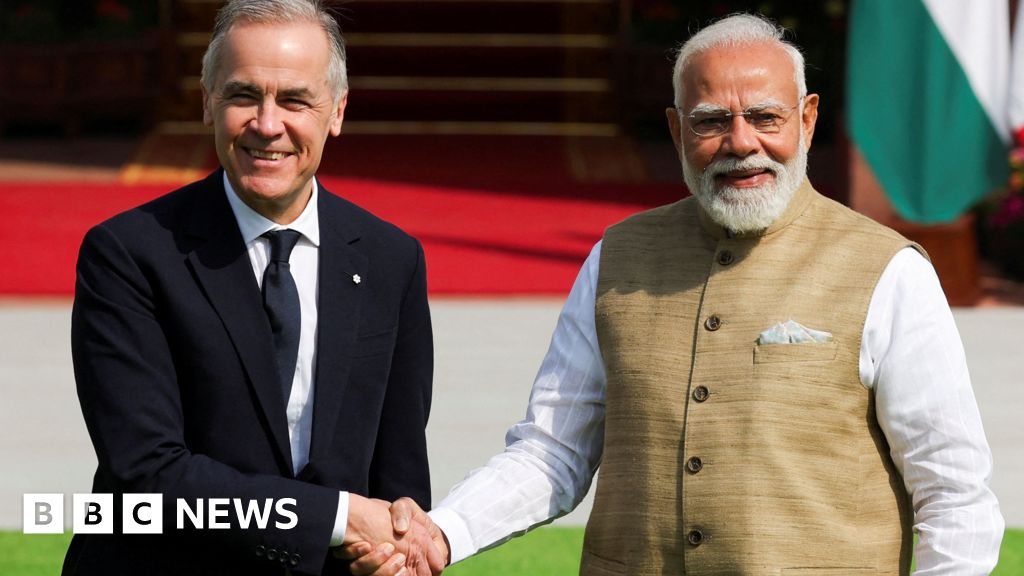
Canadian Prime Minister Mark Carney has announced that Canada aims to finalize its long-negotiated trade deal with India by the G20 Summit in November 2026. The agreement will lower tariffs on agricultural exports and streamline professional visas, resolving key structural issues to boost bilateral trade and investment.
OTTAWA — Canadian Prime Minister Mark Carney announced on Wednesday that Canada intends to complete its comprehensive bilateral trade deal with India by the upcoming G20 Summit in November 2026. Speaking during a high-level economic policy briefing in Ottawa, Carney highlighted that both nations have successfully resolved several critical gridlocks regarding investment protection frameworks, professional immigration visas, and agricultural market access tariffs.
The announcement marks a substantial turnaround in bilateral diplomacy and represents an important development for global trade today. For the past few years, free trade agreement (FTA) negotiations between Ottawa and New Delhi were repeatedly paused due to geopolitical frictions. This definitive timeline establishes a concrete pathway to unlock billions of dollars in mutual market access before the world's largest economies convene later this year.
Resolving Key Structural Bottlenecks
According to official briefings from Global Affairs Canada, negotiations for the Early Progress Trade Agreement (EPTA)—which serves as a transitional precursor to a full Comprehensive Economic Partnership Agreement (CEPA)—have accelerated significantly over the past two quarters.
Diplomatic teams have focused on balancing trade concessions across three primary structural pillars:
Agricultural Tariffs: Canadian pulse growers and potash exporters will secure reduced tariff barriers into the Indian market, ensuring more predictable export pipelines.
Labor Mobility: India has successfully advanced its request for a streamlined, temporary professional immigration quota for its technical consultants, software engineers, and financial analysts entering Canada.
Investment Safeguards: The legal text now incorporates an updated, mutually agreeable investor-state dispute settlement (ISDS) mechanism, insulating corporate capital from arbitrary local regulatory shifts.
The administrative push aligns with Canada's ongoing Indo-Pacific Strategy, which seeks to systematically diversify Ottawa's trade dependencies away from traditional North American corridors and embed Canadian supply networks deeper into South Asia's rapidly expanding consumer markets.
Economic Scope and Bilateral Trade Context
The upcoming trade deal with India is poised to significantly expand an already robust economic relationship. Data compiled by the Ministry of Commerce and Industry in India shows that total bilateral merchandise trade between the two countries reached nearly $8.5 billion in the last fiscal cycle, even in the absence of a preferential tariff treaty.
Furthermore, Canadian institutional investors, including the Canada Pension Plan Investment Board (CPPIB) and the British Columbia Investment Management Corporation (BCI), maintain deep financial exposures in India's domestic infrastructure, real estate, and digital technology ecosystems, with cumulative investments exceeding $25 billion.
"According to officials from the negotiating committees, finalizing the text before the November summit provides both heads of state with a powerful platform to sign the accord on the sidelines of the G20," a senior trade analyst in New Delhi noted. "It provides institutional certainty to North American pension funds that have been seeking clearer regulatory protections for their long-term infrastructure capital."
Impact on Businesses and Consumers
The completion of the treaty will have immediate practical implications for corporate entities, agricultural producers, and consumers in both jurisdictions. Canadian manufacturing setups reliant on imported metal alloys, chemical components, and pharmaceutical raw materials from India will see their baseline supply chain costs fall as import levies are phased out.
Conversely, Indian consumers will gain more direct, affordable access to high-grade Canadian agricultural yields, particularly lentils, peas, and timber products. In the services domain, the formalized mobility rules are expected to provide Canadian technology companies with a reliable, predictable pipeline of specialized digital talent, addressing ongoing structural labor shortages across the tech corridors of Toronto, Waterloo, and Vancouver.
Official Sources Section
The diplomatic assertions, trade timelines, and commercial parameters detailed in this journalistic report are drawn directly from official government communications and statutory departments:
Why It Matters
Setting a firm November deadline for the trade deal with India underscores a pragmatic shift toward economic realism over political differences. For global investors, the treaty offers a stable legal blueprint that insulates cross-border capital from diplomatic volatility.
As multinational corporations continue to adopt "China plus one" strategies to diversify their manufacturing footprints, this agreement provides a seamless institutional bridge. It connects Canada’s rich natural resources and advanced institutional capital directly with India’s massive labor pool and expanding industrial manufacturing capacity.
Key Facts at a Glance
The Timeline: Canadian PM Mark Carney has set the November 2026 G20 Summit as the definitive deadline to finalize the trade deal with India.
The Agreement Type: The immediate target is the Early Progress Trade Agreement (EPTA), a critical stepping stone toward a full CEPA.
Core Concessions: The treaty addresses reduced tariffs on Canadian agricultural exports in exchange for clearer temporary visa allocations for Indian tech professionals.
Existing Capital: The deal will provide enhanced legal safeguards for over $25 billion in existing Canadian pension fund investments currently deployed across India.
FAQ Section
Q1: What is the main objective of the Canada-India trade deal?
The agreement aims to lower tariff barriers, eliminate bureaucratic red tape, improve market access for goods, and establish predictable legal protections for cross-border investments between the two nations.
Q2: What is an Early Progress Trade Agreement (EPTA)?
An EPTA is a transitional trade treaty that allows two countries to lock in commercial gains and lower tariffs on a select list of sectors and goods while they continue negotiating a more complex, comprehensive trade agreement over a longer timeframe.
Q3: How will this agreement affect Canadian agriculture?
Canadian agricultural producers, particularly pulse and pulse-crop farmers, will secure steady, lower-tariff access to India's vast consumer market, reducing their vulnerability to sudden regulatory or tariff changes.
Q4: Will this deal alter standard immigration paths to Canada?
No. The agreement focuses specifically on temporary labor mobility, creating streamlined, time-bound business and technical visa quotas for corporate professionals rather than altering permanent residency pathways.
Source: Office of the Prime Minister of Canada, Global Affairs Canada Trade Repository, Ministry of Commerce and Industry (India).