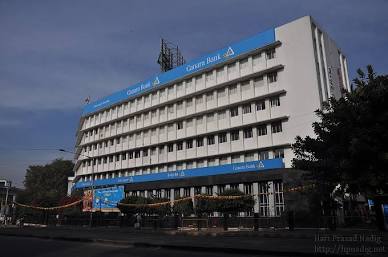
Canara Bank has revised its benchmark Marginal Cost of Funds Based Lending Rate (MCLR) upward by 5 basis points across major tenures. Effective August 12, the bank's one-year MCLR rises to 8.80% from 8.75%, leading to slightly higher interest rates and revised EMIs for prospective and resetting borrowers.
BENGALURU — Canara Bank has officially announced an upward revision in its Marginal Cost of Funds Based Lending Rate (MCLR) across selected tenures. Under the revised rate structure, the public sector bank’s benchmark one-year MCLR increases to 8.80% from the previous 8.75%, taking effect on August 12.
The adjustment reflects rising cost of funds across the Indian banking sector. The 5 basis point increase directly influences consumer credit products tied to the one-year benchmark, including floating-rate home loans, auto loans, and long-term personal advances.
Marginal Revision Across Selected Loan Tenures
The interest rate hike by the Bengaluru-headquartered lender applies across overnight, short-term, and medium-term loan tenures. While the one-year MCLR—the primary reference rate for most retail credit—rises to 8.80%, corresponding upward shifts were also notified for other tenures, including overnight, three-month, and six-month lending rates.
| Tenure | Existing Rate | Revised Rate (w.e.f. Aug 12) |
| One-Year | 8.75% | 8.80% |
| Six-Month | 8.50% | 8.55% |
| Three-Month | 8.15% | 8.20% |
| Overnight | 7.85% | 7.90% |
The bank stated that the monthly revision follows regular internal assessments governing input capital costs, yield on balances, and statutory reserve maintenance requirements.
Sector-Wide Pressure on Cost of Funds
The rate hike by Canara Bank comes amid a broader pattern among Indian commercial banks revising their fund-based lending rates. Higher interest rates paid on term deposits over recent quarters have steadily pushed up overall borrowing costs for public and private sector lenders alike.
Even as the Reserve Bank of India (RBI) maintains macro-prudential stability via its monetary policy stance, individual banks have calibrated their MCLR levels monthly to reflect realistic funding costs. Existing borrowers with loans tied to the Repo Linked Lending Rate (RLLR) remain unaffected by MCLR revisions, as RLLR tracks the central bank's policy repo rate directly.
Official Sources Section
According to official regulatory filings submitted to Indian stock exchanges (BSE and National Stock Exchange of India) and notices published on Canara Bank’s official portal, the board-approved revision in the Marginal Cost of Funds Based Lending Rate (MCLR) enters into force on August 12.
The announcement adheres to guidelines established under the Reserve Bank of India's regulatory framework governing interest rate disclosures.
Quote Section
"According to officials, the bank has reviewed its Marginal Cost of Funds Based Lending Rate (MCLR) across various tenures to align with prevailing market conditions and input funding costs," the bank indicated in its regulatory communication. "The revised lending rates take effect from August 12."
Why It Matters
The upward revision carries direct operational and financial consequences for existing and prospective retail and commercial borrowers:
Retail Loan Equated Monthly Installments (EMIs): Borrowers holding home, vehicle, or personal loans linked to Canara Bank’s one-year MCLR will experience a marginal increase in monthly repayment amounts or extended loan tenures upon their upcoming reset dates.
Corporate and Commercial Credit: Working capital facilities and medium-term corporate credit lines linked to short-term MCLR tenures (such as 3-month or 6-month rates) will reflect slightly higher borrowing costs.
Banking Sector Margins: Adjusting lending rates allows public sector lenders to preserve Net Interest Margins (NIMs) against elevated deposit rate obligations.
Key Facts at a Glance
Benchmark Rate: Canara Bank raised its flagship one-year MCLR to 8.80% from 8.75%.
Effective Date: August 12.
Quantum of Increase: 5 basis points (0.05%) across affected tenures.
Primary Impact: Floating-rate home, auto, and corporate loans reset on an annual basis.
FAQ Section
What is MCLR, and how does it affect existing loan accounts?
The Marginal Cost of Funds Based Lending Rate (MCLR) is an internal benchmark rate set by banks to determine minimum interest rates for loans. When a bank increases its one-year MCLR, floating-rate loans reset to higher interest rates on their designated annual reset dates.
Will this rate revision increase my existing home loan EMI immediately?
Not immediately. MCLR-linked loans usually have an annual reset frequency. The higher interest rate of 8.80% will only apply to your account on the scheduled reset date specified in your loan agreement.
Are Repo Linked Lending Rate (RLLR) home loans affected by this change?
No. RLLR-linked loans are directly anchored to the Reserve Bank of India’s policy repo rate and do not change when the bank adjusts its internal MCLR.
How much more interest will borrowers pay after a 5 basis point increase?
A 5 basis point (0.05%) increase equates to a modest change. For instance, on a ₹50 lakh home loan over a 20-year term, a 0.05% hike increases the monthly EMI by roughly ₹150 to ₹160.
Source: Canara Bank Regulatory Filings (BSE/NSE), Reserve Bank of India Guidelines.