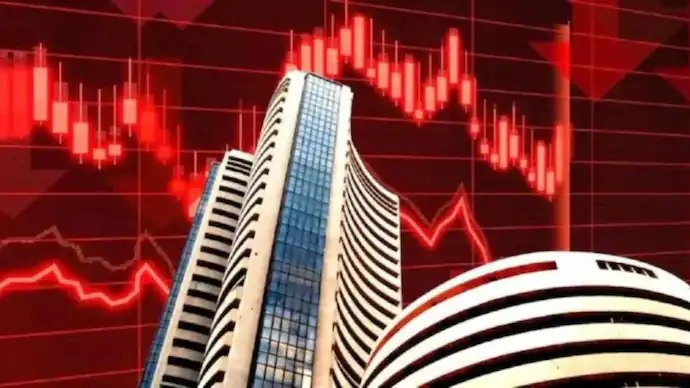
India's benchmark indices closed lower in a cautious trading session, with the Nifty 50 declining 0.46% and the BSE Sensex dropping 0.49%. The pullback was driven by profit-taking across major sectors and cautious risk management among institutional investors navigating near-term market volatility.
India's benchmark indices, the Nifty 50 and BSE Sensex, decline during the trading session amid cautious investor sentiment.
Overview
MUMBAI — Indian benchmark equity indices closed lower in a volatile trading session, with the National Stock Exchange's Nifty 50 Index (.NSEI) ending 0.46% down and the Bombay Stock Exchange's BSE Sensex (.BSESN) dropping 0.49%. Disclosed through official stock market exchange reports in August 2026, the market correction reflects broader profit-taking across heavyweight banking, technology, and auto stocks following recent record highs.
The intraday decline highlights prevailing caution among institutional investors and retail market participants as global macroeconomic headwinds and domestic sector rotations dictate near-term equity trajectories.
Market Performance and Index Movements
According to official market data published by the National Stock Exchange (NSE) and the Bombay Stock Exchange (BSE), the Nifty 50 index faced sustained selling pressure during the latter half of the trading session, eventually settling below key psychological thresholds. Concurrently, the BSE Sensex mirrored the downward trend, driven by losses in major index constituents.
Market analysts noted that cautious trading patterns were compounded by foreign institutional investor (FII) capital outflows and defensive positioning ahead of upcoming macroeconomic data releases. Despite the session's losses, trading volumes remained steady across major sectoral indices.
Impact on Investors and Market Participants
For retail investors, equity mutual fund holders, and institutional portfolio managers, daily index fluctuations underscore the importance of disciplined asset allocation and long-term investment strategies. Sector rotations into defensive assets such as fast-moving consumer goods and pharmaceuticals helped cushion broader portfolio drawdowns.
Financial experts continue to monitor foreign portfolio flows, currency fluctuations, and corporate earnings updates as primary indicators influencing market sentiment through the remainder of the trading week.
Official Sources Section
Details regarding the closing values and percentage declines of the benchmark indices are sourced directly from official market summaries and trading reports published by the National Stock Exchange (NSE) and the Bombay Stock Exchange (BSE).
"According to officials, the lower closing figures reflect routine profit-booking and cautious risk management among institutional traders amid evolving global and domestic economic signals."
Why It Matters
Tracking daily movements of benchmark indices such as the Nifty 50 and BSE Sensex allows market participants to evaluate overarching market trends and investor risk appetite. Understanding index corrections helps stakeholders navigate volatility within India's capital markets.
Key Facts at a Glance
Market Indices: Nifty 50 Index (.NSEI) and BSE Sensex (.BSESN)
Nifty 50 Closing Change: Down 0.46%
BSE Sensex Closing Change: Down 0.49%
Primary Trading Venues: National Stock Exchange (NSE) and Bombay Stock Exchange (BSE)
Market Sentiment: Cautious profit-taking and defensive sector rotation
Frequently Asked Questions
1. How did India's Nifty 50 Index close in the latest trading session?
The Nifty 50 Index (.NSEI) ended the trading session 0.46% lower.
2. What was the performance of the BSE Sensex?
The BSE Sensex (.BSESN) concluded the trading day 0.49% lower.
3. Where are official daily trading figures and index summaries published?
Official closing values and market reports are published daily by the National Stock Exchange (NSE) and the Bombay Stock Exchange (BSE).
4. What factors contributed to the decline in benchmark indices?
Market participants attributed the lower closes to profit-taking in heavyweight stocks, institutional capital outflows, and cautious sentiment ahead of macroeconomic updates.
Source: National Stock Exchange (NSE) and Bombay Stock Exchange (BSE).