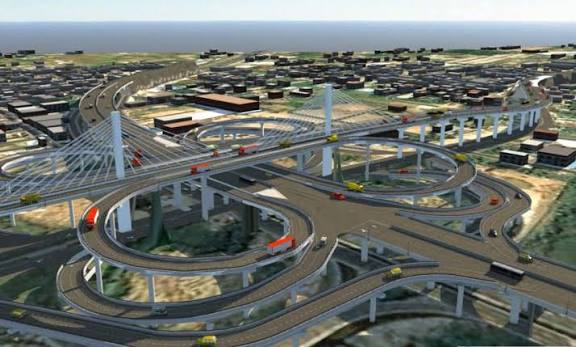
Chennai’s ₹621-crore Teynampet-Saidapet flyover on Anna Salai has missed its September 2026 deadline, moving to February 2027. The Tamil Nadu Highways Department was forced to redesign the Nandanam-Teynampet stretch with 45 portal pillars after discovering that underground metro station foundations were not aligned in a straight line.
CHENNAI — The construction of Chennai’s 3.2-kilometer Teynampet-Saidapet flyover along the arterial Anna Salai has hit a major engineering obstacle midway through execution, forcing the Tamil Nadu State Highways Department to push its completion target to February 2027. The ₹621-crore elevated corridor, originally scheduled to open to traffic by September 2026, required an emergency change-of-scope after on-site surveys revealed that underground Chennai Metro foundations along the Nandanam-Teynampet stretch do not run in a straight alignment as initially recorded in preliminary project reports.
Foundation Discrepancy Forces Mid-Project Scope Revision
Engineers encountered the structural roadblock after substantial progress had already been achieved on the southern half of the corridor, where workers had erected more than 80 pillars and placed 50 deck spans between Saidapet and Nandanam. When construction teams prepared to lay the central pillars on the northern Nandanam-Teynampet section, technical reviews showed that utilizing the pre-existing metro foundations would cause the bridge deck to become skewed and curved rather than straight.
The initial Detailed Project Report (DPR) had envisioned placing single central piers directly above the structural columns of the underlying Chennai Metro Rail network to accelerate construction speed. However, the reality of the subsurface conditions diverged from the initial drawings. In response, the State Highways Department has redesigned the section, replacing the planned central pillars with specialized portal frame structures. Under this revised engineering plan, 45 portal pillars will be erected on both sides of the roadway and anchored into the diaphragm walls of the Teynampet and Nandanam underground metro stations in coordination with Chennai Metro Rail Limited (CMRL).
Road Width Variations and Structural Adjustments
The redesign also addresses extreme variations in the surface width of Anna Salai along the commercial corridor. While the road width spans up to 40 meters at Saidapet and 36 meters near the DMS complex, it narrows sharply to 32 meters near Anna Arivalayam and just 28 meters near Cenotaph Road.
Engineers determined that installing large central piers in these narrower bottlenecks would have severely choked surface traffic lanes, making traffic management during and after construction impossible. The new portal frame system allows the elevated corridor to span across the full road carriage width using shorter 11-meter steel girders resting on outer portal columns, avoiding obstruction to central ground-level lanes.
The Teynampet-Saidapet flyover represents one of India's most complex urban highway developments. Spanning directly above an active metro rail tunnel situated 14 to 15 meters below ground, the project utilizes more than 15,000 tonnes of prefabricated structural steel brought in from specialized manufacturing units in Gujarat and Telangana.
Commuter Impact and Traffic Bottlenecks
The structural revision and subsequent timeline delay have prolonged severe traffic congestion across central Chennai. The ongoing construction, combined with phase-2 metro works, has forced daily detours through commercial neighborhoods like T. Nagar, Cenotaph Road, and Theagaraya Road. Commuters navigating these alternative routes face extended travel times and deteriorating surface road conditions caused by heavy vehicle diversion.
Once fully commissioned, the four-lane elevated corridor is designed to allow more than 240,000 vehicles daily to bypass seven major signalized junctions—including Eldams Road, SIET College, Cenotaph Road, Nandanam, and CIT Nagar—reducing peak transit times between Saidapet and Teynampet from 30 minutes to under five minutes.
Official Sources Section
Technical updates, alignment revisions, and project timelines are based on project bulletins issued by the Highways and Minor Ports Department, Government of Tamil Nadu and engineering coordination reports from Chennai Metro Rail Limited.
Quote Section
"According to officials from the state highways department, the redesign was essential to ensure absolute structural safety and prevent alignment curves, and while the new target is set for February 2027, the department is coordinating closely with metro authorities to maintain the revised execution pace."
Why It Matters
The engineering delay on the Teynampet-Saidapet flyover highlights the technical challenges of retrofitting multi-tier elevated transit systems into crowded urban centers with legacy subsurface infrastructure. The successful execution of the portal frame redesign will preserve vital ground-level lane capacity while safeguarding underground metro operations on Chennai's busiest transit corridor.
Key Facts at a Glance
Project Scale: ₹621-crore, 3.2-kilometer four-lane prefabricated steel elevated corridor.
New Completion Target: Deadline pushed from September 2026 to February 2027.
Cause of Delay: Mismatch between DPR data and actual underground metro foundation alignments along the Nandanam-Teynampet stretch.
Design Solution: Replacing central piers with 45 portal frame structures anchored to metro station diaphragm walls.
Frequently Asked Questions
Why was the Teynampet-Saidapet flyover delayed?
The project was delayed after highway engineers discovered that underground metro foundations on the Nandanam-Teynampet stretch were not in a straight line, necessitating a mid-construction design change.
What is the revised deadline for the flyover?
The Tamil Nadu Highways Department has rescheduled the completion target to February 2027.
Will the design modification increase the total project cost?
State highway officials stated that the scope adjustment to portal pillars is being accommodated within the approved ₹621-crore budget.
Which major junctions will the elevated corridor bypass?
The elevated road will bypass seven busy intersections along Anna Salai, including Eldams Road, SIET College Road, Cenotaph Road, Nandanam, and CIT Nagar junctions.
Source: Highways and Minor Ports Department, Government of Tamil Nadu, Chennai Metro Rail Limited