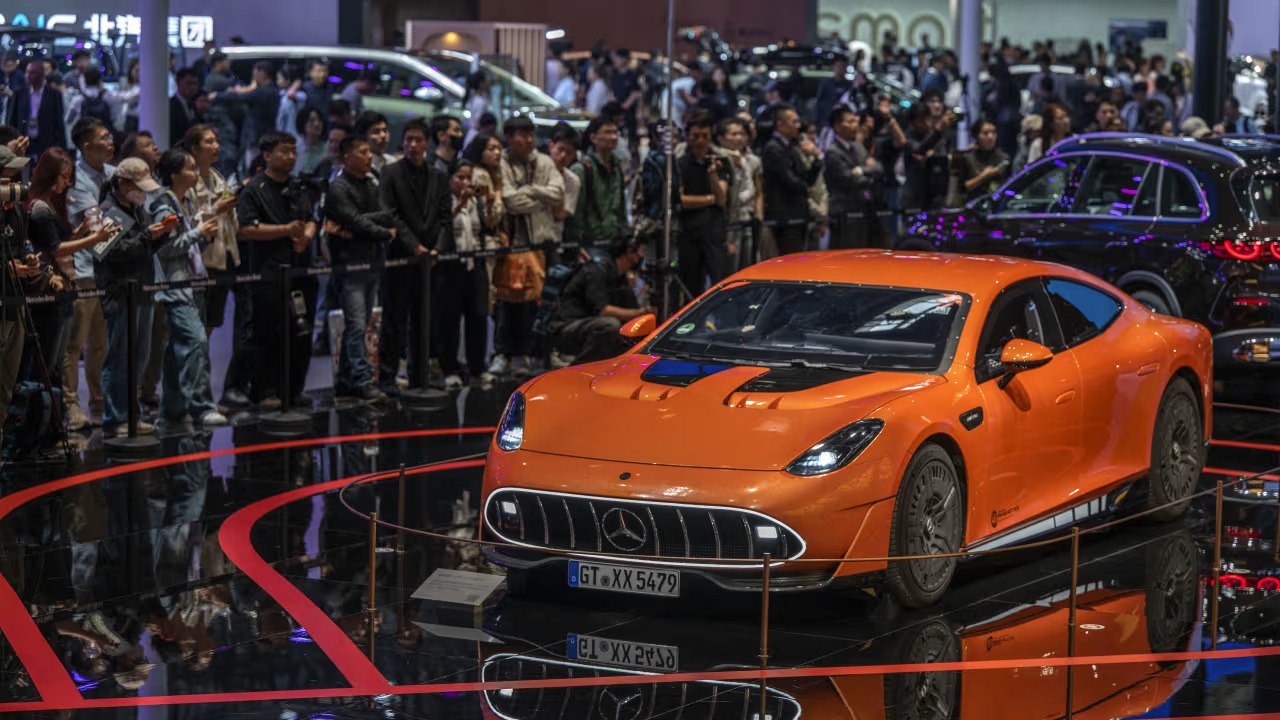
China’s electric vehicle market has become the most brutal car battleground in the world, with relentless price cuts, wafer-thin margins and ruthless competition for market share. Now, that same high-pressure playbook is increasingly spilling into Europe, Southeast Asia and other export markets, reshaping how cars are priced, sold and built worldwide.
For legacy automakers and policymakers, this is not just a story about cheap Chinese EVs; it is about an entire industry adjusting to a world where scale, software and batteries matter more than chrome and dealership muscle. As Chinese brands export their price war, global players are being forced to respond with discounts, accelerated EV launches and, in some cases, defensive tariffs.
How China’s Car Market Turned Brutal
Over the past few years, China has nurtured dozens of EV brands, supported by aggressive industrial policy, battery supply-chain dominance and deep local capital. That created more capacity than local demand, especially as growth slowed. The result has been a ferocious battle for survival: steep price cuts, constant new model launches, and an unforgiving environment where weaker brands are pushed to the brink.
Why The Shock Is Now Global
As profits get squeezed at home, Chinese automakers are looking overseas to absorb capacity and keep factories running. Europe, Latin America, the Middle East and Southeast Asia are seeing an influx of aggressively priced EVs and hybrids that undercut local models while offering strong tech and range. This forces global giants, from Volkswagen and Toyota to US and Korean brands, to respond with their own discounts, finance schemes and cheaper EV platforms.
What It Means For Consumers And Jobs
In the short term, buyers benefit from lower prices, more features for the money and faster innovation cycles. Over the medium term, however, there is a risk that only a handful of ultra efficient, vertically integrated players survive, potentially reducing choice and concentrating manufacturing power in fewer countries. That is why governments are scrambling to balance consumer benefit with industrial policy: tax breaks for local EV manufacturing, subsidies for batteries, and in some regions trade defence measures against what they see as underpriced imports.
The Next Phase: Software, Subscriptions And Scale
As hardware prices race to the bottom, carmakers are betting on software and services, such as connected features, in car apps and subscriptions, to protect margins. The winners in this new game will be the companies that combine scale manufacturing with strong software ecosystems and control over batteries. Those that cannot keep up with China’s cost curve or match its speed of innovation will face tough choices: consolidate, pivot to niches, or exit the market altogether.
Global Car Market Stress Signals
- China’s EV market has triggered a relentless price war and consolidation pressure
- Chinese brands are exporting surplus capacity and aggressive pricing worldwide
- Legacy automakers are responding with discounts, cheaper EV platforms and alliances
- Governments are weighing consumer gains against risks to domestic auto jobs and industry
- Future competitiveness hinges on battery supply, software ecosystems and massive scale
Sources: International auto industry reporting, EV market analyses, and recent commentary on Chinese EV exports, global price wars and policy responses in key markets