Newly leaked internal emails reveal that major Indian automakers—including Maruti Suzuki, Tata Motors, and Mahindra—collaborated with the Society of Indian Automobile Manufacturers (SIAM) to flag alarming chloride and moisture contamination levels in E20 petrol across 18 states before abruptly withdrawing their official government complaint.
Internal correspondence shows major Indian carmakers privately raised concerns over high chloride levels in E20 fuel before retracting their official warning to the government.
Internal Discussions Reveal Chloride and Moisture Alarms
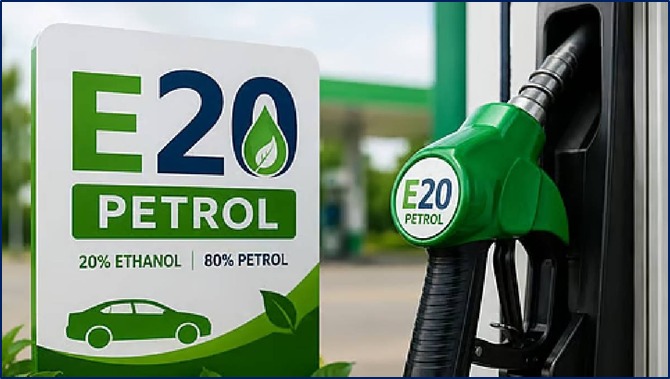
In August 2026, leaked internal communications reviewed by media outlets exposed deep private anxieties among India's premier automakers regarding the national E20 fuel rollout (petrol blended with 20% ethanol). Before officially withdrawing its warning, the Society of Indian Automobile Manufacturers (SIAM)—representing major original equipment manufacturers (OEMs) such as Maruti Suzuki, Tata Motors, and Mahindra & Mahindra—compiled testing data from over 250 fuel samples across 18 states.
According to the internal emails, the testing revealed excessive chloride concentrations ranging from 6 to 570 parts per million (ppm) in states like Rajasthan, and up to 420 ppm in New Delhi, vastly exceeding permissible government safety limits of 3 ppm. Furthermore, technical executives documented high moisture levels scaling up to 13,000 ppm in regions like Andhra Pradesh, triggering rapid component corrosion, fuel-injector clogging, and immediate engine stalling.
SIAM's Retraction and Government Stance
Following public debate and sharp media scrutiny over the initial leak of the confidential advisory, SIAM officially retracted its communication, stating that the figures required further comprehensive authentication and regional data collection. The industry lobby maintained that the data exchange was meant exclusively for internal technical validation among oil marketing companies (OMCs) and member carmakers rather than public dissemination.
Despite these internal findings, government representatives and petroleum ministry officials defended the safety of the fuel program, characterizing earlier alarms as an unfounded misinformation campaign. Official statements noted that OMCs conduct rigorous water-ingress tests multiple times daily across more than 87,000 retail fuel stations nationwide. Meanwhile, representatives for Mahindra dismissed the leaked conclusions as baseless, while Maruti Suzuki and Tata Motors declined immediate comment on the email disclosures.
Impact on Consumers, Businesses, and Investors
The revelation of unpublicized contamination data carries substantial practical implications for vehicle owners, commercial fleet operators, and automotive investors. Persistent reports of accelerated mechanical wear, damaged fuel pumps, and reduced fuel efficiency have left motorists increasingly skeptical about long-term engine compatibility with E20 petrol.
For commercial businesses and transport operators, unexpected maintenance overheads resulting from fuel-induced corrosion threaten operational margins. For investors, the friction between empirical testing data and public regulatory assurances highlights potential compliance and warranty risks as India accelerates its broader green energy transition mandates.
Why It Matters
The discrepancy between automakers' private technical findings and public retractions underscores ongoing challenges in India's rapid adoption of blended fuels. Resolving fuel quality discrepancies is vital to safeguarding consumer vehicles against premature component failure and maintaining public trust in national decarbonization initiatives.
Key Facts at a Glance
Core Issue: Internal emails reveal extensive private concern among automakers regarding high chloride and moisture contamination in E20 petrol.
Testing Scope: Industry tests across 250 samples in 18 states showed chloride levels spiking far above the permitted 3 ppm threshold.
Key Entities Involved: SIAM, Maruti Suzuki (MRTI.NS), Tata Motors (TAMO.NS), and Mahindra & Mahindra.
Action Taken: SIAM formally withdrew its government warning, citing the need for broader data authentication.
FAQ Section
What did the leaked internal emails reveal about E20 fuel?
The emails revealed that major automakers and SIAM privately recorded high chloride and moisture contamination levels in E20 petrol samples across 18 states, linked to component corrosion.
Why did SIAM withdraw its official complaint to the government?
SIAM withdrew the warning, stating that the figures cited in the communication required further comprehensive verification and regional data authentication.
How have automobile manufacturers responded to the leaked reports?
Mahindra stated that conclusions drawn from the emails were baseless, while Maruti Suzuki and Tata Motors did not issue immediate public comments.
What is the government's official position on E20 fuel safety?
The Ministry of Petroleum and Natural Gas maintains that fuel quality is rigorously monitored across retail networks and that E20 petrol is completely safe for compliant vehicles.
Source: SIAM Official Communications, Ministry of Petroleum and Natural Gas Releases, NSE India Disclosures