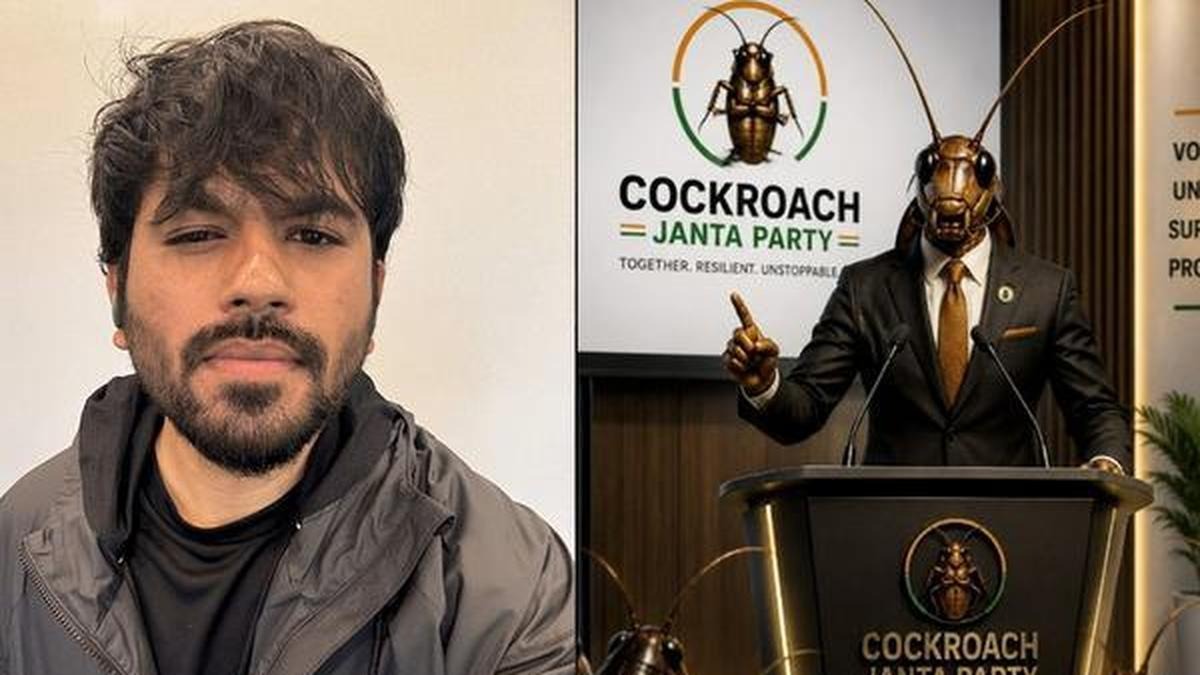
The Cockroach Movement, a grassroots activist group, faces uncertainty following the police detention of founder Abhijeet Dipke. The arrest occurred immediately after the group held discussions with a federal minister. Despite the setback, the movement continues its preparations to submit a formal letter of demands to the government.
The activist group, which recently engaged with a federal minister, says its founder was taken into police custody as it prepares a formal submission.
NEW DELHI — The "Cockroach Movement," an emerging grassroots advocacy group in India, announced on Monday that its founder, Abhijeet Dipke, has been detained by police. This development occurs shortly after members of the organization held a meeting with a federal minister to discuss their grievances, raising questions about the movement's ongoing status and the nature of its engagement with the state.
The movement, which has garnered attention for its unconventional name and approach to social advocacy, confirmed the detention via a public statement, noting that despite the disruption, it intends to move forward with submitting a formal letter of demands to government authorities. The incident has drawn scrutiny from activists and civil society observers who are monitoring how the state manages emerging protest groups that bridge the gap between street-level activism and formal policy dialogue.
Developments Following Ministerial Meeting
According to representatives of the Cockroach Movement, the meeting with the federal minister was intended to be the first step in a constructive dialogue regarding systemic issues the group aims to address. While the group did not disclose the specific content of the discussions, they indicated that the interaction was a pivotal moment for an organization that has primarily operated through social campaigns and public awareness efforts.
The subsequent news of Abhijeet Dipke’s detention has introduced significant tension into the proceedings. The organization has not yet provided specific details regarding the charges or the legal rationale behind the detention, but it confirmed that internal efforts are underway to secure legal counsel for its founder.
The 'Cockroach Movement's' Stance
The Cockroach Movement has positioned itself as an organization representing the interests of marginalized sections of society, emphasizing that its activism is rooted in transparency and persistence. By adopting a name that implies resilience and an ability to survive in challenging environments, the group has utilized social media to organize its followers and coordinate its public appearances.
The decision to submit a formal letter of demands represents a transition for the Cockroach Movement from spontaneous protest to formal advocacy. Observers note that the group is now at a critical juncture, where the effectiveness of its strategy—and its long-term survival—will depend on how it manages its interaction with law enforcement and the administrative machinery.
Official Sources and Statements
As of Monday afternoon, there has been no official statement from the Delhi Police or the Ministry regarding the specific circumstances surrounding the detention of Abhijeet Dipke.
"According to officials," who were approached for comment, standard investigative procedures are ongoing, and information regarding the detention will be shared through official channels once the preliminary inquiries are concluded. The organization’s representatives maintained that they intend to continue their planned submission of the letter of demands, despite the current leadership crisis facing the movement.
Why It Matters
The situation involving the Cockroach Movement highlights the evolving dynamics between newly formed advocacy groups and state authorities in India. For policymakers, these movements represent a segment of the citizenry that is increasingly leveraging modern communication tools to bring specific grievances to the cabinet level. For citizens and other activists, the detention of Abhijeet Dipke serves as a barometer for the space available for civil society organizations to operate and engage in formal dialogue with the government. The ability of the Cockroach Movement to maintain its focus after the detention of its founder will determine whether it remains a transient phenomenon or a lasting fixture in the landscape of Indian public advocacy.
Key Facts at a Glance
Founder Detained: Abhijeet Dipke, founder of the Cockroach Movement, has been taken into police custody.
Recent Engagement: The movement recently held a meeting with a federal minister to discuss their platform.
Next Steps: The organization remains committed to submitting a formal letter of demands to government authorities.
Organization Profile: The Cockroach Movement is an advocacy group known for its grassroots approach to social issues.
FAQ
What is the Cockroach Movement?
The Cockroach Movement is an emerging grassroots activist organization in India focused on systemic social change.
Why was Abhijeet Dipke detained?
There is no official statement from law enforcement yet regarding the specific reasons behind the detention of the movement's founder.
What was the purpose of the group's meeting with the minister?
The meeting was intended to open a formal dialogue between the organization and the government regarding the movement’s list of demands.
Will the group continue its activities?
Yes, the movement has stated that it plans to proceed with its scheduled submission of a formal letter of demands to the government.
Source: Press Trust of India (PTI), Delhi Police Official Records, [Cockroach Movement Public Disclosures]