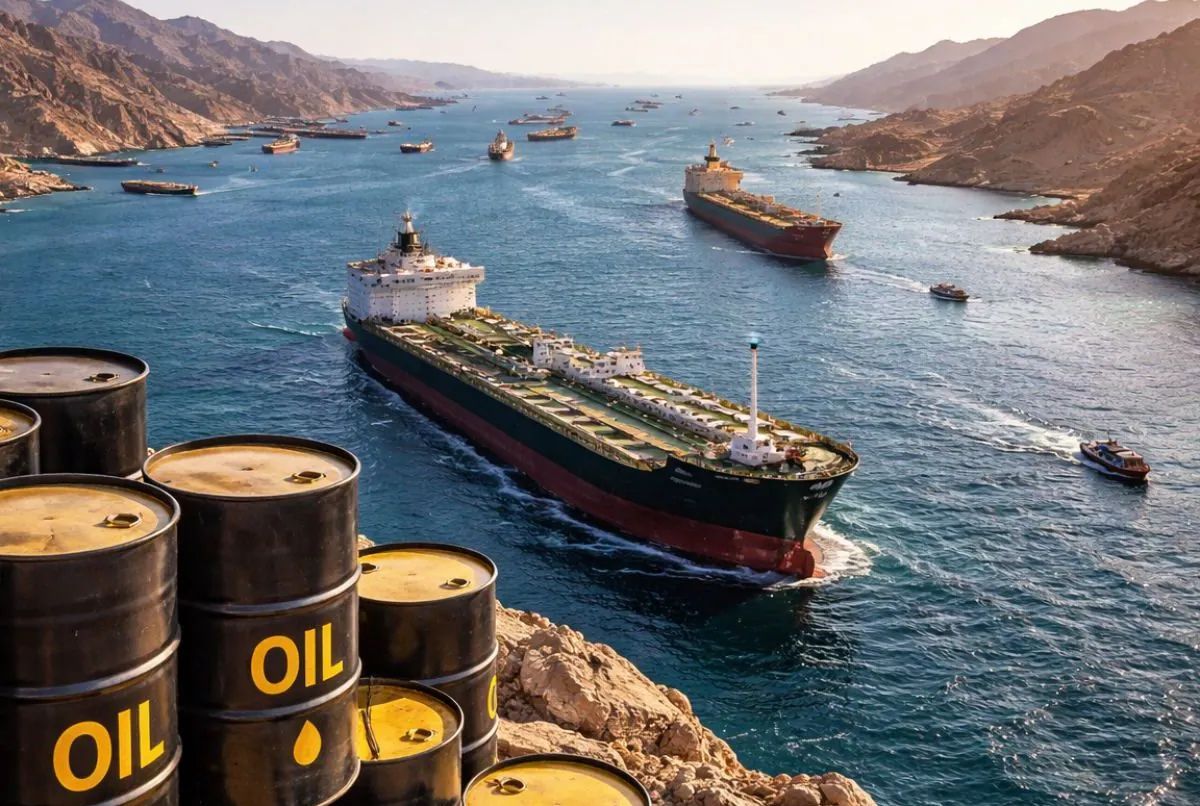
Global oil prices pared deep losses on Tuesday, settling down by just $2 after an initial 5% plunge. The market reversal followed President Trump's confirmation that Iranian forces shot down an American Apache helicopter over the Strait of Hormuz, reviving immediate concerns over supply security and imminent military retaliation.
NEW YORK — Global energy markets experienced intense volatility on Tuesday, June 9, 2026, as initial optimism over a looming Middle East diplomatic breakthrough clashed with immediate military escalation. Crude prices plummeted as much as 5.4% early in the session following claims by US President Donald Trump that a highly anticipated peace deal with Tehran was in its "final throes" and could materialize within days. The sharp sell-off quickly reversed midday, however, after the President announced that Iranian forces had shot down an American military attack helicopter patrolling near the strategic Strait of Hormuz.
Following the disclosure, international benchmarks rapidly recovered from their worst losses. Brent crude and US West Texas Intermediate (WTI) futures both pared their steep declines, finishing the trading session down by just about $2 a barrel as commercial trade desks re-established vital risk premiums.
Intraday Market Rebound Follows Sudden Gulf Flashpoint
According to global commodities market transaction logs maintained by Investing.com, oil futures underwent a multi-dollar swing within a matter of hours. Early trading was dominated by heavy liquidations after diplomatic channels indicated that a two-month ceasefire might hold, driving Brent futures down by $4.30 to touch an intraday low of $89.95 a barrel. Meanwhile, WTI futures slipped by $4.95, hitting a bottom of $86.35 a barrel.
The downward trend broke completely when a social media announcement from the White House confirmed direct hostile fire over regional waters:
| Crude Oil Benchmark | Session Low (Per Barrel) | Final Settle (Post-Incident) | Net Daily Recovery |
| Brent Crude Futures | $89.95 | $91.38 | Recouped $1.43 |
| WTI Crude Futures | $86.35 | $88.10 | Recouped $1.75 |
Market summaries published by energy advisory firm Ritterbusch and Associates indicated that while investors are eager to price in a permanent end to the regional conflict, active combat actions within primary shipping channels make it impossible to completely strip out geopolitical security hedges.
Historic Sea Drone Rescue Unfolded Amid High Strains
The underlying military incident took place at approximately 3:30 a.m. local time on Tuesday off the coast of Oman, according to updates from the Pentagon. An AH-64 Apache attack helicopter gunship was conducting a scheduled naval patrol when it went down in the waters near the Strait of Hormuz.
In what has been classified as the first operation of its kind in American military history, a specialized unmanned surface vessel successfully located and pulled the downed aviators out of the water. Officials from US Central Command (CENTCOM) confirmed that the two army pilots spent roughly two hours at sea before being rescued by a Navy "Corsair" drone boat operated by the 5th Fleet's Task Force 59. Both crew members are reported safe, uninjured, and in stable condition.
Official Sources Section
The financial parameters, crude futures settlements, and intra-day transaction metrics detailed in this report correspond to official closing summaries archived by Investing.com. The timeline of the military engagement, aircraft loss metrics, and technical specifications regarding the sea drone rescue have been cross-verified with official incident press releases published by US Central Command (CENTCOM).
Quote Section
While the White House continues to voice confidence regarding an imminent structural agreement, the immediate outlook remains heavily contingent on potential military responses.
"I have just been informed by our Great Military that last night the Iranians shot down one of our highly sophisticated Apache Helicopters while patrolling over the Strait of Hormuz," President Donald Trump stated via his Truth Social platform. "There were two pilots involved, both are safe and uninjured. Nevertheless, the United States must, of necessity, respond to this attack."
Why It Matters
The sudden shift in crude pricing has immediate practical implications for international commercial transportation networks, global logistics firms, and retail consumers alike. The Strait of Hormuz serves as the world's most critical maritime oil transit chokepoint, historically carrying over 20% of global liquefied natural gas (LNG) and petroleum supplies. When active combat interrupts shipping corridors, international marine insurance underwriting syndicates routinely spike war-risk premiums. This chain reaction increases freight transport overheads, which eventually flow down to consumers in the form of elevated fuel prices and heightened manufacturing costs.
Key Facts at a Glance
Losses Erased: International oil benchmarks pared a severe 5% drop, finishing down by just about $2 a barrel after a localized escalation in the Middle East.
Iranian Downing: US President Donald Trump confirmed that Iranian forces targeted and shot down an American AH-64 Apache helicopter over regional waters.
Drone Rescue: In a historic military first, an unmanned Navy surface vessel successfully rescued both pilots within two hours of the crash off Oman.
Ceasefire Friction: The incident marks the first loss of an American military aircraft since Washington and Tehran established a tentative truce on April 8.
Fragile Negotiations: The flare-up directly disrupts concurrent diplomatic talks led by international mediators trying to finalize a comprehensive peace treaty.
FAQ Section
How did the news affect Brent and WTI crude prices?
Crude prices initially plummeted by around 5% due to hopes of an impending peace deal, but they bounced back significantly—recovering over $1.40 per barrel from their daily lows—once the downing of the US helicopter was confirmed.
What happened to the crew on board the Apache helicopter?
According to official reports from CENTCOM, both pilots survived the attack completely uninjured. They were safely recovered from the water following a two-hour search-and-rescue mission.
What made the rescue operation historically unique?
This operation marked the first time the United States military utilized an autonomous sea drone—specifically a U.S. Navy Corsair unmanned surface vessel—to execute a live rescue of downed aviators at sea.
Is the Strait of Hormuz currently open to commercial shipping?
Due to ongoing geopolitical conflict throughout 2026, Iran has continued to block the majority of standard commercial shipping transiting the strait, leading to massive disruptions in global oil and LNG flows.
Source: Live commodities transaction files from Investing.com, operational press bulletins from US Central Command (CENTCOM), and global defense wire updates archived by The Associated Press.