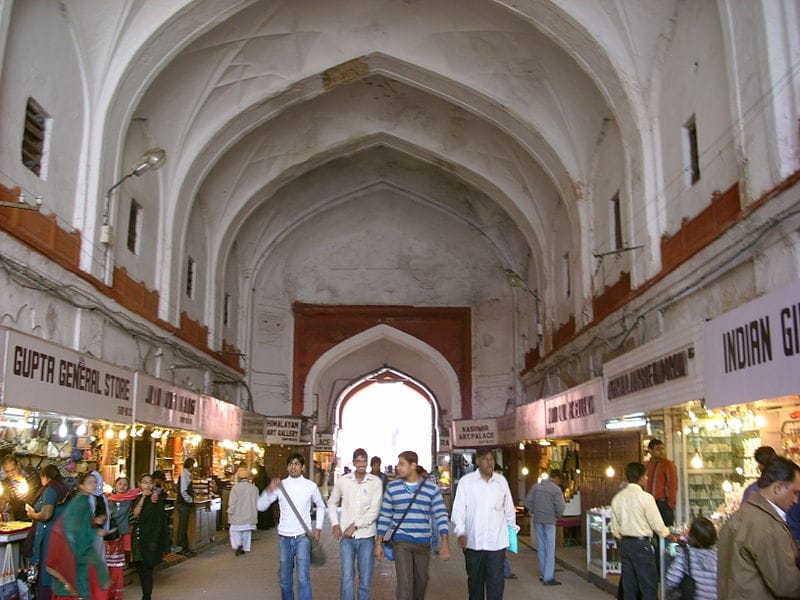
Under the Delhi Master Plan 2047 draft framework, municipal authorities plan to shift wholesale trade and warehousing activities out of the congested Walled City to peripheral logistics sites. The strategy aims to reduce freight congestion, safeguard heritage structures, and redevelop Old Delhi into a pedestrianized 24-hour cultural hub.
NEW DELHI — In a major urban planning decision aimed at decongesting the national capital, the draft Master Plan for Delhi (MPD) 2047 officially proposes the relocation of wholesale trade and warehousing activities away from the Walled City, including historic hubs like Chandni Chowk and Sadar Bazaar, to dedicated peripheral zones outside the central city.
Detailed Blueprint for Relocation and Urban Regeneration
Under the statutory framework of MPD-2047, civic authorities and the Government of National Capital Territory of Delhi (GNCTD) have been directed to formulate a phased timeline to facilitate the transition of heavy commercial storage.
The Master Plan specifies distinct spatial and infrastructural conditions for replacement facilities outside the heritage core:
Spatial Criteria: New warehousing units will be permitted on land parcels measuring 1 hectare or larger, provided they maintain direct access to primary corridors with a minimum 30-meter right of way.
Freight and Traffic Management: By moving bulk freight movement outside the core city, urban planners aim to significantly cut heavy vehicular movement causing chronic traffic logjams in Old Delhi.
E-commerce Adaptation: The policy framework acknowledges the rapid emergence of decentralized, smaller logistics nodes driven by modern e-commerce demands while restricting large-scale bulk storage in congested alleys.
Transforming Old Delhi into a Heritage and Cultural Hub
Relocating commercial godowns serves as a baseline strategy to convert the Walled City from an overburdened trade depot into an active, pedestrianized cultural center.
The land freed by moving wholesale trade and warehousing activities will support adaptive reuse initiatives:
24-Hour City Concept: MPD-2047 proposes identifying specific circuits to boost night markets, heritage walks, arts spaces, craft centers, and local tourism.
Safety Protocols: The plan institutes a strict ban on storing hazardous or inflammable commodities within the dense residential and retail quarters of Old Delhi.
Pedestrian Infrastructure: The core zones will be developed as Active Travel Areas featuring dedicated non-motorized transport lanes, cycle-sharing systems, and pedestrianized walkways.
Impact on Traders, Citizens, and Real Estate
The shifting of wholesale trade and warehousing activities carries direct operational and financial implications across multiple sectors:
For Traders and Business Owners: Wholesalers will transition from cramped, high-risk heritage premises to modernized logistics hubs featuring standardized loading docks and better transport connectivity.
For Logistics and Freight Operators: Clear access rules along 30-meter corridors will streamline fleet operations and reduce transit delays caused by Old Delhi's narrow road networks.
For Local Residents: Decongesting the Walled City will lower structural fire risks, reduce localized air and noise pollution, and restore pedestrian safety across residential neighborhoods.
Official Sources
Information regarding this urban planning framework is derived from public regulatory documentation released by municipal and urban development authorities:
"Warehousing and wholesale activities within the Walled City are to be shifted to compatible areas... local bodies and the Delhi government may prepare a schedule for facilitating this relocation," according to provisions detailed in the draft Delhi Master Plan (MPD) 2047.
Why It Matters
Moving heavy wholesale trade and warehousing activities out of Old Delhi addresses decades of infrastructure strain in one of Asia's most densely populated commercial districts. By shifting bulk logistics to the city's periphery, the capital can preserve its historic architecture, modernize its supply chain infrastructure, and resolve chronic urban congestion.
Key Facts at a Glance
Scope of Move: Relocation of wholesale markets and godowns out of the Walled City and Chandni Chowk.
New Facility Specifications: Warehousing plots must be 1 hectare or larger with access to 30-meter-wide roads.
Implementation Authority: Local municipal bodies and the Delhi Government will oversee the relocation timeline.
Urban Redirection: Walled City to be revitalized as a 24-hour heritage, tourism, and pedestrian-friendly zone.
Frequently Asked Questions (FAQs)
Q1: Which areas are covered under the plan to shift wholesale activities?
The proposal specifically targets the congested commercial corridors of the Walled City, including historic trading hubs like Chandni Chowk and Sadar Bazaar.
Q2: Where will the new warehousing facilities be located?
Wholesale trade and warehousing activities will be moved to peripheral, compatible zones outside the city core that feature roads at least 30 meters wide and plot sizes of 1 hectare or more.
Q3: What will happen to the space left vacant in Old Delhi?
The vacated heritage structures and urban quarters will be revitalized through adaptive reuse, supporting cultural centers, pedestrian markets, craft hubs, and a 24-hour tourist economy.
Source: Delhi Development Authority (DDA), Press Trust of India (PTI), Ministry of Housing and Urban Affairs (MoHUA).