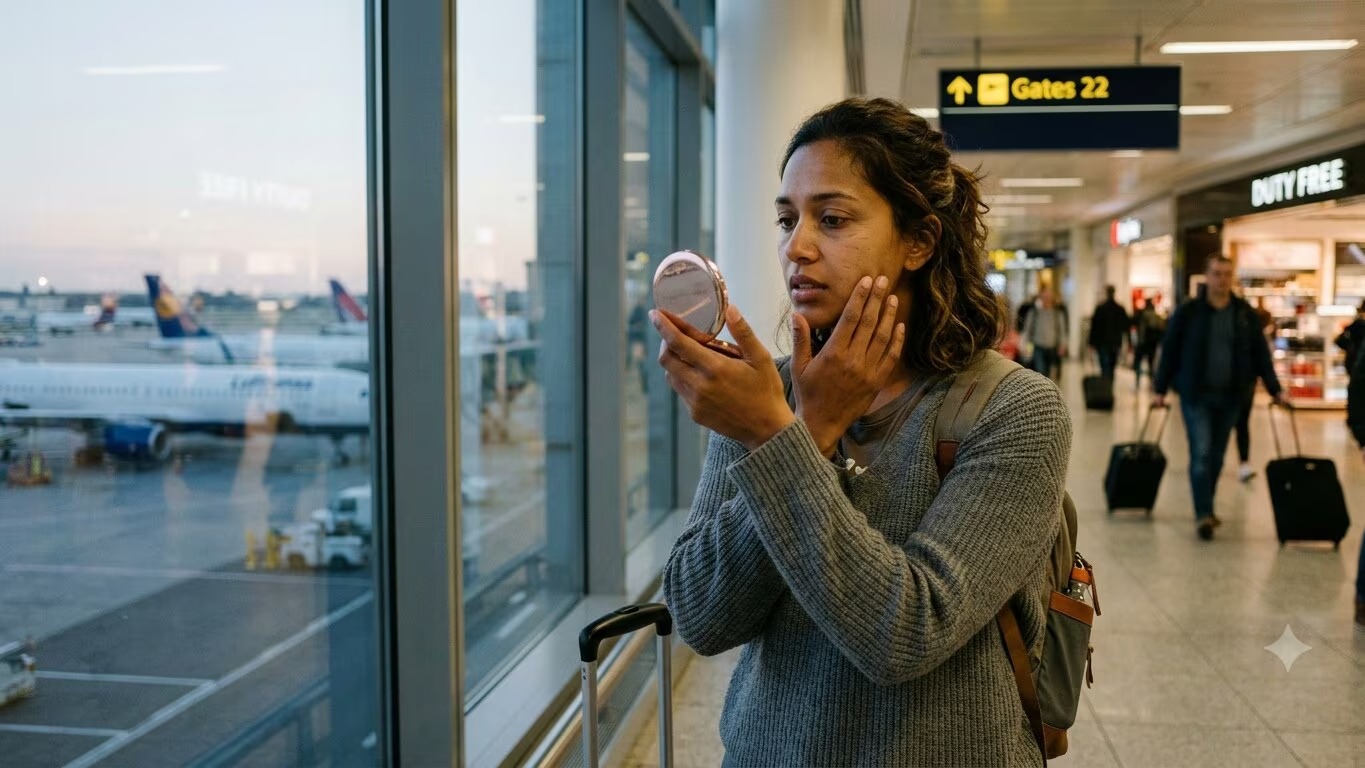
The viral "airport skin" trend has prompted dermatologists to warn against multi-step in-flight beauty routines. Dry cabin air below 20% humidity causes rapid skin dehydration. Experts state that applying too many products can trap bacteria and compromise the skin barrier, recommending simple hydration and UV protection instead.
LONDON — The rise of the viral "airport skin" phenomenon has sparked widespread debate among clinical dermatologists and beauty professionals regarding how air travel environments affect human skin. What originally began as simple passenger hacks to counter dehydration from pressurized cabins has transformed into an over-complicated social media trend. Millions of travelers are now performing exhaustive, multi-step skincare routines directly at their seats or inside airport terminals.
Medical experts are speaking out as these multi-product travel regimens gain traction on platforms like TikTok and Instagram. They warn that complex routines featuring harsh active ingredients can severely disrupt the skin barrier, exacerbating the very issues travelers are trying to fix.
What Is 'Airport Skin' and Why Does It Occur?
The term "airport skin" refers to a acute physiological response triggered by prolonged exposure to the unique environmental conditions of airport terminals and commercial aircraft cabins.
According to Dr. Rupika Singh, a leading dermatologist and founder of Akiya Aesthetics, the primary catalyst behind this condition is the severely low humidity levels maintained within airplane cabins. While comfortable indoor humidity generally ranges between 30% and 50%, aircraft cabins frequently drop below 20%, creating an environment drier than many desert regions.
This extreme lack of environmental moisture rapidly accelerates trans-epidermal water loss (TEWL). When this happens, water is aggressively drawn out of the skin's top layers, leaving the complexion looking fatigued, tight, dull, and deflated.
The Hidden Risks of In-Flight Skincare Trends
To combat these harsh conditions, beauty influencers have popularized high-intensity, multi-step routines. These routines often involve applying multiple toner pads, hydrating sheet masks, serums, and heavy occlusive moisturizers mid-flight. However, dermatologists caution that performing these extensive regimens inside an aircraft can backfire.
"While maintaining skin hydration during long-haul flights is highly recommended, complex routines featuring too many products are completely unnecessary and can even be damaging," notes Dr. Rachel Nazarian, a New York-based dermatologist.
Dr. Nazarian explains that airplane cabins are hotbeds for circulating particulate matter and germs. Constantly touching the face to apply multiple layers of product significantly increases the risk of transferring bacteria to the skin, which can clog pores and lead to severe breakouts.
Furthermore, clinical experts strongly advise against using aggressive active ingredients—such as alpha-hydroxy acids (AHAs), beta-hydroxy acids (BHAs), or retinols—right before or during a flight. Because the skin barrier is already under stress from the low humidity, these potent exfoliants are highly likely to trigger inflammation, redness, and hyper-reactivity.
Official Sources Section
The clinical recommendations, biological assessments, and skincare safety guidelines outlined in this report are based on official dermatological evaluations from Akiya Aesthetics, peer-reviewed insights documented by The American Academy of Dermatology, and independent laboratory research on skin barrier function published via the National Center for Biotechnology Information.
Expert Recommendations
Dermatologists state that the most effective way to prevent "airport skin" is to focus entirely on simplicity, barrier repair, and sun protection.
Why It Matters
For everyday consumers and frequent flyers, shifting away from over-complicated, multi-step routines saves money and protects skin health during travel.
For the global beauty and skincare industries, this shift represents a major change in consumer demand. Brands are increasingly focusing on hand-luggage-friendly, multi-tasking products specifically designed to protect the skin barrier during travel.
Key Facts at a Glance
The Cause: Airplane cabin humidity drops below 20%, accelerating trans-epidermal water loss and leaving skin looking flat and dehydrated.
The Trend: Social media has driven a surge in multi-step in-flight routines, which can trap bacteria and irritate the skin.
The Danger: Using chemical exfoliants (like AHAs or BHAs) while flying can severely compromise an already stressed skin barrier.
The Solution: Dermatologists recommend a simple, hands-free routine focused on hydration, ceramides, and mandatory UV protection.
Frequently Asked Questions (FAQ)
Why does my skin always break out immediately after a long flight?
Post-flight breakouts are usually caused by a combination of skin barrier dehydration and increased oil production. When dry cabin air strips away moisture, the skin often overcompensates by producing excess sebum. This excess oil, mixed with recycled cabin impurities and bacteria from touching your face, can quickly clog pores.
Should I wear sunscreen if I am sitting in an airplane window seat?
Yes, broad-spectrum sunscreen is absolutely essential during daytime flights. Airplane windows effectively block UVB rays, but they do not stop UVA rays. At high altitudes, these aging and damaging rays are significantly more intense, making proper UV protection crucial.
Are sheet masks safe to use while flying?
Simple, fragrance-free hydrating sheet masks can be beneficial on long-haul flights. However, avoid any masks that contain active exfoliants, retinols, or strong vitamin C, as these are highly likely to irritate your skin in a low-humidity environment.
Source: Clinical data and statements provided by Akiya Aesthetics, regulatory skincare updates via The American Academy of Dermatology, and public safety guidelines from the National Center for Biotechnology Information.