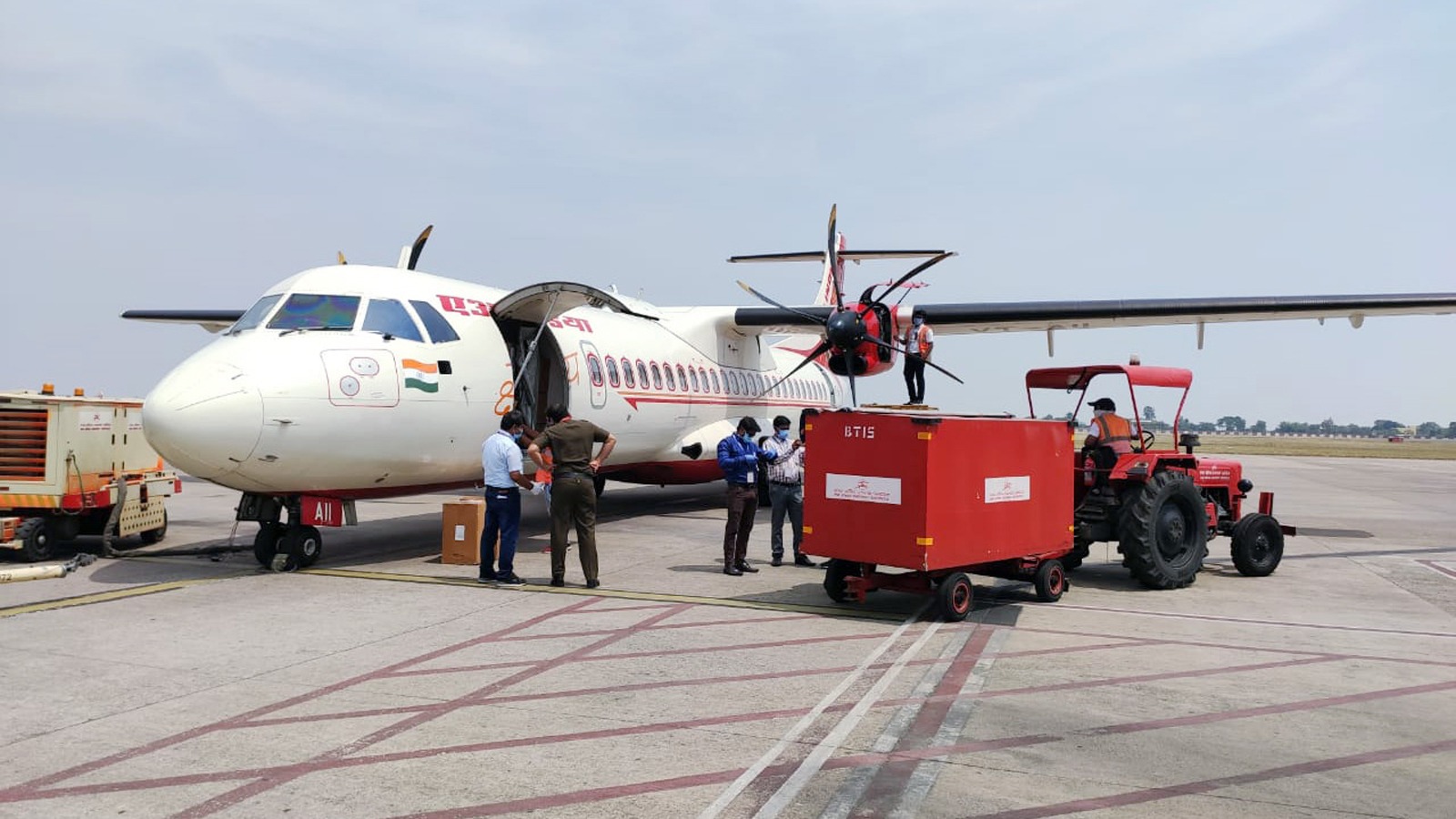
Air India has successfully operationalized India's expanded air cargo transshipment framework at Delhi's IGI Airport. Supported by revised BCAS security rules that remove repeat screening, the initiative connects major domestic hubs to international gateways, slashing transit times to 20 hours and boosting cargo capacity by 80 percent.
Air India has successfully operationalised India's scaled-up air cargo transshipment framework at Delhi's Indira Gandhi International Airport, drastically cutting transit times.
Expanding Air Cargo Efficiency and Hub Operations
NEW DELHI — Air India has successfully operationalised the scaled-up phase of India’s pioneering transshipment cargo framework at the Transshipment Excellence Centre (TEC) of Delhi International Airport Limited (DIAL) at Terminal 2. Union Civil Aviation Minister K. Rammohan Naidu formally flagged off the expanded network, which seamlessly connects four major domestic origin stations—Bengaluru, Ahmedabad, Mumbai, and Hyderabad—with key international destinations including London and Copenhagen.
The operational milestone builds upon a successful 90-day proof-of-concept (PoC) pilot program launched on June 20, 2026, which was operated end-to-end by Air India across the Chennai-Delhi-Frankfurt sector. According to official announcements from the Ministry of Civil Aviation, the initial trial phase successfully handled approximately 280 metric tonnes of cargo while boosting aircraft capacity utilization on participating routes from 75 percent to nearly 100 percent.
Regulatory Streamlining and Security Reforms
At the heart of the new framework is a major overhaul of cargo security protocols administered by the Bureau of Civil Aviation Security (BCAS). By eliminating redundant X-ray re-screening at transit airports for cargo already securely screened at its point of origin, the regulatory reform addresses a primary operational bottleneck.
Official data released by the civil aviation ministry indicates that these streamlined procedures have slashed average end-to-end transit and dwell times from 50 to 60 hours down to just 17 to 20 hours. Government officials noted that the expanded network is projected to raise Air India's monthly cargo carriage on covered routes from 1,763 metric tonnes to 3,183 metric tonnes—representing an immediate capacity increase of roughly 80 percent.
Impact on Exporters, Businesses, and the Economy
For Indian agricultural producers, perishable goods exporters, and manufacturing enterprises, faster transit turnaround times unlock immense economic value. Perishable commodities—such as regional fruits and time-sensitive cargo—can now reach overseas markets without experiencing debilitating delays or spoilage risks.
Industry analysts emphasize that reducing dwell times and cargo terminal congestion directly lowers operational overheads. This efficiency supports the central government's long-term economic vision to triple India's total annual air cargo volume from 3.5 million metric tonnes to 10 million metric tonnes by 2030, positioning the country as a primary global transshipment hub between eastern and western markets.
Quote Section
"According to official statements from the Ministry of Civil Aviation, the operationalisation of the scaled-up transshipment framework by Air India has successfully reduced cargo transit times from 60 hours to 20 hours while boosting monthly freight carriage by nearly 80 percent."
Why It Matters
Operationalising this advanced transshipment framework eliminates costly administrative bottlenecks and significantly accelerates freight movement across domestic and international corridors. For businesses and agricultural exporters, it ensures faster global market access, reduced logistics overheads, and enhanced supply chain reliability.
Key Facts at a Glance
Lead Airline Partner: Air India
Primary Hub: Transshipment Excellence Centre (TEC), Terminal 2, IGI Airport, New Delhi
Network Expansion: Connects Bengaluru, Ahmedabad, Mumbai, and Hyderabad to London and Copenhagen
Efficiency Gains: Transit times reduced from 50–60 hours down to 17–20 hours
FAQ Section
1. What is the main objective of India's new air cargo transshipment framework?
The framework aims to eliminate redundant cargo re-screening at transit hubs, drastically reduce transit times, lower logistics costs, and position India as a global transshipment center.
2. Which airline operated the initial proof-of-concept for this project?
Air India operated the initial proof-of-concept program end-to-end on the Chennai-Delhi-Frankfurt route starting June 20, 2026.
3. How much have transit times improved under the new system?
Average end-to-end transit times have dropped from a range of 50 to 60 hours down to approximately 17 to 20 hours.
4. Where can stakeholders view official updates regarding air cargo regulations?
Official circulars and notifications are available through the portals of the Ministry of Civil Aviation and the Bureau of Civil Aviation Security (BCAS).
Source: Ministry of Civil Aviation Press Releases, Delhi International Airport Limited, Bureau of Civil Aviation Security