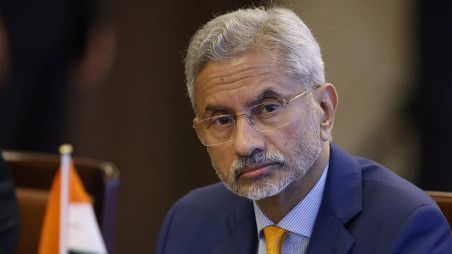
External Affairs Minister S. Jaishankar has assured Bihar leadership that the state's drinking and industrial water needs will be prioritized during upcoming renewals of the India-Bangladesh Ganga Water Treaty. With the 30-year Farakka pact expiring in December 2026, New Delhi is evaluating comprehensive stakeholder consultations.
Backed by official ministerial correspondence, New Delhi confirms that regional water security and state allocations will guide upcoming transboundary pact negotiations.
Addressing critical regional resource demands ahead of a major diplomatic expiration, Union External Affairs Minister S. Jaishankar has officially assured Bihar leadership that the state’s long-term water interests will be fully factored into any renewal of the Ganga Water Treaty. In a formal letter addressed to Janata Dal (United) national working president and Rajya Sabha MP Sanjay Kumar Jha on August 28, 2026, Jaishankar responded to ongoing parliamentary interventions regarding the 30-year bilateral water-sharing agreement between India and Bangladesh, which is scheduled to lapse on December 12, 2026.
The assurance marks a pivotal development for state stakeholders who have long contended that the original 1996 Farakka Barrage framework failed to adequately protect Bihar's lean-season water availability and industrial expansion goals.
Evaluating Inter-Ministerial Consultations, Stakeholder Engagement, and Treaty Background
Analyzing the administrative framework surrounding the upcoming treaty renewal reveals extensive multi-agency reviews aimed at balancing national foreign policy with sub-national resource requirements. According to official government disclosures and parliamentary records, key operational details include:
Formal Inter-Ministerial Reviews: Comprehensive evaluations have been conducted under the leadership of the Ministry of Jal Shakti, bringing together federal departments and regional representatives to study the pact's 30-year implementation history.
Direct State Consultations: Official records cited by the Ministry of External Affairs indicate that authorized representatives of the Bihar government participated in four formal stakeholder consultation rounds held between August 2023 and May 2024.
Historical Treaty Context: Signed on December 12, 1996, the existing transboundary agreement governs dry-season (January to May) water sharing at the Farakka Barrage, a structure situated close to the Bangladesh border that significantly impacts upstream siltation and flow levels in Bihar.
Demographic and Industrial Projections: State leaders have pressed the central government to factor in projected population demands through 2050, alongside essential requirements for rural irrigation, urban drinking water, and emerging industrial corridors.
Why It Matters
The practical implications of the Ganga Water Treaty renewal extend across interstate agricultural stability, drinking water security, and federal-state cooperative federalism in India. For the 13 million residents of Bihar, securing a predictable, scientifically managed share of lean-season river water is vital for mitigating upstream silt accumulation, preventing severe agricultural droughts, and sustaining municipal water grids. For national policymakers, balancing friendly bilateral ties with Dhaka while protecting domestic economic interests remains a delicate test of modern foreign diplomacy.
Key Facts at a Glance
Treaty Expiration: The 30-year India-Bangladesh Farakka water-sharing pact expires on December 12, 2026.
Key Stakeholder Assurance: EAM S. Jaishankar formally assured JD(U) leadership that Bihar's water needs will guide renewal decisions.
Consultation History: Representatives of the Bihar government engaged in four formal inter-ministerial meetings between 2023 and 2024.
Core State Demands: Protection of lean-season drinking water, irrigation access, and industrial supply allocations.
FAQ Section
When does the current India-Bangladesh Ganga Water Sharing Treaty expire?
The 30-year bilateral treaty, signed on December 12, 1996, is officially scheduled to expire on December 12, 2026.
What specific assurance did External Affairs Minister S. Jaishankar provide to Bihar?
Jaishankar assured state leaders that New Delhi fully understands Bihar's water security concerns and will factor them into any final decisions regarding the treaty's renewal.
Why has the state of Bihar raised objections to the treaty in its current form?
State representatives argue that the existing framework has exacerbated upstream silt accumulation and restricted essential water availability during the dry lean season for agriculture and drinking needs.
Where can official updates regarding India's international water treaties be accessed?
Official policy briefings, treaty documents, and ministerial statements are published regularly by the Ministry of External Affairs (MEA) and the Ministry of Jal Shakti.
Source: Ministry of External Affairs (MEA), The Economic Times, The Indian Express, Ministry of Jal Shakti