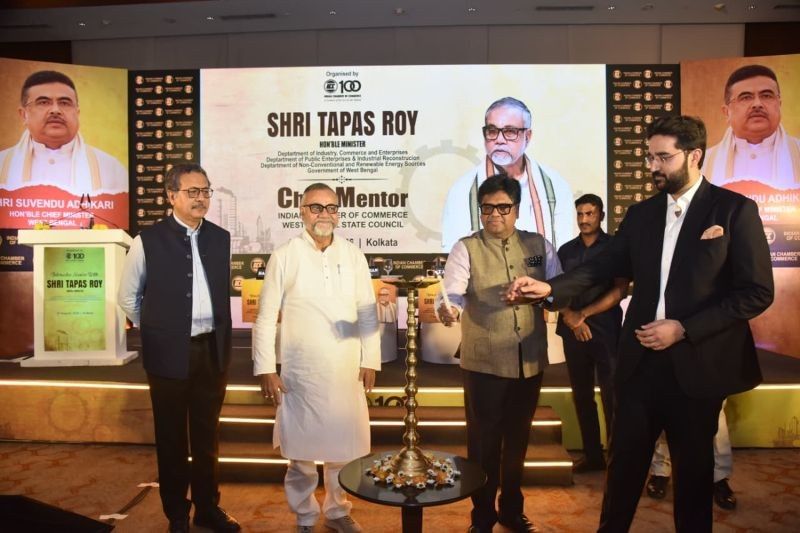
West Bengal is pursuing a comprehensive industrial revival driven by a stronger industry-government partnership. State Commerce and Industries Minister Tapas Roy announced that upcoming policy frameworks will link incentives directly to employment creation. Authorities are actively consulting business stakeholders to foster transparency, improve ease of doing business, and attract private investment.
Seeking to transform its manufacturing landscape, the West Bengal government announces stakeholder consultations and employment-linked incentives to rebuild investor confidence.
Stepping up efforts to accelerate regional economic growth and attract private sector capital, the West Bengal government has initiated a concerted drive toward an industrial revival anchored in close public-private cooperation. Speaking at an interactive business session in Kolkata on Saturday, August 8, 2026, State Commerce and Industries Minister Tapas Roy emphasized that the administration is actively seeking robust industry-government partnerships to streamline policy formulation. The strategic push comes as the state prepares to roll out a comprehensive new industrial policy designed to enhance ease of doing business and expand manufacturing footprints across districts.
Stakeholder Consultations and Policy Frameworks
To ensure that upcoming administrative guidelines reflect ground-level commercial realities, the state commerce department has scheduled formal consultations with industry leaders and trade associations. Minister Roy confirmed that a primary stakeholder meeting is slated for August 11, 2026, at Nabanna Sabhaghar in Kolkata, prior to presenting the policy framework to the state cabinet.
Key structural shifts and administrative priorities outlined by state officials include:
Employment-Linked Incentives: The state’s revised incentive scheme will pivot from capital-heavy investment metrics toward job creation, ensuring that corporate beneficiaries are rewarded based on local workforce expansion.
Targeted Infrastructure Rollouts: Groundwork has commenced on major manufacturing and expansion projects, including upcoming industrial developments by regional steel and hosiery enterprises.
Single-Window Streamlining: Enhanced GIS-enabled land banks and transparent digital clearances are being integrated to cut bureaucratic delays for incoming investors.
Impact on Citizens, Businesses, and Regional Investors
The strategic emphasis on collaborative industrialization carries significant practical implications for local enterprises, job seekers, and prospective investors. By directly engaging chambers of commerce and business leaders before finalizing statutory frameworks, the administration aims to foster a predictable and stable regulatory environment. For local citizens, the shift toward employment-linked incentives promises tangible career opportunities across manufacturing, logistics, and technical services, revitalizing the state’s socio-economic landscape.
Why It Matters
Building a collaborative relationship between government bodies and private enterprises is essential for establishing long-term economic stability. Aligning industrial incentives with actual employment generation ensures that state policies deliver sustainable growth and meaningful career opportunities for local workforces.
Key Facts at a Glance
Core Objective: Driving industrial revival through strengthened industry-government partnerships.
Key State Official: Tapas Roy, Minister for Commerce, Industries and Enterprises.
Policy Innovation: Industrial incentives linked directly to local employment generation rather than gross capital investment.
Upcoming Milestone: Stakeholder consultation meeting scheduled for August 11, 2026, at Nabanna Sabhaghar.
FAQ Section
Why is the West Bengal government revising its industrial policy?
The state is revamping its framework to improve ease of doing business, restore investor confidence, and foster transparent public-private cooperation.
How will the new industrial incentive scheme function?
Under the proposed guidelines, corporate incentives will be directly linked to employment generation, rewarding businesses based on the number of local jobs they create.
How can industry stakeholders contribute to the new policy?
Business leaders and enterprise representatives can participate in scheduled government consultations, such as the stakeholder meeting organized at Nabanna Sabhaghar.
Where can enterprises track official updates regarding West Bengal industrial initiatives?
Verified policy drafts, notifications, and meeting notices are accessible directly through the Official West Bengal Commerce and Industries Department Portal.
Source: Government of West Bengal, West Bengal Industrial Development Corporation (WBIDC), Press Information Bureau (PIB), Indian Chamber of Commerce (ICC)