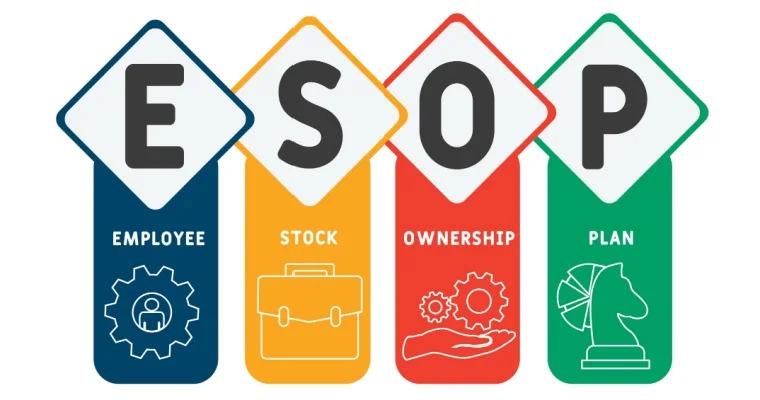
Trading salary for Esops requires checking four core benchmarks: valuation realism, liquidity horizons, vesting cliff terms, and post-termination exercise windows. As companies shift toward equity compensation, employees must evaluate these structural rules to verify whether future stock options justify reducing their guaranteed cash salary.
MUMBAI, India — June 3, 2026 — As corporate compensation structures undergo rapid transformation across major financial sectors, professional professionals are increasingly asked to evaluate a critical choice: trading salary for Esops (Employee Stock Ownership Plans). This shift, expanding across early-stage technology startups and established mid-tier enterprises alike, has brought analytical evaluation frameworks to the forefront of human resources and financial planning. Industry analysts indicate that making the correct mathematical choice requires assessing specific structural variables before reducing liquid compensation in exchange for future equity grants.
Evaluating the Valuation Realism and Liquidity Timelines
The fundamental baseline for trading salary for Esops relies on analyzing the issuing firm's current and future valuation structure. Financial data published by the Securities and Exchange Board of India (SEBI) underscores that paper valuations in private markets do not automatically translate into liquid financial assets.
The first evaluation parameter is the Valuation Realism Test. Employees must verify whether the company's internal share price is tied to recent, arms-length institutional funding rounds or if it relies on optimistic internal projections. In late-stage or public enterprises, share valuations remain transparent due to daily public market mechanics. However, in private markets, trading salary for Esops requires checking the preferred-to-common share valuation gap, which can dilute employee returns during eventual exit events.
The second parameter is the Liquidity Horizon Test. Equity compensation lacks immediate value without a clear, regulatory-compliant exit mechanism. Corporate filings show that the average time for an Indian enterprise to reach an Initial Public Offering (IPO) or a structured secondary buyout spans seven to ten years. Prospective partners must calculate whether their personal cash flow requirements can withstand prolonged lock-in periods where stock options cannot be sold or converted into cash.
Analyzing Vesting Schedules and Post-Separation Mechanics
Beyond external market variables, internal corporate governance governs the true fiscal yield of an equity compensation package. Professionals must look past the headline rupee value of their initial grant to review the exact legal framework in the corporate bylaws.
The third parameter is the Vesting Cliff and Schedule Test. Standard institutional frameworks typically require a four-year vesting window coupled with a one-year cliff. A one-year cliff means that an employee who exits the firm prior to completing 12 full months of employment forfeits 100% of their equity grant. Financial planning guidelines from the Institute of Chartered Accountants of India (ICAI) demonstrate that trading salary for Esops under shorter career horizons significantly degrades total compensation, because individuals often depart before their equity shares vest.
The fourth parameter is the Exercise Window and Post-Termination Test. Historically, many firms enforced a strict 30-to-90-day window for employees to buy their vested options after resigning. If the employee lacked the capital to purchase the shares and settle the corresponding tax liabilities upon exit, the options reverted to the company pool. While current trends show a move toward extended exercise windows of five to ten years, employees must verify these specific clauses in their official grant letters before reducing their base pay.
Official Sources Section
The financial parameters, regulatory compliance frameworks, and equity evaluation metrics referenced in this analysis are based on regulatory documentation from the Securities and Exchange Board of India (SEBI), corporate governance frameworks published by the Ministry of Corporate Affairs, and standard accounting principles issued by the Institute of Chartered Accountants of India (ICAI).
Quote Section
"Trading salary for Esops is fundamentally a decision to act as an un-diversified angel investor in your own company," stated senior compensation analysts. "According to officials, employees routinely overvalue equity packages because they calculate potential gains using best-case exit scenarios. A disciplined financial assessment requires discounting the equity value by at least 50% to account for liquidity risk, lack of diversification, and potential dilution over subsequent funding rounds."
Why It Matters
The shift toward heavier equity components directly alters the household balance sheets of white-collar professionals. Trading fixed salary for variable stock choices can impact an individual's immediate borrowing capacity, given that commercial banking institutions do not factor unvested, private equity options into mortgage and personal loan eligibility equations. Conversely, when implemented under transparent corporate governance with realistic paths to market liquidity, well-structured plans offer employees a path to meaningful capital appreciation that standard salaries rarely replicate.
Key Facts at a Glance
Market Liquidity: Private enterprise equity typically requires a seven-to-ten-year lifecycle before realizing public market liquidity.
Vesting Structure: Standard corporate frameworks impose a mandatory 12-month cliff before any equity allocation vests.
Borrowing Impact: Major banking groups exclude unvested private options when calculating retail loan and mortgage eligibility limits.
Taxation Timeline: Equity gains incur taxable events both at the time of exercise and during final share liquidation.
Frequently Asked Questions
What happens to my options if I leave the company before one year?
Under a standard corporate framework with a one-year cliff, leaving the enterprise before 12 months means you forfeit all options.
How do tax authorities calculate tax on employee stock options?
Taxation occurs in two distinct stages: first as a prerequisite tax on the fair market value when the options are exercised, and later as capital gains tax when the shares are sold.
Can I use unvested stock options as collateral for bank loans?
No, Indian banking regulations require liquid or tangible security; unvested private options cannot be used as loan collateral.
What is the difference between an option and a share?
An option grants you the legal right to purchase a share at a predetermined exercise price in the future, whereas a share represents immediate equity ownership.
Source: Securities and Exchange Board of India (SEBI), Institute of Chartered Accountants of India (ICAI), Ministry of Corporate Affairs Governance Directives.