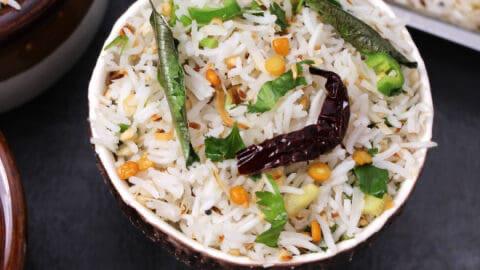
Thengai Sadam, also known as Coconut Rice, is a cherished staple dish from South India celebrated for its delightful simplicity, rich aroma, and versatile appeal. This humble rice recipe, made with freshly grated coconut and tempered spices, offers a comforting yet flavorful experience suitable f...
Thengai Sadam, also known as Coconut Rice, is a cherished staple dish from South India celebrated for its delightful simplicity, rich aroma, and versatile appeal. This humble rice recipe, made with freshly grated coconut and tempered spices, offers a comforting yet flavorful experience suitable for breakfast, lunch, or dinner. Beyond its taste, Thengai Sadam reflects the cultural essence of coastal India where coconut is a culinary cornerstone.
Key Highlights of Thengai Sadam
A vibrant dish that combines cooked rice with freshly grated coconut and a tempering of mustard seeds, urad dal, chana dal, dry red chilies, curry leaves, and nuts like cashews.
Typically prepared with coconut oil or ghee enhancing its signature aroma and taste.
Nutritionally balanced, offering carbohydrates, healthy fats, fiber, and antioxidant-rich spices.
Can be enjoyed alone or paired with spicy South Indian sides like sambar, rasam, or dry vegetable curries.
Quick to prepare, especially when using leftover rice, making it ideal for everyday meals or festive occasions.
Ingredients and Their Importance
The dish requires cooked rice (preferably cooled basmati or everyday variety), freshly grated coconut which brings a sweet nuttiness, and a traditional tempering of Indian spices. Mustard seeds add sharpness; urad dal and chana dal lend crunch and depth; curry leaves provide a fresh herbaceous note; dry red chilies give a gentle heat; and roasted cashews elevate the texture with rich crispness. Coconut oil or ghee used in tempering accentuates the tropical flavor that defines Thengai Sadam.
Step-by-Step Preparation
Start by cooking and cooling rice to avoid clumping.
Heat coconut oil or ghee in a pan; add mustard seeds and wait till they crackle.
Introduce urad dal, chana dal, and sauté until golden brown, then add dry red chilies and curry leaves.
Add cashews and roast lightly.
Toss in the freshly grated coconut, stirring gently on low flame to preserve the coconut’s natural color and aroma.
Season with salt, mix well.
Add the cooked rice, fold carefully to coat each grain with the coconut mixture without breaking the rice.
Garnish with fresh coriander if preferred and serve hot.
Cultural Significance and Eating Occasions
Thengai Sadam is much more than a side dish. It features prominently in South Indian festivals, family gatherings, and temple offerings, symbolizing purity, prosperity, and community. It often appears in lunch boxes or as a quick meal due to its satisfying flavors and ease of preparation. During auspicious occasions like Navaratri or Ganesh Chaturthi, it is customarily served without onion and garlic, preserving its sanctity. Its adaptability allows it to be paired with various dishes, from tangy chutneys to rich gravies.
Health Benefits and Nutritional Value
The recipe boasts wholesome nutrition; coconut provides medium-chain fatty acids beneficial for energy and metabolism. Spices used possess digestive and anti-inflammatory properties. The dish is naturally vegan and gluten-free, making it a safe, healthy choice for many dietary preferences.
Tips for Perfect Thengai Sadam
Use fresh coconut if possible, or high-quality frozen grated coconut.
Avoid over-roasting coconut to maintain its delicate aroma.
Coconut oil enhances traditional flavor but ghee adds richness if preferred.
Be gentle while mixing to keep rice fluffy.
Customize with green chilies for heat or roasted peanuts for crunch.
Serve freshly made or enjoy leftovers warm with minimal reheating.
Serving Suggestions
Paired with sambar, it forms a wholesome, balanced meal.
Accompanied by vegetable kurma or a tangy tomato chutney, it transforms into a festive plate.
Enjoy with plain yogurt or raita to balance spices and add cooling freshness.
In Conclusion
Thengai Sadam exemplifies the beauty of South Indian cuisine — simple ingredients, vibrant flavors, and cultural warmth. Its all-day versatility from breakfast to dinner, ease of making, and delicious taste make it a beloved dish in every household. Relishing this fragrant coconut rice one can savor a piece of South Indian heritage, a dish that unites families and celebrations alike.
Sources: Yummy Tummy Aarthi, Cookilicious, My Cooking Journey, Sharmis Passions