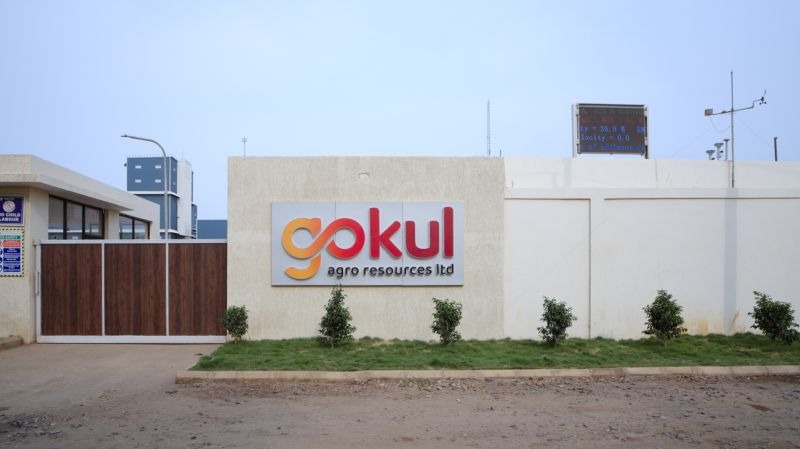
Customs authorities are investigating Gokul Agro Resources for allegedly claiming ₹529.9 million in unlawful export incentives, including RoDTEP scrips and duty drawbacks. The probe, which centers on compliance discrepancies in export documentation, could result in significant financial penalties and heightened regulatory scrutiny for the firm's future trade operations.
AHMEDABAD – Indian customs authorities have launched an investigation into Gokul Agro Resources, alleging that the company unlawfully claimed duty drawbacks and Remission of Duties and Taxes on Exported Products (RoDTEP) scrips totaling ₹529.9 million. The allegations center on discrepancies discovered during a recent audit of the firm's export incentives, a critical component of the government's trade facilitation framework.
The probe, which surfaced in regulatory disclosures on June 12, 2026, concerns financial claims associated with specific export consignments. According to official findings, the company is suspected of having utilized export incentives for transactions that may not have met the strict compliance criteria mandated by the Central Board of Indirect Taxes and Customs (CBIC).
Allegations of Unlawful Incentive Claims
The customs department has scrutinized the documentation provided by Gokul Agro Resources, focusing on the legitimacy of claims filed under the RoDTEP scheme. This program is designed to refund embedded central, state, and local duties and taxes that are otherwise not rebated under other mechanisms.
Official reports suggest that the total amount in question—₹529.9 million—was allegedly claimed over a series of exports where the company’s eligibility for these specific fiscal benefits is now under dispute. As a publicly listed company, Gokul Agro Resources is mandated to disclose such regulatory challenges to its shareholders, and the firm confirmed receipt of the notice from the Customs Department regarding the recovery of these benefits.
Regulatory and Market Implications
The development has drawn attention to the heightened scrutiny being applied to export-linked incentive schemes. The Indian government has recently intensified its compliance monitoring of RoDTEP and duty drawback filings to ensure that funds are directed solely toward qualifying exporters.
For the edible oil and agricultural commodities sector, in which Gokul Agro Resources operates, these allegations highlight the complex regulatory environment. Exporters are often required to maintain meticulous records to prove that their goods comply with both domestic manufacturing standards and international trade benchmarks. Any finding of "unlawful" claiming can lead to significant penalties, including the recovery of the incentive funds with interest and potential administrative sanctions.
Quote Section
"According to officials familiar with the investigation, the customs department is currently reviewing the company’s export documentation to determine whether the incentives were claimed in violation of the existing fiscal policy framework and whether formal recovery proceedings will be finalized in the coming quarter."
Why It Matters
This investigation serves as a stark reminder of the regulatory risks associated with government export incentive schemes. For investors, the potential clawback of nearly ₹530 million represents a material financial risk, as companies rely on these credits to maintain competitive pricing in global commodity markets. Furthermore, the outcome of this case could set a precedent for how customs authorities handle similar incentive-linked discrepancies across the export industry.
Key Facts at a Glance
Total Amount in Dispute: ₹529.9 million.
Schemes Involved: Duty Drawback and RoDTEP (Remission of Duties and Taxes on Exported Products).
Regulatory Body: Central Board of Indirect Taxes and Customs (CBIC).
Nature of Allegation: Claims of unlawful incentive utilization on specific export consignments.
FAQ
1. What is the RoDTEP scheme?
RoDTEP is an export incentive scheme that refunds duties and taxes incurred on exported goods, which are not reimbursed by other existing schemes.
2. What is the potential impact on Gokul Agro Resources?
Beyond the financial recovery of ₹529.9 million, the company may face interest, penalties, and increased regulatory scrutiny of its future export filings.
3. Has Gokul Agro Resources commented on the allegations?
The company has formally disclosed the receipt of the notice to stock exchanges and is reportedly coordinating with legal and tax advisors to respond to the Customs Department’s findings.
Source: CBIC, BSE India, DGFT