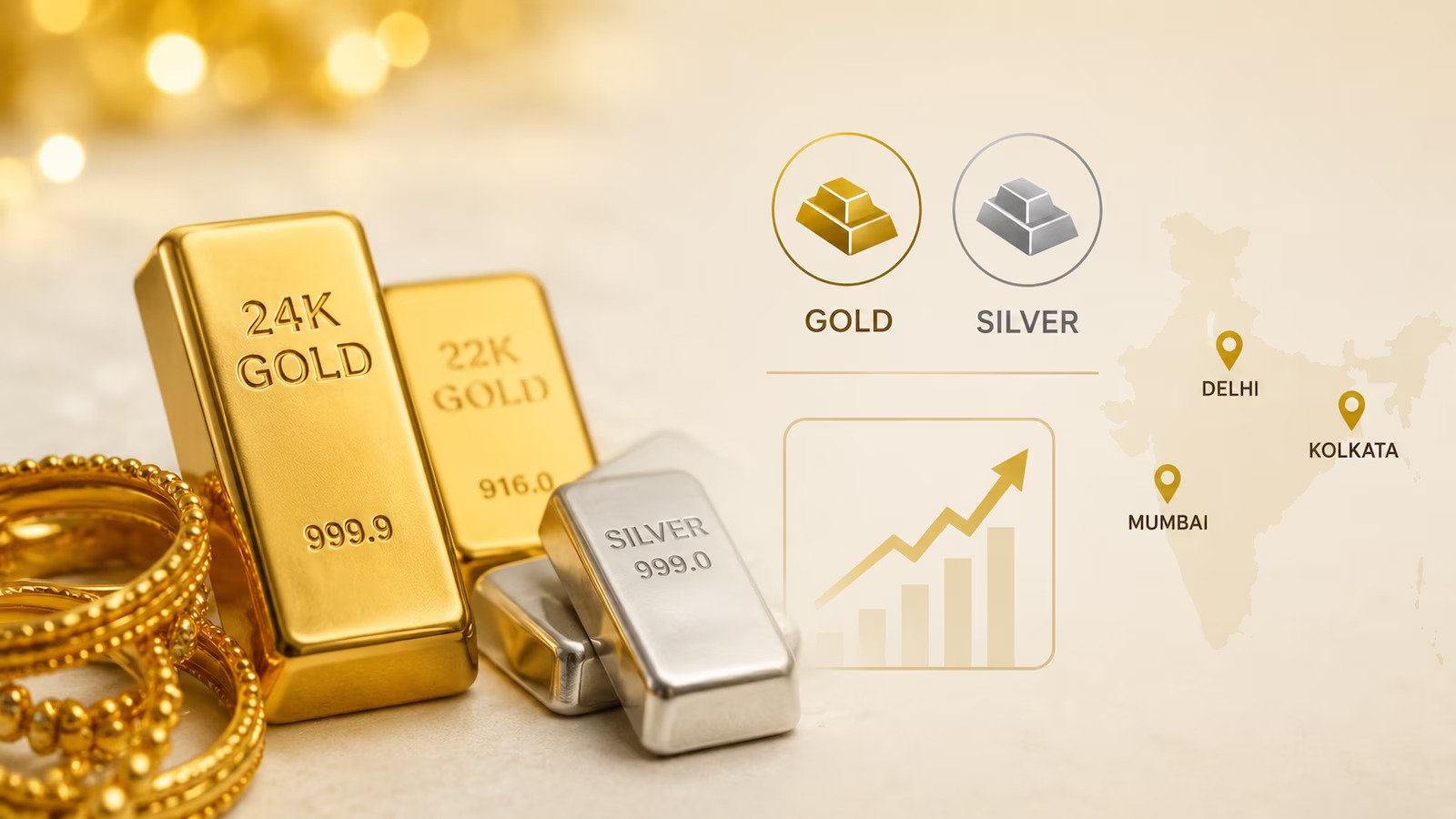
Gold and silver prices have reached record highs in Mumbai, with 24K gold exceeding ₹84,100 per 10 grams and silver trading above ₹1,05,000 per kg. Driven by geopolitical tensions and robust central bank buying, the rally reflects a continued global flight to safety, influencing both retail consumer patterns and domestic investment strategies.
Surging geopolitical tensions and central bank buying have propelled precious metals to new peaks as domestic market rates set fresh records today.
MUMBAI – Domestic gold and silver prices soared to unprecedented levels on Friday, July 17, 2026, as uncertainty regarding global monetary policy and regional instability drove investors toward safe-haven assets. In the Mumbai bullion market, the price of 24-karat gold crossed the ₹84,100 per 10 grams threshold, while silver prices maintained a strong position, trading consistently above ₹1,05,000 per kilogram.
The sharp uptick in precious metal valuations comes as domestic demand remains resilient despite the higher price environment. Financial analysts attribute the momentum to a combination of persistent inflationary pressures and a flight to safety among retail and institutional investors.
Factors Driving the Precious Metals Rally
Market experts suggest that the current rally is primarily fueled by a weakening outlook for traditional equities and ongoing geopolitical risks. Gold, traditionally viewed as a hedge against volatility, has seen sustained interest from both the Reserve Bank of India (RBI) and global central banks, which have increased their physical holdings throughout 2026.
"The rise in domestic prices is mirroring global trends where safe-haven buying has intensified," stated a senior commodities analyst. "With the ongoing tensions in West Asia and uncertainty surrounding global interest rate cuts, gold and silver continue to function as the preferred defensive positions for portfolios."
Silver’s performance is further buoyed by a mix of investment demand and industrial requirements. As a key component in renewable energy technologies and electronics, silver’s dual-utility as both a precious metal and an industrial commodity has prevented significant price corrections even as gold reaches record highs.
Market Impact and Consumer Sentiment
For consumers, the rapid appreciation in gold prices has led to a noticeable shift in purchasing patterns. While traditional jewelry demand remains a cornerstone of the Indian market, retailers report that investors are increasingly favoring digital gold, gold ETFs (Exchange Traded Funds), and sovereign gold bonds.
For businesses, the high cost of raw silver and gold has introduced operational challenges, particularly in the manufacturing of high-end electronics and decorative jewelry. Jewelers have expressed concerns that while the value of their inventory has increased, sustained high prices could dampen the volume of retail transactions during the upcoming festive season.
Official Sources and Market Data
According to the India Bullion and Jewellers Association (IBJA), the rates released reflect the closing prices of the previous session, adjusted for daily market volatility. The Ministry of Finance continues to monitor domestic bullion trends as part of its broader assessment of external sector stability and import bill management.
Quote Section
"According to officials," the current price environment is heavily influenced by external factors, including international market dynamics and fluctuations in the USD-INR exchange rate. Organizers stated that while the current surge reflects broad market sentiment, consumers are advised to track daily updates through authorized bullion portals to ensure price transparency.
Why It Matters
The surge in gold and silver prices is a key indicator of the current global economic climate, highlighting a preference for hard assets in the face of macro uncertainty. For the average investor, this trend emphasizes the role of precious metals in portfolio diversification. For policymakers, the rising valuation of imported bullion impacts the nation's current account deficit, necessitating a delicate balance between encouraging gold investment and managing foreign exchange outflows.
Key Facts at a Glance
24K Gold Price: Successfully crossed the ₹84,100 per 10 grams mark in Mumbai.
Silver Valuation: Remains robust, trading above the ₹1,05,000 per kilogram level.
Primary Drivers: Geopolitical tensions, central bank gold accumulation, and persistent inflationary concerns.
Investment Shift: Growing investor preference for gold ETFs and sovereign bonds over physical gold due to convenience and liquidity.
Frequently Asked Questions
Why are gold and silver prices rising simultaneously?
Both metals are currently benefiting from safe-haven demand. Gold is primarily driven by portfolio hedging, while silver benefits from both investment demand and its critical role in industrial manufacturing.
Should I purchase gold at these record-high prices?
Financial experts generally recommend long-term accumulation through SIP-based gold ETFs or sovereign bonds rather than timing the market, given the current price volatility.
How do global events affect local bullion rates?
Domestic rates are derived from international market prices adjusted for local import duties, taxes (GST), and the USD-INR currency exchange rate.
Source: India Bullion and Jewellers Association (IBJA), Ministry of Finance, Reserve Bank of India (RBI)