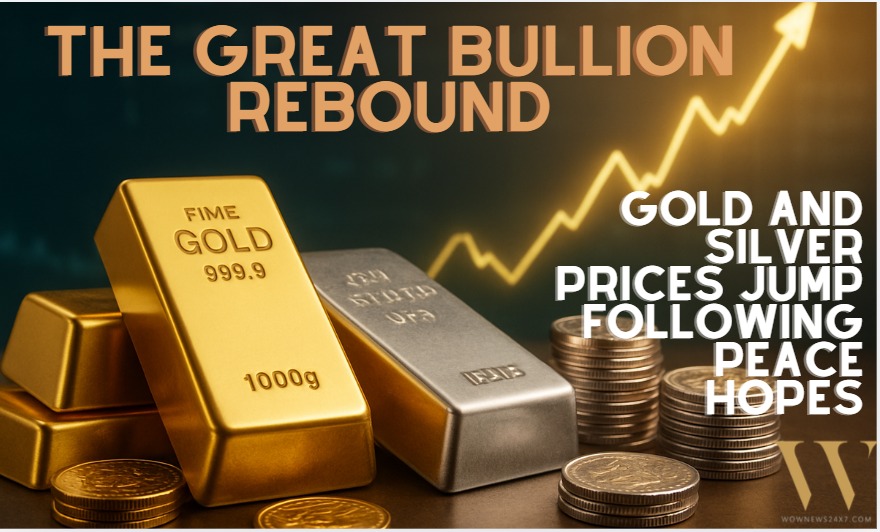
Gold and silver prices in India staged a significant rebound on June 12, 2026, as geopolitical tensions in the Middle East eased. Silver led the rally with a ₹10,000 per kg jump, while 24K gold recovered to ₹14,858 per gram, signaling renewed stability in domestic bullion markets.
Bullion markets across India witnessed a robust rebound on Friday as gold and silver prices surged, reversing the losses recorded earlier in the week. The recovery comes on the heels of statements from U.S. leadership suggesting that peace negotiations between the United States and Iran are nearing a resolution, helping to soothe global geopolitical tensions that had previously rattled commodity markets.
After a period of significant volatility that saw gold prices correct by nearly 20% amid heightening conflict and concerns over persistent U.S. inflation, the precious metal gained substantial ground in early trading. By mid-morning on June 12, 2026, 24-karat gold rose by approximately ₹294 per gram, with 10 grams of pure gold now valued at ₹1,48,580 in major markets.
Silver Leads the Bullion Rally
While gold’s recovery has been steady, silver has emerged as the day's primary performer. In the domestic retail market, silver prices jumped by ₹10,000 per kilogram, bringing the rate to ₹2,60,000 per kg. Analysts suggest that the industrial nature of silver makes it particularly sensitive to sentiment shifts regarding global shipping lanes and manufacturing stability.
The rally reflects a broader sigh of relief across international commodity exchanges. Hopes that the Strait of Hormuz—a vital artery for global energy and trade—will remain open and secure have effectively lowered the "geopolitical risk premium" that had inflated costs for energy and safe-haven assets throughout the week.
Global Cues and Macroeconomic Impact
The price surge is deeply tied to shifting macroeconomic signals. Earlier in the week, bullion prices faced downward pressure following the release of U.S. Consumer Price Index (CPI) data, which showed inflation hitting a three-year high of 4.2%. The high inflation figure had spurred concerns that the Federal Reserve would maintain an aggressive interest rate policy, which typically dampens demand for non-yielding assets like gold and silver.
However, the change in tone regarding the U.S.-Iran conflict has acted as a countervailing force. "According to officials and market analysts tracking the situation, the potential for a ceasefire has effectively calmed market nerves, allowing precious metals to recalibrate based on evolving supply-chain and demand projections," said one commodity expert based in Mumbai.
Impact on Retail and Industrial Demand
For Indian consumers, the rebound offers a complex outlook. With the wedding and festive season approaching in several regions, retail demand remains a stabilizing factor, preventing deeper corrections during market dips. While retail prices remain elevated compared to historical averages, the stability provided by consistent domestic demand is expected to prevent the "extreme" price swings seen in the futures markets.
For industrial sectors, the recent volatility in silver prices serves as a reminder of the metal's dual identity as both a store of value and a critical raw material for solar panels, electronics, and electric vehicle (EV) components. Manufacturers are currently navigating these price fluctuations by optimizing inventory, as silver remains essential to green-energy transition technologies.
Why It Matters
The fluctuations in gold and silver prices directly affect India’s trade deficit and household savings. As the world’s second-largest consumer of gold, India’s domestic bullion market is a barometer for retail economic health. The current stabilization provides businesses and individuals with more clarity for planning large-scale purchases, though global volatility remains a significant factor to monitor.
Key Facts at a Glance
Gold Recovery: 24-karat gold rose by ₹294 per gram on June 12, 2026.
Silver Surge: Silver prices saw a single-day gain of ₹10,000 per kilogram in the retail market.
Primary Driver: Optimism surrounding US-Iran peace negotiations and reduced fears of supply-chain disruptions.
Market Context: Prices had previously corrected by roughly 20% earlier in the week due to U.S. inflation data and geopolitical risks.
FAQ
1. Why did gold and silver prices rise today?
Prices rebounded primarily due to reports of progress in peace negotiations between the U.S. and Iran, which eased fears of a major conflict in the Middle East.
2. Are retail prices different from MCX rates?
Yes, retail prices in Indian cities include local taxes, import duties, and dealer margins, whereas MCX rates reflect exchange-traded futures and update continuously.
3. Is now a good time to buy gold?
Market analysts often suggest that gold is a long-term hedge. While prices have rebounded, investors are generally advised to look for stabilization before making large purchases.
Source: Goodreturns.in, Mint, Business Today