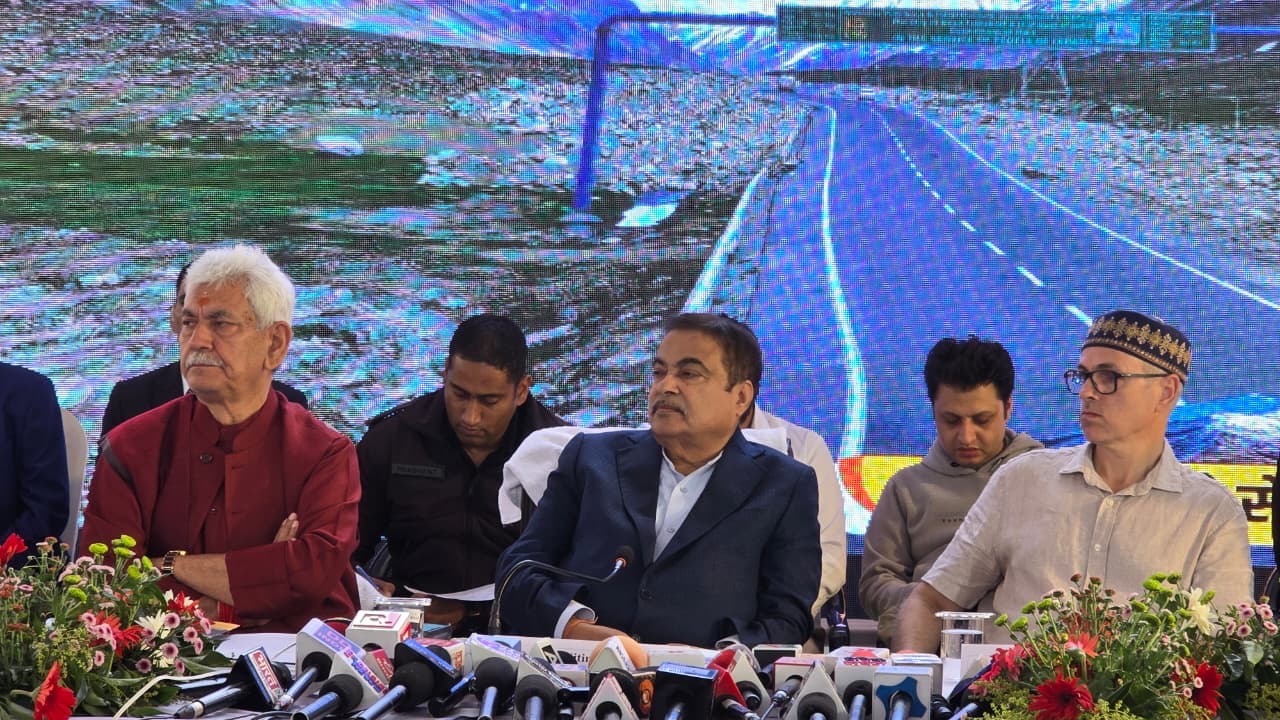
Union Minister Nitin Gadkari has announced a Rs 1,500-crore project to upgrade the 57-kilometer Srinagar-Sonamarg-Gumri road into a four-lane highway. The project will reduce travel times from 2.5 hours to 45 minutes, boosting regional tourism and complementing the strategic connectivity achieved by the Zojila Tunnel breakthrough.
GANDERBAL, Jammu and Kashmir — The Union Government has officially announced a massive infrastructure project worth Rs 1,500 crore to upgrade and widen the strategically vital Srinagar-Sonamarg-Gumri road. The announcement marks a critical step in India’s ongoing multi-billion-dollar push to strengthen connectivity across border territories, directly facilitating faster passenger mobility and year-round military logistics in the northern region.
Union Minister for Road Transport and Highways Nitin Gadkari unveiled the initiative following a historic engineering breakthrough at the adjacent Zojila Tunnel site. The infrastructure expansion involves transforming the existing 57-kilometer stretch into a high-speed four-lane highway with paved shoulders. This development addresses long-standing geoclimatic isolation challenges and promises to dramatically accelerate economic integration between the Kashmir Valley and the Union Territory of Ladakh.
Detailed Project Report Finalization Set to Accelerate Construction
According to official briefings provided by the Ministry of Road Transport and Highways, the administrative mechanisms for the Rs 1,500-crore four-laning project are moving on an accelerated timeline. Technical teams are currently finalizing the Detailed Project Report (DPR), with an official completion deadline set for July.
Once the DPR is cleared by ministry planners, procurement tenders will be issued immediately to initiate earthworks and structural expansion. The highway expansion will be supervised directly by the National Highways and Infrastructure Development Corporation Limited (NHIDCL), working alongside regional engineering consultants to navigate the complex mountainous topography native to the Ganderbal and Sonamarg sectors.
The physical construction framework will prioritize advanced geotechnical engineering. Planners intend to include crash barriers, reinforced retaining walls, and specialized anti-landslide netting to guarantee high safety standards along the landslide-prone corridor.
Slashing Commute Times to Transform Tourism and Local Commerce
The execution of the Srinagar-Sonamarg-Gumri four-laning project will alter the travel dynamics of northern Jammu and Kashmir:
Massive Commute Reductions: The transition from a congested two-lane road to a wide four-lane highway is expected to slash travel times across the 57-km stretch from approximately two-and-a-half hours down to just 45 minutes.
All-Weather Resilience: By widening the paved shoulders and optimizing the horizontal alignment, the highway will minimize seasonal traffic bottlenecks caused by heavy precipitation and localized mudslides.
Tourism Acceleration: The road acts as the primary access corridor to the alpine resort hub of Sonamarg, which will see direct economic benefits from safer, faster, and more reliable commuter access for local and international visitors.
For regional communities, the expanded artery provides faster access to emergency healthcare systems in Srinagar, lowers transit costs for fresh agricultural produce, and stabilizes commercial supply lines that serve the high-altitude remote villages of Ganderbal district.
Strategic Alliance with the Zojila Tunnel Project for Ladakh Access
The Rs 1,500-crore highway allocation is structurally linked to the grander logistical transformation of India's northern borders. The four-lane upgrade serves as the vital western approach corridor feeding into the 13-kilometer Zojila Tunnel, which successfully achieved its final excavation breakthrough beneath the Zojila Pass.
By four-laning the approach road from the Srinagar end, the government ensures that the massive traffic volumes expected once the tunnel opens can flow seamlessly without causing severe bottlenecks. Strategic defense analysts point out that this integrated network allows the Indian Armed Forces to move heavy convoys, armored units, and supply lines toward the line of actual control with unprecedented efficiency, ending decades of total winter isolation.
Official Sources Section
The infrastructure parameters, financial allocations, project timelines, and state updates outlined in this report are sourced directly from the following official institutional entities:
High-level media declarations issued by the Ministry of Road Transport and Highways.
Field project briefs filed by the National Highways and Infrastructure Development Corporation Limited (NHIDCL).
Territorial development communiqués verified by the Office of the Lieutenant Governor of Jammu and Kashmir.
Quote Section
"The Srinagar-Sonamarg-Gumri road project to be four-laned with paved shoulders at an investment of Rs 1,500 crore. The DPR will be completed by July, after which work will commence. People traveling to Sonamarg and Ladakh will benefit immensely, and I am happy that Kashmir tourism will receive a significant boost."
— Nitin Gadkari, Union Minister for Road Transport and Highways, via formal press conference
"According to officials accompanying the high-level inspection team, the synchronization of this wide four-lane approach highway with the modern Zojila Tunnel system forms the core of India’s updated mountain logistics strategy."
— Infrastructure Correspondent, assessing northern regional highway assets
Why It Matters
For regional commuters and travelers, the project eliminates hours of grueling travel through high-altitude choke points, making transit safer and predictable. For the tourism and hospitality sectors, reliable road infrastructure expands seasonal operations into sustainable year-round businesses. Strategically and economically, the Rs 1,500-crore deployment bolsters national security by enabling swift defense mobilization while attracting auxiliary institutional investments into northern logistics, horticulture storage, and high-altitude public works.
Key Facts at a Glance
Major Funding Injection: The Central Government has committed Rs 1,500 crore to widen the crucial Srinagar-Sonamarg-Gumri highway stretch.
Four-Laning Expansion: The project will upgrade 57 kilometers of existing bottlenecked corridors into a modern four-lane highway featuring paved shoulders.
Drastic Travel Easing: Commute times along the strategic mountain route are projected to fall from 2.5 hours to approximately 45 minutes upon completion.
Immediate Project Timeline: The Detailed Project Report (DPR) is on schedule for formal finalization by July, clearing the path for physical construction.
Strategic Synchronization: The expanded roadway directly serves as the primary western approach line connecting to the newly breached 13-km Zojila Tunnel network.
FAQ Section
What is the Srinagar-Sonamarg-Gumri road project, and how much does it cost?
The project is a major highway expansion initiative announced by the Union Government to upgrade 57 kilometers of the critical Srinagar-Sonamarg-Gumri corridor into a four-lane highway with paved shoulders. The total sanctioned budget for the development is Rs 1,500 crore.
When will the physical construction work on this highway begin?
According to Union Minister Nitin Gadkari, the Detailed Project Report (DPR) for the four-laning expansion will be finalized by July. Tendering and physical on-site construction are scheduled to commence immediately following the report's clearance.
How will this infrastructure upgrade affect everyday travel times?
The project will drastically optimize traffic speeds. Total transit time across the 57-kilometer sector will be cut from about two-and-a-half hours down to just 45 minutes, significantly reducing traffic congestion and driver fatigue.
Why is this specific road stretch considered strategically important?
This highway corridor acts as the vital lifeline route connecting the main Kashmir Valley to the high-altitude regions of Sonamarg and Ladakh. It serves as the primary approach road to the Zojila Tunnel, making its expansion essential for both civil tourism and year-round national defense logistics.
Which government agency is tasked with executing the Rs 1,500-crore project?
The project falls under the jurisdiction of the Ministry of Road Transport and Highways, with field execution, engineering monitoring, and design compliance managed by the National Highways and Infrastructure Development Corporation Limited (NHIDCL).
Source: Ministry of Road Transport and Highways Media Bureau, National Highways and Infrastructure Development Corporation Limited Project Registry, Kashmir News Observer Field Dispatches.