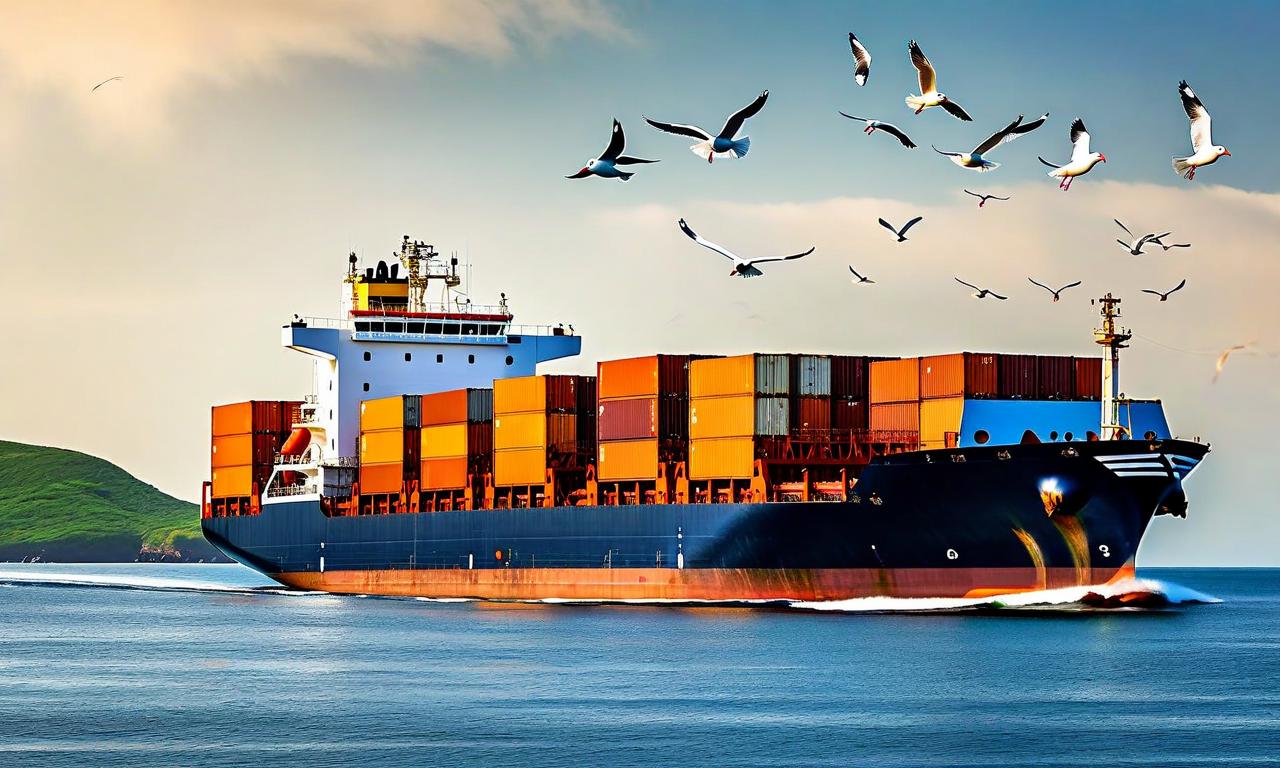
The Great Eastern Shipping Company Limited has signed a binding contract to buy a secondhand South Korean-built Long Range 2 (LR2) product tanker of roughly 110,000 dwt. Funded entirely via internal accruals, the vessel will join the fleet by Q2 FY27, expanding capacity amid elevated global shipping rates.
MUMBAI, June 16, 2026 — The Great Eastern Shipping Company Limited (BSE: 500620, NSE: GESHIP) announced on Tuesday that it has entered into a binding contract to acquire a secondhand Long Range 2 (LR2) product tanker. The vessel, which features a capacity of approximately 110,000 deadweight tonnage (dwt), is expected to join the company’s operational fleet by the second quarter of the 2026–27 fiscal year.
The modern vessel, built at a prominent South Korean shipyard, represents a strategic capacity expansion for the Mumbai-headquartered maritime major. While the company did not disclose the exact financial value of the transaction, management confirmed that the acquisition will be funded entirely through internal accruals and existing cash reserves, avoiding any expansion of corporate debt.
Strategic Fleet Modernization and Market Dynamics
The acquisition comes at a critical juncture for the global tanker shipping industry. Long Range 2 vessels are highly versatile assets in the maritime trade because they are technically capable of transporting both crude oil and refined petroleum products, such as diesel, jet fuel, and naphtha. This flexibility allows shipowners to quickly switch between "dirty" and "clean" cargo markets depending on which sector offers higher daily spot earnings.
According to industry data shared during the company's recent investor presentations, global product tanker trade routes have lengthened significantly. Disruptions in traditional transit corridors, including the Middle East and the Red Sea, have forced vessels to take longer routes around Africa. This increase in "ton-mile demand"—the volume of cargo multiplied by the distance traveled—has kept freight rates elevated, making large-capacity vessels like LR2 tankers highly lucrative for international ship operators.
Current Owned Fleet Structure
Prior to the integration of this newly contracted vessel, Great Eastern Shipping's fleet operations reflected a balanced allocation across wet and dry bulk categories:
| Vessel Category | Fleet Count | Primary Commodities Transported |
| Crude Tankers | 5 | Unrefined petroleum, heavy fuel oils |
| Product Tankers | 16 | Diesel, petrol, jet fuel, naphtha, kerosene |
| LPG Carriers | 4 | Liquefied petroleum gas, propane, butane |
| Dry Bulk Carriers | 14 | Iron ore, coal, grain, bauxite, fertilizer |
Impact on Investors and Energy Supply Chains
For public market investors, the transaction underscores Great Eastern Shipping's disciplined approach to capital allocation. By relying purely on internal accruals rather than raising high-cost debt, the firm preserves its strong balance sheet while increasing its revenue-generating capacity. The company recently declared a quarterly dividend of ₹11.70 per share, marking its 17th consecutive quarterly payout to shareholders.
On a broader scale, the expansion of India's domestic shipping tonnage is vital for national energy security. Indian refiners are among the world's largest exporters of refined petroleum products to Europe and Asia. Having reliable, large-scale domestic carriers ensures that trade channels remain stable even during periods of geopolitical volatility.
Official Sources Section
The details concerning the ship purchase contract, vessel specifications, deadweight tonnage, and delivery timelines are based on official regulatory disclosures filed by the company with BSE Limited and the National Stock Exchange of India Limited (NSE) under capital market compliance guidelines. Fleet metrics and industry capacity utilization statistics are corroborated by the company's Q4 FY26 investor statements.
Quote Section
"According to officials, the addition of the 110,000 dwt LR2 tanker aligns with the company's ongoing strategy to selectively modernize its fleet when market conditions present high-quality secondhand opportunities. Organizers stated that the vessel's high flexibility to alternate between clean and dirty petroleum products will allow the commercial desk to maximize returns in an environment of extended global voyage distances."
Why It Matters
This transaction illustrates how major maritime players are responding to structural shifts in global trade. By acquiring an asset that can haul over 100,000 tons of fuel in a single voyage, the company optimizes its operational efficiency. For international fuel consumers and businesses, a larger global fleet of flexible LR2 tankers helps stabilize transport costs, ultimately influencing retail fuel prices and industrial energy supply chains.
Key Facts at a Glance
Vessel Type: Secondhand Long Range 2 (LR2) product and crude-capable tanker.
Capacity Size: Approximately 110,000 deadweight tonnage (dwt).
Origin: Constructed by a high-tier South Korean shipbuilding yard.
Timeline: Expected to formally join the operational fleet by Q2 FY27 (July–September 2026).
Financing: Funded 100% through internal corporate accruals with no fresh debt.
FAQ Section
1. What makes an LR2 tanker different from standard oil tankers?
Long Range 2 (LR2) tankers typically range between 80,000 and 120,000 dwt. Unlike standard crude oil tankers, LR2 ships feature specialized internal tank coatings and separate pumping systems that allow them to safely transport highly refined, clean petroleum products without contamination.
2. Why buy a secondhand vessel instead of ordering a new one?
Ordering a new ship from a shipyard currently involves a waiting period of three to four years due to full global order books. Buying a high-quality secondhand vessel allows Great Eastern Shipping to deploy the asset into the high-rate market almost immediately.
3. How will this acquisition alter the company's total carrying capacity?
The addition of 110,000 dwt will expand Great Eastern Shipping’s total fleet capacity beyond its current standing of roughly 3.19 million dwt, reinforcing its position as a dominant private-sector tonnage provider in India.
Source: The Great Eastern Shipping Company Investor Relations, BSE India Corporate Disclosures, National Stock Exchange of India