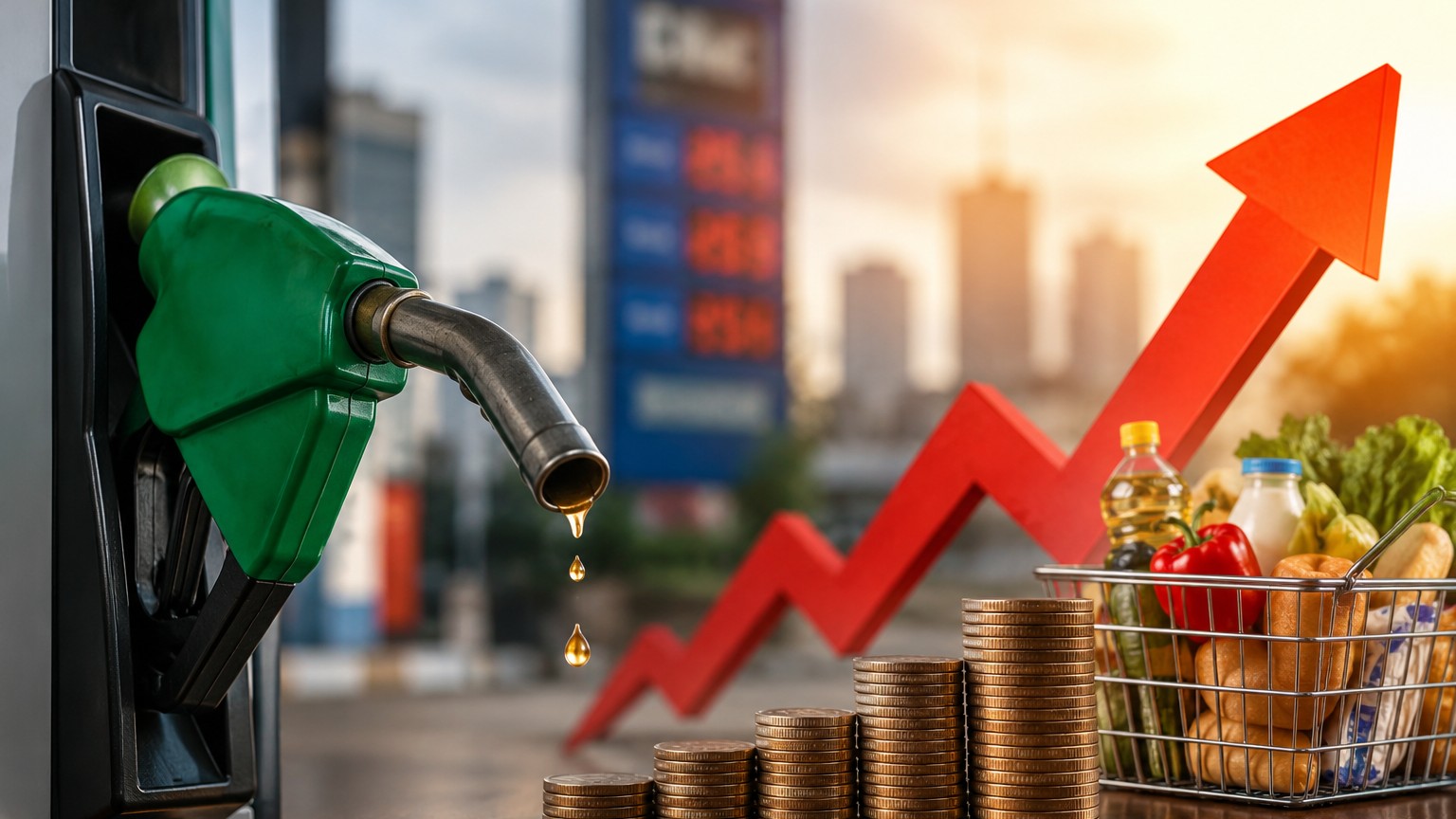
A rapid 7.50 rupee per litre increase in domestic petrol and diesel prices has raised concerns about renewed inflation in India. Driven by rising Brent crude prices near 95 dollars amid tensions in the Middle East, this cost surge threatens to raise transportation costs and delay anticipated central bank interest rate cuts.
MUMBAI, India - A sudden, concentrated sequence of retail fuel cost increases across India is threatening to disrupt the country's macro stabilization path, raising fresh concerns that higher petrol, diesel prices could spark renewed inflationary pressures. Following a prolonged, multi-year freeze on retail auto fuel adjustments, state-owned oil marketing companies (OMCs) enacted a fourth straight upward revision. This pushed cumulative retail price hikes to nearly 7.50 rupees per litre over an 11-day window.
This domestic fuel price surge responds to escalating conflict in West Asia and the effective closure of the critical Strait of Hormuz shipping corridor. These events have driven international Brent crude futures to hold near 95 dollars per barrel, erasing the domestic price cushion faster than economists anticipated.
The Economics of a Compressed Price Revision Cycle
The rapid implementation of the retail hikes marks a sharp break from the price stability maintained since 2022. For over two years, public sector oil companies—including Indian Oil Corporation (IOCL), Bharat Petroleum Corporation (BPCL), and Hindustan Petroleum Corporation (HPCL)—absorbed global crude fluctuations on their balance sheets. However, with international procurement costs rising sharply in early 2026, those deferred expenses are now flowing directly to consumer pump meters.
In the latest national adjustment, public energy distributors increased petrol prices by 2.61 rupees per litre and diesel by 2.71 rupees per litre. In the capital city of New Delhi, standard retail petrol climbed past the key threshold to 102.12 rupees per litre, while diesel climbed to 95.20 rupees per litre. Financial analysts note that while these immediate increases generate an estimated 4,400 crore rupees in vital monthly revenue protection for state OMCs, they simultaneously strip purchasing power out of household budgets.
Direct and Indirect Inflationary Transmission Channels
The primary concern for macroeconomic planners is the secondary transmission of diesel price increases into the broader economy. Because diesel powers the vast majority of India’s long-haul commercial trucking fleets, agricultural tractors, and localized freight locomotives, any expansion in input energy costs impacts the final wholesale market value of basic food commodities, daily essentials, and heavy building supplies.
In its Monthly Economic Review, the Ministry of Finance addressed these developing vulnerabilities:
"Recent increases in petrol and diesel prices could trigger both direct and indirect inflationary effects, while any further escalation in energy prices may erode the current inflation cushion faster than expected."
Compounding this industrial challenge is the threat of an irregular southwest monsoon season. If agricultural food output faces weather disruptions at the same time as transportation logistics costs rise, the Reserve Bank of India (RBI) could see consumer price index (CPI) headline numbers push well above its mid-term target zone. This risk could force monetary policymakers to delay anticipated benchmark repo rate cuts later this fiscal year.
Structural Energy Dependence and Import Security
The recent price revisions highlight India’s structural exposure to international energy supply blockades. According to latest custom tracking matrices, crude oil and derivative petroleum imports made up 53.9% of India’s total merchandise import bill from the Western Gulf Cooperation Council (GCC) economic zone over the past fiscal year.
While Indian state refiners have systematically diversified their procurement lines away from volatile hubs, the physical closure of the Strait of Hormuz forces container ships onto longer, more expensive maritime detours. This adds significant freight and insurance premiums to every imported barrel of crude.
Official Sources Section
The domestic retail price matrices, municipal fuel rates, and commercial supply confirmations have been verified against corporate releases from national distributors and statements from the Ministry of Petroleum and Natural Gas. Macroeconomic forecast warnings, trade exposure ratios, and wholesale import indices align with the official economic data published by the Ministry of Finance and market data from the Bombay Stock Exchange.
Industry Statements
"According to officials tracking regional distribution frameworks, public sector oil marketing firms are executing calculated daily pricing formulas to recover extensive past under-recoveries on automotive fuels and commercial cooking gas cylinders."
"Organizers from localized transport associations stated that long-haul fleet margins have dropped to unsustainable levels, and transport operations will be forced to apply a direct 8% to 12% freight surcharge on all inter-state consumer goods shipments if retail diesel rates do not stabilize."
Why It Matters
For everyday consumers, higher petrol, diesel prices function as an indirect tax that reduces discretionary spending on retail shopping, consumer electronics, and lifestyle services. For institutional investors, it introduces structural complications: rising input costs threaten to squeeze profit margins across manufacturing sectors, while persistent core inflation could keep interest rates elevated for a longer period, slowing down corporate capital expenditure cycles.
Key Facts at a Glance
Sharp Price Cycle: Domestic retail auto fuel prices surged by nearly 7.50 rupees per litre over less than two weeks.
Capital Benchmarks: Retail petrol in New Delhi rose to 102.12 rupees per litre, with diesel reaching 95.20 rupees per litre.
Global Catalyst: Driven by international crude oil price increases as Brent futures hover around 95 dollars per barrel due to geopolitical tensions in the Middle East.
Macro Risk: The Ministry of Finance has warned that higher fuel costs threaten to squeeze the national inflation cushion.
Frequently Asked Questions (FAQ)
Why are petrol and diesel prices rising so fast right now?
Retail prices are rising because state-owned oil marketing companies are passing on the delayed impact of higher international crude oil costs. Global oil prices have climbed significantly due to supply concerns and transport disruptions around the Strait of Hormuz.
How do higher diesel costs specifically influence food inflation?
Diesel is the primary fuel used by agricultural machinery and commercial freight trucks. When diesel prices rise, transport operators increase their freight rates, which raises the wholesale and retail cost of transporting fresh produce, milk, and grain to urban markets.
Will the government step in to lower retail prices?
While the central government can lower fuel prices by reducing central excise duties, any significant tax cut would impact fiscal deficit targets. Planners are currently prioritizing fiscal balance alongside targeted fuel sourcing diversification.
Source: Ministry of Finance Monthly Economic Review, Press Trust of India (PTI) News Archive, Bombay Stock Exchange Corporate Desk.