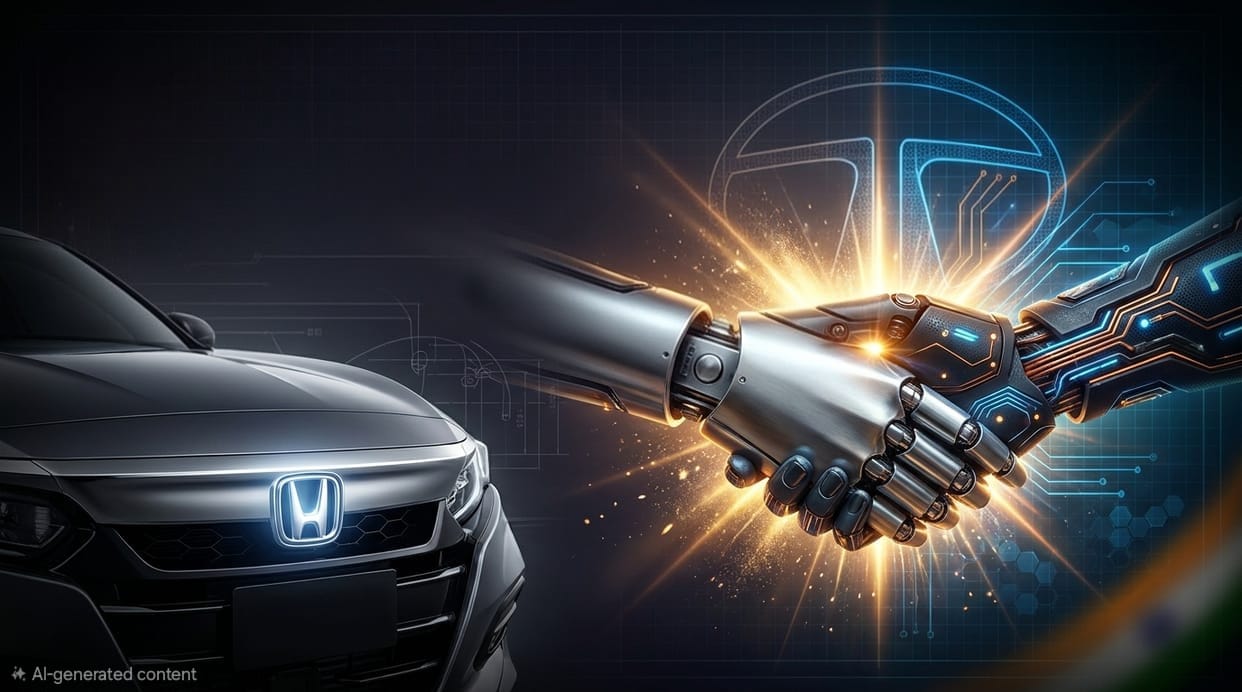
In an unprecedented move for Japanese auto manufacturing, Honda Motor Co. has selected India's Tata Technologies to engineer a full vehicle platform. The strategic partnership aims to compress development cycles, reduce vehicle manufacturing costs, and accelerate multi-powertrain electrified car rollouts across Asian markets starting from 2028.
TOKYO/MUMBAI — Honda Motor Co. has contracted Indian engineering firm Tata Technologies to develop a major portion of a new vehicle platform, according to industry sources and reports from Nikkei and Bloomberg. The deal marks the first time the Japanese automotive giant has entrusted a core vehicle architecture end-to-end to an Indian engineering services company. The initiative forms a central pillar of Honda’s effort to reduce R&D expense, accelerate development timelines, and regain competitive parity against fast-moving global rivals in Asian and emerging markets.
Strategic Pivot to External Engineering Partners
Historically, Japanese original equipment manufacturers (OEMs) have maintained strict, in-house control over vehicle platform architecture—the fundamental structural chassis, mounting points, and crash geometry that underpin multiple car models. Honda's decision to hand platform development to Tata Technologies Ltd., a unit of India’s Tata Group, signals a strategic shift in Japanese automotive R&D.
The agreement covers a comprehensive full vehicle engineering program designed to accommodate multiple powertrains, including internal combustion engines (ICE), hybrid electric vehicles (HEVs), and battery electric vehicles (BEVs). While the platform is not currently slated for North American vehicle models, it is targeted primarily at high-growth Asian markets where low-cost electric and hybrid vehicles from Chinese manufacturers have rapidly eroded market share.
Financial Restructuring and "Triple Half" Efficiency Targets
The outsourcing decision arrives as Honda undergoes a broad cost-restructuring program. Following significant financial headwinds and R&D expenditures tied to software-defined vehicles (SDVs), Honda President and Global CEO Toshihiro Mibe outlined aggressive operational targets. The corporate mandate, dubbed the "Triple Half" initiative, aims to cut development costs, development timelines, and engineering workload by 50 percent compared to 2025 baseline metrics.
By leveraging Tata Technologies' 12,000-strong engineering workforce and digital design capabilities in India, Honda expects to significantly compress vehicle gestation cycles while lowering fixed structural costs. Tata Technologies previously referenced securing a "strategically important full vehicle development program" with a major Japanese OEM in its fiscal earnings filings without initially naming Honda.
Market Context and Impact on Regional Operations
Honda’s car operations in India and Southeast Asia have faced rising headwinds. In India, the world’s third-largest passenger vehicle market, Honda’s market share fell from roughly 4 percent in FY2020 to near 1 percent in FY2026 amid stiff competition from Maruti Suzuki, Hyundai, and Tata Motors.
The new Honda Tata Technologies vehicle platform collaboration directly addresses local design preferences. Honda plans to introduce localized strategic models built on flexible architectures starting in 2028, focusing on sub-four-meter compact vehicles and mid-size crossovers tailored specifically to South Asian climate and road requirements.
Official Sources Section
Honda Motor Co. Statement: Officials stated that the company is "always considering various options" regarding external partnerships to heighten cost competitiveness, while declining to comment on specific commercial details.
Tata Technologies Disclosure: In earnings disclosures filed with regulatory bodies, Tata Technologies confirmed the acquisition of a "full vehicle engineering programme" from a leading Japanese automaker to supply end-to-end product design services.
Media & Financial Reports: Initial reports published by
Nikkeiand corroborated by
Bloomberg Newsverified the structural scope and geographic focus of the platform contract.
Quote Section
"According to officials, Japanese automotive manufacturers are facing unprecedented margin pressure due to rising software-defined vehicle costs and shifting global EV adoption," reported Nikkei analysts familiar with the project.
In earlier corporate communications regarding local market strategies, Honda Global CEO Toshihiro Mibe stated: "We will proactively leverage external competitiveness and resources in areas that can increase our speed, flexibility and cost competitiveness, thereby strengthening the overall competitiveness of Honda."
Why It Matters
For Consumers: Accelerates the rollout of affordable hybrid and electric vehicles equipped with modern safety features and optimized regional designs.
For Investors: Offers Tata Technologies (
BSE/NSE: TATATECH) a high-margin validation of its full-service engineering capabilities. For Honda (
NYSE: HMC), it helps execute the "Triple Half" strategy to protect operating margins.
For Automotive Industry: Sets a precedent for major Japanese OEMs to delegate core platform engineering to specialized Indian design houses.
Key Facts at a Glance
First-Time Partnership: First time Honda has outsourced end-to-end core platform development to an Indian engineering services firm.
Multi-Energy Architecture: Platform engineered to support internal combustion, hybrid electric, and battery electric powertrains.
Target Geographic Scope: Focused on Asian and emerging markets; North American platform development remains excluded at this stage.
Launch Timeline: First commercial vehicles leveraging the new architecture expected to enter regional production from 2028 onward.
FAQ Section
Why did Honda choose Tata Technologies for platform engineering?
Tata Technologies offers full-vehicle engineering expertise and global digital capabilities, enabling Honda to reduce R&D expenses and shorten vehicle launch cycles.
Will cars developed under this partnership be sold in North America?
Current reports indicate the project focuses specifically on vehicles destined for Asian and emerging international markets, excluding North America at this stage.
Is Tata Motors building Honda cars?
No. Tata Technologies is an independent engineering service subsidiary under the Tata Group. It provides design and engineering services to global automotive brands, distinct from Tata Motors' vehicle manufacturing operations.
What powertrains will the new platform support?
The underlying architecture is being designed to support traditional internal combustion engines (ICE), hybrid powertrains (HEV), and battery electric vehicles (BEV).
Source: Nikkei Asia - Automotive Industry Reports, Bloomberg Business News, Honda Motor Co. Corporate Relations, Tata Technologies Regulatory & Investor Filings