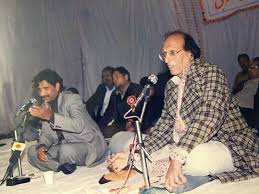
The enduring legacy of Dr. Bashir Badr highlights how the legendary poet built bridges with poetry across South Asia. By introducing conversational language to classical Urdu ghazals, Badr democratized literature, transforming his verses into tools for communal healing and cross-border cultural diplomacy that continue to inspire unity today.
NEW DELHI, India — Decades of cultural evolution have cemented Dr. Bashir Badr as one of the most influential literary figures in modern South Asia, demonstrating precisely how Bashir Badr built bridges with poetry. By stripping the traditional Urdu ghazal (amatory poem) of its dense Persian vocabulary and introducing everyday colloquial language, Badr transformed a complex classical art form into a shared cultural space. Literary academies and cultural organizations across New Delhi and Bhopal continue to host commemorative seminars analyzing how his unique focus on universal human experiences effectively connected opposing socio-political groups and crossed international borders.
Dismantling the Linguistic Barriers of Urdu Ghazals
Before Dr. Bashir Badr’s rise to prominence in the mid-to-late 20th century, Urdu poetry frequently relied on highly structured, courtly vocabulary that required specialized knowledge to interpret. Academic archives from Aligarh Muslim University (AMU), where Badr earned his Bachelor's, Master's, and PhD degrees, reveal how he intentionally challenged this status quo.
Badr chose to write in Awaami Zubaan (the language of the common people), blending simple Hindustani words with classical Urdu meters. This structural choice democratized the art form, allowing individuals with no formal training in literature to connect with his couplets.
By utilizing themes of shared domestic life, love, heartbreak, and resilience, his verses spread widely outside traditional literary circles. He made the modern ghazal accessible to a vast population across India, Pakistan, and the global South Asian diaspora, laying the groundwork for inclusive cultural dialogue.
Healing Communal Divides Through Public Verse
The true test of how Bashir Badr built bridges with poetry came during periods of severe civil unrest in India. Following the destruction of his home and his entire collection of unpublished manuscripts during the Meerut riots of 1987, Badr did not retreat into bitterness or political polarization. Instead, he channeled the trauma into verses that directly condemned violence while advocating for collective healing.
His subsequent poetry collections became essential references for peace committees, community organizers, and political leaders seeking to de-escalate regional tensions. By emphasizing the shared suffering of ordinary citizens on both sides of sectarian divides, Badr’s public recitations at Mushairas (traditional poetic symposiums) functioned as therapeutic communal spaces. His famous couplets became slogans for unity, frequently quoted by citizens, peace activists, and lawmakers in parliament to emphasize secular harmony.
Historical Impact on Modern South Asian Culture
| Cultural Domain | Traditional Approach Before Badr | Impact of Badr's Literary Approach |
| Linguistic Reach | Courtly Persianized Urdu limited to elites | Simplification into conversational Hindustani for the masses |
| Socio-Political Role | Romantic escapism or rigid political ideology | Active tool for communal reconciliation and empathy |
| Global Diaspora | Confined to highly formal literary salons | Adapted into popular music, cinema, and international festivals |
Official Sources Section
Biographical records, academic analyses of his poetic meters, and administrative documentations of his awards are preserved by the Sahitya Akademi (India's National Academy of Letters) and the Madhya Pradesh Urdu Academy. Badr was formally recognized by the Government of India with the prestigious Padma Shri award in 1999 for his extraordinary contributions to literature and education.
Institutional Evaluations
"Dr. Bashir Badr transformed the Urdu ghazal from a closed literary exercise into an expansive human conversation," stated an archival research paper from the Sahitya Akademi. "His verses served as vital diplomatic and social bridges because they spoke directly to the shared emotional truths of the human condition, completely bypasssing religious, regional, or national divisions."
Why It Matters
Understanding how Bashir Badr built bridges with poetry provides critical, practical insights for contemporary society:
For Cultural Diplomats: His methodology shows how simplified, empathetic language can serve as a soft-power tool to ease cross-border tensions.
For Citizens and Communities: His poems offer a timeless framework for using artistic expression to counter polarizing narratives and rebuild community trust after crises.
For Artists and Innovators: Badr's enduring relevance proves that cultural longevity relies on inclusivity and clear accessibility rather than insular, elite-focused complexities.
Key Facts at a Glance
Linguistic Revolution: Badr pioneered the use of everyday Hindustani terms within formal Urdu ghazals, making poetry highly accessible to the public.
Academic Foundation: He holds a doctorate from Aligarh Muslim University and spent years teaching as a formal professor of Urdu literature.
Communal Harmony: After losing his home to the 1987 Meerut riots, his poetry evolved into a celebrated voice for national reconciliation and peace.
National Recognition: He received the Padma Shri in 1999 from the Indian Government for his contributions to national integration through literature.
Frequently Asked Questions
How exactly did Bashir Badr change traditional Urdu poetry?
He replaced dense, archaic Persian words with simple, everyday language. This allowed his work to be easily understood and appreciated by the public, breaking down traditional class barriers in literature.
What role did his poetry play during times of social conflict?
Instead of taking partisan sides, Badr wrote about the universal pain of tragedy and the vital need for human connection. His poems were frequently used by peace activists and leaders to soothe communal tensions.
What official honors did Dr. Bashir Badr receive for his work?
Among numerous literary accolades, he was awarded the prestigious Padma Shri by the President of India in 1999 and received the Sahitya Akademi Award for his collection Aas.
Source: Official award registries of the Sahitya Akademi, academic thesis repositories at Aligarh Muslim University, and published archival profiles from the Madhya Pradesh Urdu Academy.