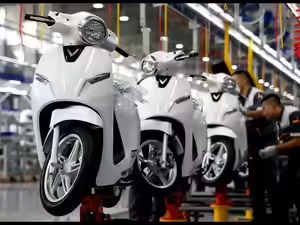
More urban Indian households are now treating an electric vehicle as the “second family vehicle” for short commutes, errands and school runs, echoing a new mantra: hum do, humari ek EV. Rising fuel prices, better city charging, and attractive state subsidies are nudging families to keep one EV alongside a conventional petrol or diesel car.
Instead of fully replacing their primary vehicle, many middle-class families are adding a compact e-scooter or small electric car as their daily workhorse. The pattern is clearest in larger cities and Tier-II hubs, where short-distance trips dominate and public charging plus home sockets make EV use simple and cost-effective.
How Families Are Using Their First EV
For most households, the EV is becoming the default choice for under-20 km trips: school drops, office commutes, grocery runs and nearby social visits. The ICE car or bike is increasingly reserved for long highway drives, outstation trips or situations where charging might be uncertain. Over time, families are realising that 60–70% of their annual trips fall into the “short, predictable” bucket that EVs handle comfortably.
Economics Behind “One EV Per Household”
Running costs are the clincher. Per-km expenses on electricity are significantly lower than petrol or diesel, and regular city traffic actually favours EV efficiency. Add in state EV subsidies, lower road tax in many regions, and occasional discounts from manufacturers, and the total cost of ownership over five to seven years starts to look compelling, especially for high-usage families.
Charging, Convenience And Behaviour Shifts
Most early adopters are charging at home overnight using standard connections or basic wall boxes, turning range anxiety into a non-issue for city use. As societies install shared chargers and workplaces add charging points, families feel more comfortable using EVs for slightly longer intra-city trips too. Ride-share fleets and delivery vehicles going electric are reinforcing the perception that EVs are “normal” and reliable for daily use.
What This Means For India’s EV Transition
If the “at least one EV per family” trend deepens, India’s EV journey may be less about dramatic overnight shifts and more about steady, blended adoption. Households could continue to rely on a mix of ICE and electric vehicles for years, but the share of everyday kilometres travelled on batteries will keep rising quietly cutting oil demand, local pollution and running costs without forcing abrupt lifestyle changes.
Everyday EV Adoption Insights
- EVs increasingly used as second family vehicles for short, daily trips
- Households keep an ICE vehicle for highways and long outstation travel
- Low running cost and state incentives drive the “one EV per home” mindset
- Home and society charging ease range concerns for city-focused usage
- Blended garages (one EV, one ICE) are emerging as India’s most realistic near-term EV pattern
Sources: Recent Indian business and auto media coverage on household EV adoption patterns, scooter and small EV sales trends, state EV policy incentives, and expert commentary on India’s “second vehicle as EV” behaviour