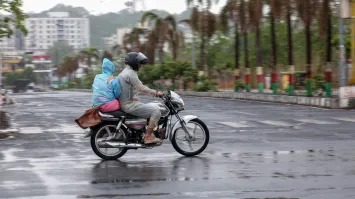
The India Meteorological Department (IMD) has forecast an active wet spell across North India lasting until June 13, 2026. Driven by a western disturbance, the system will bring thunderstorms, hailstorms, and wind gusts up to 70 km/h to Delhi, Punjab, and Haryana, cutting peak temperatures by 4 to 6 degrees Celsius.
NEW DELHI — Large swathes of North India are on the verge of welcoming a significant break from intense summer temperatures. The national meteorological authority has predicted widespread pre-monsoon precipitation, thunderstorms, and localized hailstorms to persist across multiple northern states until Saturday, June 13, 2026.
The India Meteorological Department (IMD) confirmed through an official press release that an active, moisture-laden western disturbance originating over the Mediterranean Sea has intersected the upper latitudes of the subcontinent. This developing storm system will steadily suppress severe heatwave conditions that have held temperatures above 43 degrees Celsius throughout early June.
Technical Meteorological Triggers and Regional Impact
The sudden transition in regional weather systems is driven by a deep weather trough shifting across Northwest India. Prior to the arrival of this western disturbance, daytime maximum temperatures across Delhi, Punjab, Haryana, and West Uttar Pradesh climbed sharply, touching 42 to 44 degrees Celsius.
However, as the low-pressure system pushes further inland, it is introducing substantial sub-tropical moisture. This interaction is triggering unstable atmospheric conditions and widespread cloud cover.
According to IMD's multi-tier regional forecasts, the impact of the wet spell is split across distinct geographical terrains:
The Mountainous Interior: Widespread rainfall and isolated heavy downpours are forecast across Jammu and Kashmir, Himachal Pradesh, and Uttarakhand between June 11 and June 13, prompting local travel warnings due to risk of loose gravel shifts.
The Northern Plains: Punjab, Haryana, Chandigarh, Delhi, and Rajasthan are slated to receive light to moderate scattered showers accompanied by dramatic thundersqualls.
Squally Wind Velocity: Wind speeds during peak thundersquall events on Thursday and Friday are projected to reach 50 to 60 kilometers per hour, gusting up to 70 kilometers per hour in isolated plain corridors.
Temperature Reprieve and Delayed Monsoon Onset Logistics
The primary economic and health benefit of this multi-day wet spell is a dramatic plunge in daily heat parameters. Forecasters expect maximum daytime readings to drop by 4 to 6 degrees Celsius across Northwest India by Friday afternoon.
In the national capital region of Delhi, top temperatures that hovered near 43 degrees Celsius on Wednesday are expected to plunge down to a comfortable 34 to 36 degrees Celsius by June 12. This shift will provide long-awaited relief to domestic power grids and urban populations.
While these pre-monsoon showers bring cooling relief, they do not mark the official arrival of the main Southwest Monsoon in North India. The IMD reported that the 2026 Southwest Monsoon made a slightly delayed landfall in Kerala on June 4, three days behind schedule.
While the monsoon front has advanced steadily through Maharashtra, central agricultural tracking indicates that the real monsoon boundary will likely maintain its traditional timeline, reaching the northern plains and Delhi closer to June 25 to June 30.
Official Sources Section
Weather warning metrics, regional temperature predictions, wind velocity baselines, and western disturbance tracking data are prepared in accordance with formal climate bulletins issued by the India Meteorological Department (IMD) Ministry of Earth Sciences, regional state hazard centers, and current tracking charts from the World Meteorological Organization (WMO).
Quote Section
Meteorological officials urge regional authorities and citizens to stay alert, noting that while the drop in heat is beneficial, sudden thundersqualls carry localized hazards.
According to Dr. Mrutyunjay Mohapatra, Director General of the India Meteorological Department:
"The active western disturbance moving across Northwest India will trigger a highly volatile weather phase till June 13. While this system brings essential relief from prolonged heatwave conditions, urban municipalities must remain prepared for sudden thundersqualls and heavy wind gusts that can impact weak physical structures and power transmission networks."
Commenting on the long-range seasonal progression, climate research desks added:
"The current cooling spell across the north provides excellent near-term relief, but long-range ocean models require close monitoring. With an 80% probability of El Niño conditions developing in the Pacific by August, the seasonal monsoon distribution later this year could face structural challenges, making these early pre-monsoon water inputs highly valuable."
Why It Matters
For millions of agrarian families across the fertile plains of Punjab, Haryana, and Uttar Pradesh, this pre-monsoon rainfall lowers soil temperatures and primes the fields for early kharif sowing operations. For urban consumers and small businesses, the cooling drop in temperatures eases household electricity demand, which has strained power infrastructure throughout late May.
However, travelers and transport operators moving through northern hill stations like Shimla, Manali, and Dehradun must monitor road conditions closely, as sudden thundersqualls can spark localized mudslides and hamper road visibility.
Key Facts at a Glance
The Rain Window: The IMD has issued a formal wet spell warning across North and Northwest India, extending until Saturday, June 13.
Temperature Drop: Daytime maximum temperatures are projected to tumble by 4 to 6 degrees Celsius, with Delhi dropping to a low of 34 to 36 degrees Celsius.
Storm Elements: Peak weather intensity on June 11 and June 12 will feature thunderstorms, lightning strikes, localized hailstorms, and wind gusts up to 70 km/h.
Monsoon Distinction: These showers are driven by a western disturbance and do not signify the official entry of the Southwest Monsoon, which is slated for late June.
FAQ Section
Is the current rain across North India marking the official onset of the monsoon?
No. This wet spell is caused by a western disturbance system moving in from the Mediterranean Sea. The actual Southwest Monsoon is advancing through central India and is projected to arrive in the north between June 25 and June 30.
Which states will experience the maximum impact of the hailstorm and thundersquall alerts?
The highest risk for intense thundersqualls, wind gusts, and isolated hailstorms is concentrated across the plains of Punjab, Haryana, Delhi, East Rajasthan, and West Uttar Pradesh through June 11 and June 12.
Will this weather update significantly reduce power cuts across northern states?
Yes. As maximum temperatures drop from 43 degrees down to the mid-30s, the extreme cooling demand on regional power grids will ease, helping to reduce load-shedding incidents caused by overtaxed transformers.
Source: India Meteorological Department (IMD), Ministry of Earth Sciences Press Bureau, World Meteorological Organization Climate Tracker, Press Trust of India (PTI) Weather Wire.