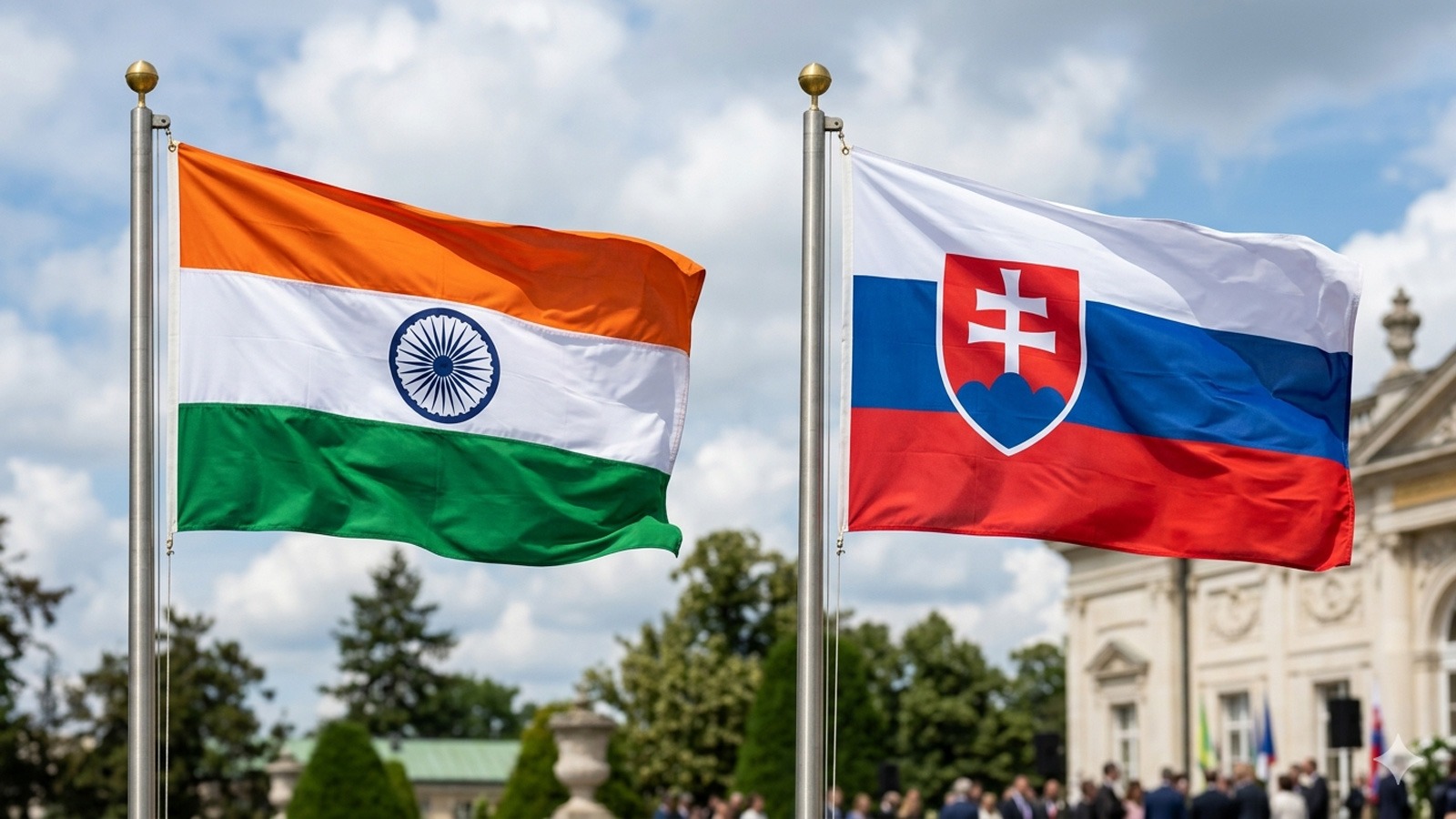
During a historic first state visit to Bratislava, Prime Minister Narendra Modi and Slovak counterpart Robert Fico elevated bilateral ties to a Comprehensive Partnership. The summit produced key agreements on defense manufacturing, digital public infrastructure, and legal labor migration, alongside Slovakia's formal endorsement of India's permanent UN Security Council seat.
BRATISLAVA — In a major diplomatic development for New Delhi's European foreign policy, the Republic of India and the Slovak Republic officially elevated their bilateral relations to a Comprehensive Partnership. The strategic upgrade was announced on Monday, June 15, 2026, during a historic state visit by Indian Prime Minister Narendra Modi to the Slovak capital marking the first-ever visit by an Indian head of government to the country since its independence in 1993.
Following high-level bilateral talks at Bratislava Castle, Prime Minister Modi and Slovak Prime Minister Robert Fico signed a sweeping framework of accords. The resulting agreements establish deep partnerships across defense manufacturing, artificial intelligence, quantum communication, and legal labor migration. The diplomatic breakthrough reflects Central Europe’s growing alignment with India's vision for global governance reforms, counter-terrorism synchronization, and open, secure connectivity in the Indo-Pacific theater.
Technical and Defense Treaties Anchored by New MoUs
The cornerstone of the newly minted Comprehensive Partnership is a series of binding Memorandums of Understanding (MoUs) designed to combine Slovakia’s highly developed industrial ecosystem with India’s technological scale. Chief among these is a dedicated MoU on Digital Technologies, which establishes a framework for collaborative development in digital public infrastructure.
According to the official joint statements coordinated by both ministries, the bilateral outcomes feature critical operational directives:
Defense Integration: The leaders exchanged a formal Letter of Intent on Defense Cooperation to catalyze joint manufacturing, industrial co-development, and engineering collaboration between respective defense corporations.
Emerging Tech Infrastructure: New agreements cover specialized partnerships in post-quantum cryptography, 6G telecom standardization, and critical information infrastructure protection.
Academic AI Placement: India will sponsor and establish its first-ever institutional Chair in Artificial Intelligence at the Technical University of Kosice.
Skilled Labor Mobility: Recognizing mutual economic needs, an MoU on Labour Migration was enacted to streamline the orderly, legal relocation of skilled Indian tech, automotive, and STEM professionals into Slovak manufacturing hubs.
Europe Backs Modi's Call for Global Institutional Reform
The Bratislava summit went beyond bilateral trade, positioning Slovakia as a key European partner supporting New Delhi's push for global institutional overhauls. In the comprehensive joint text published via the Ministry of External Affairs (MEA), Slovak Prime Minister Robert Fico explicitly reaffirmed Bratislava’s constructive support for India’s permanent membership in a reformed United Nations Security Council (UNSC).
Furthermore, Slovakia affirmed its backing for India's integration into the Nuclear Suppliers Group (NSG). On regional security, the two nations took a firm stance against cross-border aggression by establishing a permanent Joint Working Group (JWG) on Counter-Terrorism. This move follows formal expressions of solidarity from Bratislava regarding past counter-terror security challenges faced by Indian forces.
Official Sources Section
The statutory directives and statements cited from this international summit are drawn from official state logs published by the Prime Minister's Office (PMO) via the Press Information Bureau (PIB). Operational components tracking trade frameworks were synchronized with data issued via the European Commission and the India-Slovakia Joint Economic Committee.
Quote Section
"According to officials presenting the joint statements in Bratislava, the elevation to a Comprehensive Partnership signals a structural shift in how Central European states interface with emerging Asian powers. Organizers stated that both democracies are fully aligned on the foundational premise that contemporary global security disputes can only be resolved through peaceful, multilateral diplomacy rather than active military conflict."
Why It Matters
The formalization of the India-Slovakia Comprehensive Partnership brings immediate advantages to industrial manufacturers, tech investors, and skilled professionals. By securing Slovakia's support, India gains a key ally within the European Union to accelerate the finalization and implementation of the India-EU Free Trade Agreement (FTA).
For Indian engineering, electronics, and automotive firms, Slovakia serves as a central logistics and assembly gateway into the broader Eurozone market. Meanwhile, the newly signed migration accord protects Indian laborers and tech professionals with structured legal frameworks, preventing exploitation while filling critical labor shortages in Central Europe’s manufacturing lines.
Key Facts at a Glance
Historical Milestone: This represents the first-ever state visit by an Indian Prime Minister to Slovakia since its independent founding in 1993.
Strategic Upgrade: Relations have been elevated to a Comprehensive Partnership, boosting defense, tech, and space industry cooperation.
UNSC Reorganization Support: Slovakia officially backed India’s bid for permanent membership in a reformed UN Security Council.
Fintech and AI Integration: The treaties establish a dedicated India Chair in AI at Kosice alongside an expansive digital tech public infrastructure framework.
Counter-Terror Alliance: A new Joint Working Group on Counter-Terrorism was formed to coordinate intelligence at the United Nations.
FAQ Section
Why is Prime Minister Modi's visit to Slovakia considered historic?
This marks the first time since Slovakia gained independence in 1993 that an active Indian Prime Minister has traveled to the country for an official state visit, shifting historical ties into an active strategic partnership.
What industries stand to gain the most from this new comprehensive framework?
The automotive, electronics, information technology, and defense industries will see the most immediate impact. The agreements simplify joint ventures, technology transfers, and the legal cross-border mobility of skilled engineers.
How does this agreement affect India's wider relations with the European Union?
Slovakia's active endorsement helps build critical momentum within the European Council to finalize the highly anticipated India-EU Free Trade Agreement (FTA), which aims to drop tariff barriers for exporters on both sides.
Source: Ministry of External Affairs of India Official Bilateral Registry, Press Information Bureau Government of India Press Portal, Prime Minister of India Official Updates.