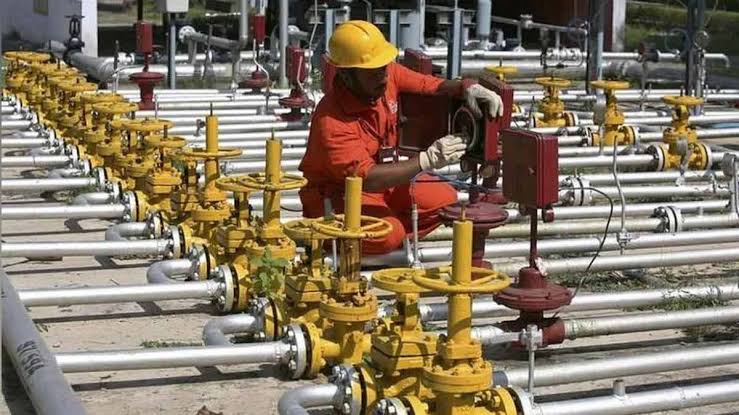
The Petroleum and Natural Gas Regulatory Board has cleared a ₹7,000-crore LPG pipeline expansion spanning 1,800 km across six Indian states. Executed by GAIL, the three corridors will expand the national common-carrier network to 9,500 km, cutting road-tanker traffic, reducing distribution costs, and enhancing supply security for imported cooking gas.
NEW DELHI — Downstream energy regulator Petroleum and Natural Gas Regulatory Board (PNGRB) has approved the development of nearly 1,800 kilometers of new liquefied petroleum gas (LPG) pipeline infrastructure across six states, entailing an estimated capital outlay of ₹7,000 crore. Authorised to state-run GAIL (India) Limited, the nationwide project will expand India's common-carrier LPG pipeline network by 23.5%, scaling total operational coverage from 7,700 kilometers to approximately 9,500 kilometers. The decision comes as India seeks to modernize inland fuel distribution, transition bulk transit away from congested highways, and enhance system resilience for imported cooking gas supplies.
Corridors and Multi-State Grid Route Details
The regulatory approval encompasses three strategically engineered pipeline corridors spanning Telangana, Maharashtra, Uttar Pradesh, Uttarakhand, Karnataka, and Goa:
Cherlapally to Nagpur Corridor (556 km): Traverses Telangana and Maharashtra, connecting coastal and central supply feeds to industrial and consumer centers across Vidarbha.
Jhansi to Sitarganj Pipeline (611 km): Links northern transit points across Uttar Pradesh and Uttarakhand to ensure uninterrupted supplies to Himalayan and sub-Himalayan bottling hubs.
Shikrapur to Goa and Hubli Route (633 km): Connects western Maharashtra to western coastal tourism nodes and northern Karnataka's industrial belt.
The new infrastructure builds directly upon existing trunk lines, including the landmark 2,757-kilometer Kandla–Gorakhpur LPG Pipeline.
Modal Shift: Replacing Road Tankers with Line-Pack Systems
A key driver behind the LPG pipeline expansion is the structural shift from road-based logistics to underground transit. Currently, a substantial portion of imported LPG arriving at maritime ports is transported to inland bottling facilities via thousands of diesel-powered road tank trucks.
Moving fuel through underground pipelines eliminates hazardous long-haul tanker traffic, cuts road accident risks, and lowers logistics costs. In addition, the enclosed pipeline network functions as "line-pack" storage, enabling continuous product movement that cushions inland markets against localized transport strikes, severe weather disruptions, or sudden demand spikes.
Economic Impact and Energy Security
India remains one of the world's largest consumers and importers of LPG, relying on overseas shipments for more than 60% of its total domestic requirement. Expanding high-capacity pipelines from coastal terminals directly to major consuming cities insulates downstream supply chains from international freight bottlenecks and reduces the carbon footprint associated with heavy vehicle transportation.
For GAIL (India) Limited, developing these three designated lines reinforces its position as the nation's primary pipeline infrastructure operator while guaranteeing long-term transmission tariff revenues from public sector oil marketing companies (OMCs).
Official Sources Section
Regulatory filings, route lengths, and capital projections cited in this report are based on statutory notifications from the Petroleum and Natural Gas Regulatory Board, disclosures by GAIL (India) Limited, and policy documentation published by the Ministry of Petroleum and Natural Gas.
Quote Section
"The development of 1,800 kilometers of pipeline infrastructure will substantially reduce the movement of LPG tank trucks, thereby improving road safety, lowering logistics costs, easing traffic congestion, and significantly decreasing carbon emissions through a modal shift from road to pipelines," the Petroleum and Natural Gas Regulatory Board stated in an official announcement.
Why It Matters
Public Safety: Shifts volatile hazardous cargo off congested national highways into underground transport networks.
Lower Distribution Costs: Pipeline transit drastically reduces unit freight expenses compared to multi-axle diesel trucks.
Supply Continuity: Line-pack capacity provides continuous inventory buffers during seasonal surges and import delays.
Key Facts at a Glance
Total Investment: ₹7,000 crore ($731 million) allocated for network development.
Total Length: 1,800 kilometers added across three distinct pipeline routes.
States Covered: 6 states (Telangana, Maharashtra, Uttar Pradesh, Uttarakhand, Karnataka, Goa).
Implementing PSU: GAIL (India) Limited.
Network Growth: Common-carrier LPG network expands 23.5% to ~9,500 km.
Frequently Asked Questions
What are the three new LPG pipeline corridors cleared by PNGRB?
The three corridors are the Cherlapally–Nagpur line (556 km), Jhansi–Sitarganj line (611 km), and Shikrapur–Goa–Hubli line (633 km).
Which entity will construct and operate the new pipelines?
State-run natural gas and pipeline major GAIL (India) Limited has been authorised to develop all three projects.
How will this expansion benefit everyday consumers?
By replacing road tankers with continuous underground pipelines, the projects reduce distribution bottlenecks, cut fuel transit emissions, and ensure more reliable cooking gas deliveries.
Source: Petroleum and Natural Gas Regulatory Board, GAIL (India) Limited, Ministry of Petroleum and Natural Gas.