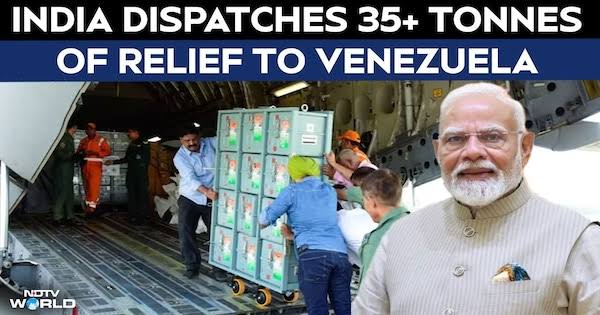
India has successfully concluded 'Operation Amistad,' a two-week humanitarian mission in earthquake-hit Venezuela. A 41-member Indian Army medical contingent provided critical aid, performing over 8,000 medical procedures and major surgeries using portable BHISHM hospitals. The mission reflects India's ongoing commitment to global disaster relief and strengthens bilateral ties with Venezuela.
NEW DELHI — India’s humanitarian assistance and disaster relief (HADR) mission in Venezuela concluded successfully this week, with the Indian contingent returning to New Delhi on July 10, 2026. Launched in response to a series of devastating earthquakes that struck the South American nation in late June, the mission—codenamed "Operation Amistad"—marked a significant demonstration of India’s rapid disaster response capabilities on the global stage.
The 41-member medical team, deployed by the Indian Army’s 60 Para Field Hospital, spent two weeks operating in the affected regions. During their deployment, the team utilized advanced medical modules to stabilize healthcare infrastructure, which had been severely compromised by the seismic activity.
Deployment and Tactical Success
Operation Amistad began on June 26, when two Indian Air Force C-17 Globemaster III aircraft transported the specialized medical contingent and over 35 tonnes of emergency relief materials to Venezuela. The equipment included two "BHISHM" (Bharat Health Initiative for Sahyog, Hita & Maitri) Cubes—modular, portable mini-hospitals capable of performing emergency surgeries and intensive care treatments in disaster-hit zones.
According to the Ministry of External Affairs (MEA), the mission provided critical care to hundreds of earthquake survivors. The medical task force performed over 8,000 medical procedures and laboratory investigations, including more than 20 major surgeries, effectively bridging the healthcare gap during the immediate aftermath of the disaster.
Official Sources and Diplomatic Recognition
The operation was conducted in close collaboration with the Venezuelan government. Following the conclusion of the mission, acting President of Venezuela, Delcy Eloína Rodríguez Gómez, formally thanked Prime Minister Narendra Modi for India’s solidarity and timely support during the national emergency.
"The Government of India conveys its sincere appreciation to the Government of the Bolivarian Republic of Venezuela for the assistance and cooperation extended to the Indian contingent throughout the mission," the MEA stated in an official release.
Why It Matters
Operation Amistad serves as a practical application of India's commitment to the philosophy of Vasudhaiva Kutumbakam ("The World Is One Family"). By deploying specialized military medical units and indigenous technology like the BHISHM Cubes, India has reaffirmed its status as a "first-responder" in global humanitarian crises. For the local Venezuelan communities, the presence of the Indian field hospital provided essential trauma management and emergency services at a time when local medical facilities were overwhelmed.
Key Facts at a Glance
Mission Duration: June 26, 2026 – July 10, 2026.
Medical Impact: Over 8,000 procedures and laboratory investigations performed.
Surgical Success: More than 20 major surgeries conducted by Indian Army doctors.
Aid Provided: 35 tonnes of relief supplies, including medicines, two BHISHM portable hospitals, and essential disaster response equipment.
Personnel: 41-member contingent including surgeons, anaesthesiologists, and paramedical staff.
FAQ
What was the primary goal of Operation Amistad?
The mission aimed to provide urgent medical and humanitarian relief to communities impacted by the massive earthquakes in Venezuela, supporting local infrastructure through specialized medical care.
What are BHISHM Cubes?
BHISHM (Bharat Health Initiative for Sahyog, Hita & Maitri) Cubes are advanced, modular, and portable hospital units designed by India for rapid deployment, capable of providing trauma care, surgery, and intensive care in disaster zones.
Who led the mission?
The mission was carried out by the Indian Army's 60 Para Field Hospital unit, in coordination with the Indian Air Force and the Venezuelan government.
Source: Ministry of External Affairs, DD India, The Hindu