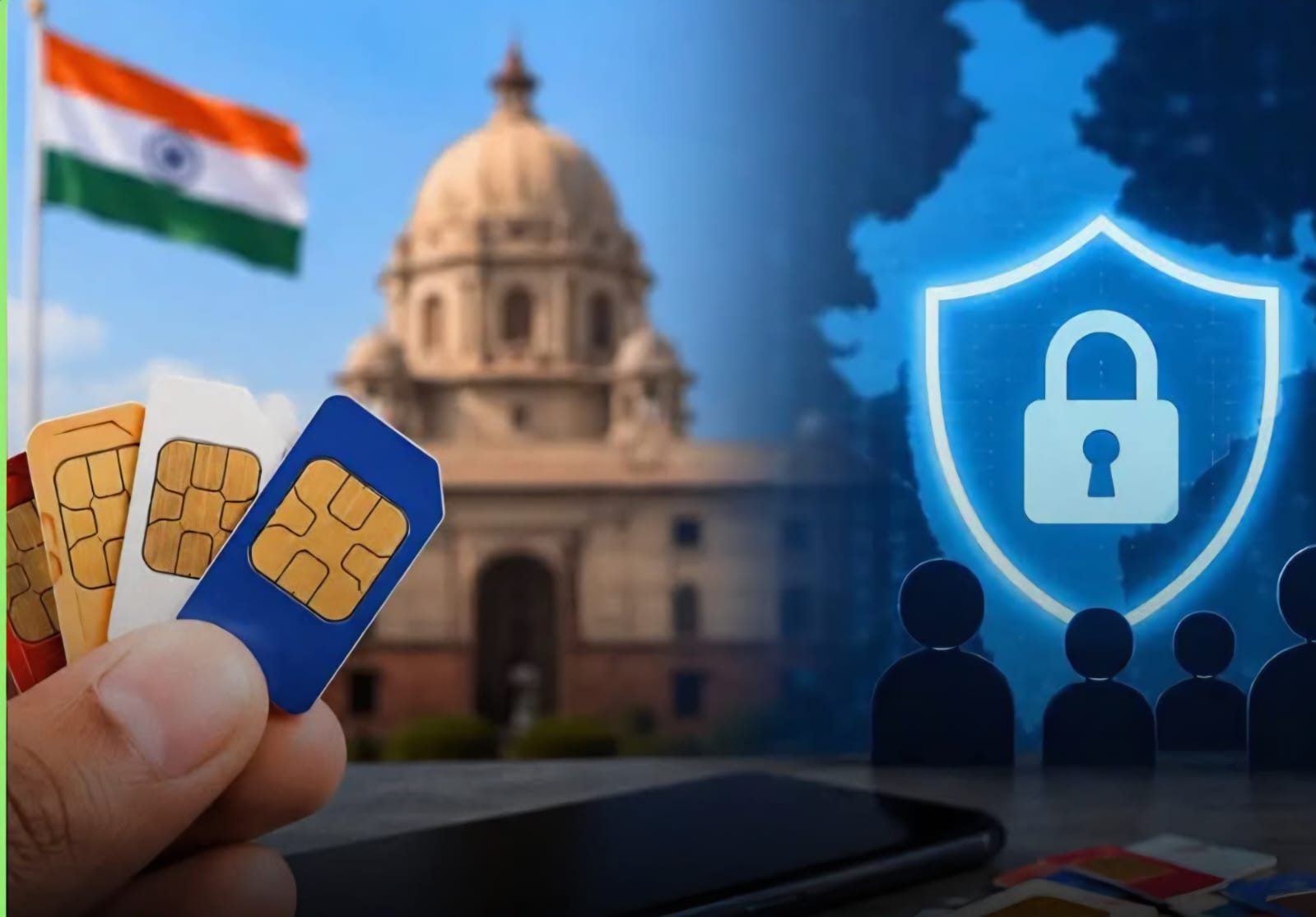
India will strictly enforce its long-standing SIM card limits starting August 24, 2026. Telecom operators must use the government's Digital Intelligence Platform to block new SIM issuances to individuals holding over nine connections (six in North-Eastern states), preventing cross-operator limit evasion and curbing telecom fraud.
NEW DELHI — The Department of Telecommunications (DoT) has directed all telecom operators across India to implement strict technological controls starting August 24, 2026, to prevent subscribers from obtaining mobile connections beyond the legally permitted limit.
Under the new directive issued in a circular dated August 17, telecom service providers must integrate their onboarding systems with the central Digital Intelligence Platform (DIP). This step aims to automatically block individual applicants who already hold the maximum number of SIM cards registered in their name across all service providers.
The enforcement push targets identity fraud, unauthorized SIM usage, and cybercrime by closing gaps that previously allowed subscribers to bypass individual SIM caps by registering connections with different operators or across separate telecom circles.
National SIM Limits and Regional Variations
While the national ceiling on mobile connections per individual remains unchanged at nine, the DoT is shifting from self-declaration to real-time enforcement across all telecom circles.
General Telecom Circles: Individuals in most states and union territories can hold up to nine active mobile connections registered under their identity.
Restricted Regions: Subscribers residing in Jammu and Kashmir, Assam, and the North-Eastern states remain subject to a lower cap of six active mobile connections per person.
The limit applies to the sum total of connections held across all providers—such as Reliance Jio, Bharti Airtel, Vodafone Idea, and BSNL—rather than nine connections per provider.
Technical Integration with Digital Intelligence Platform
To enforce the cap, telecom companies must introduce technical and organizational checks during the customer onboarding workflow. Operators will query the central Digital Intelligence Platform (DIP), which aggregates subscriber records from every telecom service provider nationwide.
Starting August 23, 2026, the DIP will display a representative photo-based identification feature for subscribers identified as having reached or exceeded their applicable connection ceiling. Telecom operators have been granted until November 30, 2026, to fully streamline their automated system integration.
If a connection is activated beyond the permissible ceiling during the transition period, DoT rules specify that the additional SIM may be immediately suspended for 24 hours while verification takes place under the Customer Application Form (CAF) terms.
Mandatory Disclosure Rules for Consumers
Applicants seeking a new mobile connection must explicitly disclose all existing mobile numbers registered under their identity on the updated Customer Application Form (CAF). This includes active connections obtained from other telecom operators or registered in different service areas.
The new rules do not mean that existing active SIM cards above the limit will instantly deactivate on August 24. However, individuals exceeding their ceiling must surrender, transfer, or disconnect surplus numbers through the government’s Sanchar Saathi portal to bring their overall count into compliance before applying for any additional mobile connections.
Official Sources Section
According to official circulars issued by the Department of Telecommunications (DoT), telecom service providers are mandated to halt SIM issuance beyond prescribed limits starting August 24. Operational frameworks and subscriber management guidelines are coordinated via the central Telecom Regulatory Authority of India (TRAI) and the official Sanchar Saathi Portal.
Quote Section
"According to officials at the Department of Telecommunications, mandatory cross-operator verification through the Digital Intelligence Platform ensures real-time compliance with individual SIM caps, preventing illegal multi-SIM accumulation across different circles."
Why It Matters
For mobile subscribers, the tighter enforcement prevents identity theft and deters bad actors from fraudulently obtaining SIM cards using stolen credentials. For citizens holding multiple numbers across different service providers, checking active registrations on the Sanchar Saathi portal is now essential to avoid delays when requesting new mobile lines. For telecom operators, integrated verification reduces regulatory non-compliance and strengthens cybersecurity across telecommunication networks.
Key Facts at a Glance
Effective Date: Automated cross-operator blocking takes effect on August 24, 2026, with full technical integration required by November 30, 2026.
Connection Cap: Maximum 9 SIM cards per individual across India, and 6 SIM cards for Jammu & Kashmir, Assam, and North-Eastern states.
Enforcement System: Operators must check applicant data against the government's central Digital Intelligence Platform (DIP) before issuance.
Mandatory Disclosure: Applicants must declare all active mobile numbers on the Customer Application Form regardless of operator or state circle.
Consumer Action: Existing users exceeding the ceiling can manage, report, or surrender unneeded connections via the Sanchar Saathi portal.
Frequently Asked Questions
Will my existing SIM cards stop working on August 24?
No. Existing active SIM cards will not automatically stop working on August 24. However, you will be blocked from getting any new SIM card if your total connections already meet or exceed the limit.
How many SIM cards can a person legally hold in India?
An individual can hold up to nine mobile connections across all telecom operators in most parts of India. In Jammu and Kashmir, Assam, and North-Eastern states, the limit is six connections per person.
How do telecom operators verify if I already have 9 SIM cards?
Telecom service providers will query the Department of Telecommunications' central Digital Intelligence Platform (DIP) to verify your total active connections across all networks before issuing a new SIM.
How can I check how many SIM cards are registered under my name?
Citizens can log onto the government's official Sanchar Saathi portal (TAFCOP feature) using their primary mobile number to view, report, or surrender unauthorized or unneeded connections registered under their identity.
Source: Official circulars and statements from the Department of Telecommunications (DoT), the Telecom Regulatory Authority of India (TRAI), and the Sanchar Saathi Portal.