The India-UK Comprehensive Economic and Trade Agreement (CETA) officially took effect on July 15, 2026, facilitating $140 million in zero-duty Indian exports on its first day. The landmark pact aims to boost bilateral trade to $100 billion by 2030, enhancing market access for Indian goods and professionals while safeguarding sensitive domestic sectors.
The Comprehensive Economic and Trade Agreement (CETA) marks a new era in bilateral relations, granting immediate duty-free access to nearly 99% of Indian goods in the British market.
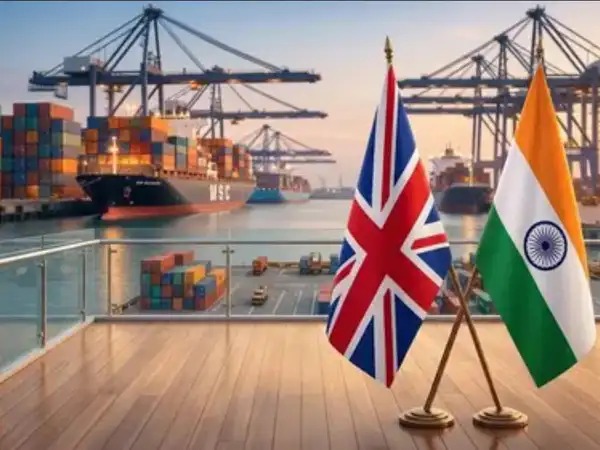
India successfully exported $140 million worth of goods to the United Kingdom on Wednesday, July 15, 2026, marking the first day of the implementation of the India-UK Comprehensive Economic and Trade Agreement (CETA). The inaugural shipments, which included textiles, gems and jewellery, engineering goods, marine products, electronics, and pharmaceuticals, were dispatched from over 20 locations, including major seaports in Mundra, Nhava Sheva, and Chennai, as well as air cargo hubs in Mumbai, Kolkata, and Hyderabad.
The landmark agreement, which follows 14 rounds of rigorous negotiations, aims to expand bilateral trade from the current $60 billion to $100 billion by 2030. By eliminating tariffs on nearly 99% of Indian exports, the pact is expected to provide a significant competitive edge to labour-intensive sectors and bolster the "Make in India" initiative.
A New Benchmark for Bilateral Trade
The CETA is described by officials as one of the most ambitious trade deals ever undertaken by India. The agreement, which spans 30 chapters, establishes a robust framework for services, investment, and professional mobility, while also including a Double Contribution Convention (DCC) to assist Indian professionals working temporarily in the UK.
Under the DCC, eligible Indian professionals and their employers will be exempt from making social security contributions in the UK for up to five years, provided they continue their contributions in India.
Protecting Domestic Interests and MSMEs
While the deal opens significant market access, the Indian government has maintained strategic safeguards. India has ring-fenced sensitive domestic sectors, including agriculture, dairy, and gold, by excluding them from duty concessions. Furthermore, the agreement includes specific protections for Indian steel exporters against potential market disruptions.
In terms of government procurement, the pact allows Indian suppliers legal access to the UK’s £90 billion ($122 billion) procurement market, with reciprocal opportunities offered to British firms in India, subject to strict thresholds and safeguards to protect domestic Micro, Small, and Medium Enterprises (MSMEs).
Official Sources and Perspectives
Commerce Secretary Rajesh Agrawal emphasized that the agreement is a "win-win" outcome achieved after more than 800 technical sessions. British High Commissioner to India, Lindy Cameron, hailed the deal as a "new gold standard," noting its potential to contribute nearly £5 billion annually to the GDP of both nations.
Prime Minister Narendra Modi noted in a social media statement that the operationalization of the CETA and the social security agreement will deepen economic linkages and provide "fresh momentum to farmers, entrepreneurs and MSMEs".
Why It Matters
The implementation of the CETA is critical for Indian exporters who have faced tariff disadvantages compared to competitors in regions like Bangladesh or Pakistan. By removing 4–16% in tariffs on various product categories, Indian businesses are now better positioned to integrate into global value chains and increase their footprint in one of the world’s largest developed economies.
Key Facts at a Glance
Zero-Duty Access: Nearly 99% of Indian exports now enter the UK market duty-free.
Bilateral Goal: The agreement targets a total bilateral trade volume of $100 billion by 2030.
Immediate Impact: $140 million in goods were exported on the first day of the pact alone.
Professional Mobility: The DCC exempts eligible Indian workers from UK social security contributions for up to five years.
FAQ
How does this agreement affect Indian MSMEs?
The pact includes simplified customs procedures, digital trade facilitation, and specific safeguards that allow India to prioritize MSME participation in government procurement.
What happens if the UK imposes a carbon tax?
The CETA contains a specific provision allowing India to withdraw certain concessions if a future UK carbon tax is deemed to have an adverse impact on Indian exports.
Does the deal open India's agricultural sector?
No. India has excluded sensitive items like dairy, agriculture, millets, apples, and edible oils from tariff concessions to protect domestic farmers.
Source: Ministry of Commerce and Industry, GOV.UK, PIB India, House of Commons Library