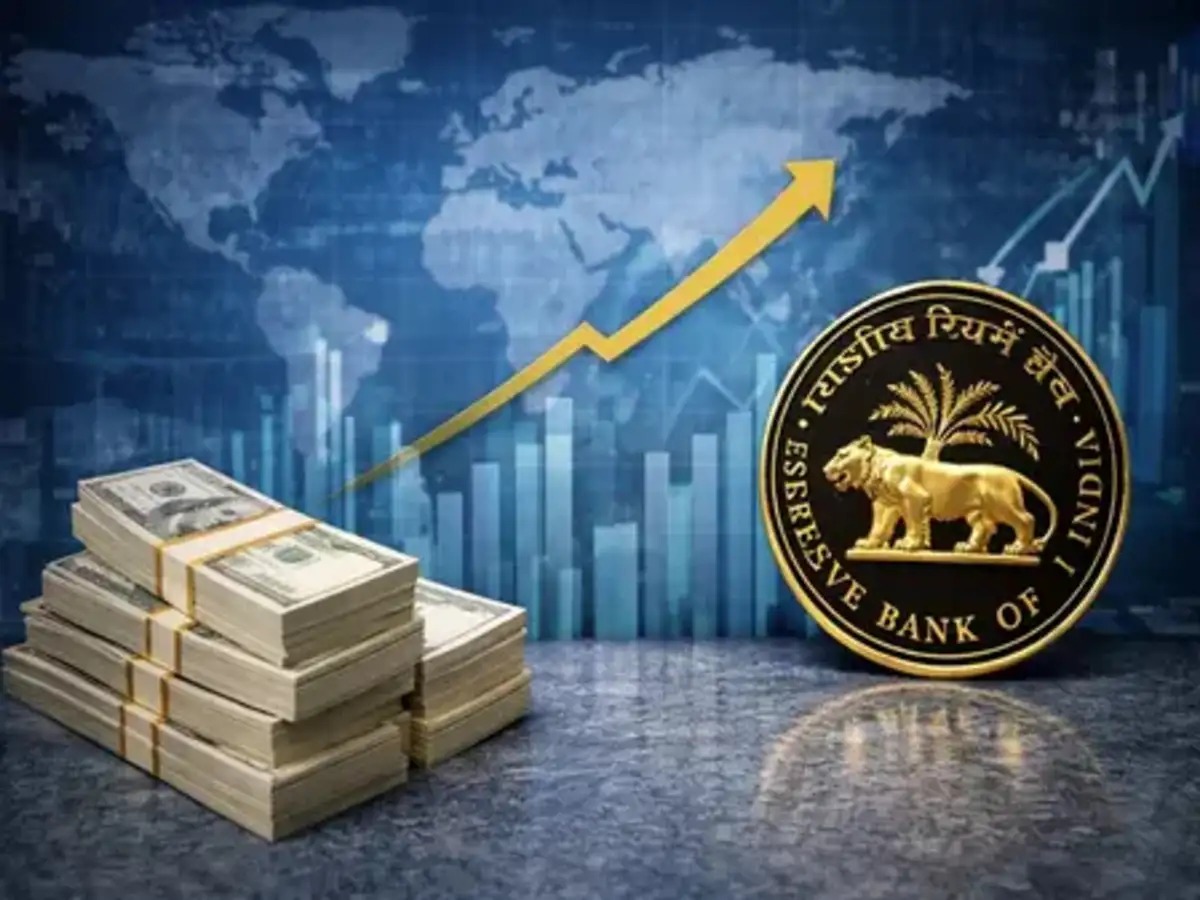
India forex reserves rose to $675.16 billion for the week ending July 10, 2026, up from $674.19 billion in the preceding week, according to new data from the Reserve Bank of India. The steady accumulation reflects a strategic policy of building capital buffers to shield the domestic currency from global market volatility.
MUMBAI — India forex reserves rose significantly to reach $675.16 billion for the week ending July 10, 2026. The monetary update, made public through the central bank's weekly statistical supplement on Friday, July 17, 2026, marks a strong expansion from the $674.19 billion logged in the preceding week. This steady increase highlights the central bank's active dollar-buying market interventions, aimed at stabilizing the domestic rupee while reinforcing the nation's balance sheet defenses against unexpected capital flights across global emerging financial markets.
Central Bank Operations Strengthen India Forex Reserves
According to granular financial reports published by the monetary policy desk, the expansion of India forex reserves by nearly one billion dollars within a single weekly reporting cycle indicates a structured regulatory approach. The central bank capitalized on steady foreign portfolio investment (FPI) inflows into the domestic equity and debt markets to absorb excess dollar liquidity, thereby protecting regional export competitiveness.
The primary components driving the growth in India forex reserves include Foreign Currency Assets (FCAs), gold reserves, Special Drawing Rights (SDRs), and the country's reserve position with the International Monetary Fund. Foreign Currency Assets, which constitute the largest piece of the reserve basket, experienced valuation gains as major global currencies fluctuated against the US dollar index, further expanding the nation's total import cover window.
Strategic Intervention Stabilizes the Domestic Rupee
The strategic build-up of India forex reserves serves as the primary operational tool used by the RBI to counter abrupt exchange rate fluctuations. Throughout the preceding months, global economic pressures—including adjustments in Western sovereign interest rates and shifting commodity price cycles—created systemic depreciation pressures for currencies across emerging markets.
Historically, thin reserve positions forced central banks to raise interest rates defensively, which often dampened local corporate expansions. Armed with a deep pool of foreign currency assets, the RBI’s trading desk can smoothly inject dollars into the local interbank market during times of severe spot demand. This specialized capability ensures that the Indian Rupee fluctuates within a tight, highly predictable trading band, minimizing currency risk for international trade entities.
Long-Term Capital Safeguards for Institutional Investors
For global fund managers, cross-border corporate investors, and asset managers, the robust trajectory of India forex reserves enhances institutional confidence. A large capital buffer indicates sovereign financial strength, which reassures major international rating agencies during periodic macroeconomic reviews.
This strong position helps minimize the country's sovereign risk premiums, enabling domestic commercial firms and infrastructure organizations to secure long-term external commercial borrowings (ECBs) at highly competitive institutional interest rates. Furthermore, it protects macro financial stability, guaranteeing foreign portfolio investors that they can seamlessly liquidate and repatriate investments without triggering steep localized currency devaluations.
Microeconomic Impact on Citizens, Commuters, and Consumers
The growth of India forex reserves yields concrete, positive benefits for regular citizens, small commercial enterprises, and local consumers. A highly insulated national currency protects local purchasing power by preventing sharp spikes in imported inflation. This stability is particularly vital for keeping landing costs predictable for essential consumer goods like electronic sub-assemblies, pharmaceutical ingredients, and industrial machinery.
For local business owners engaged in cross-border trade, steady exchange rates remove the need for expensive short-term currency hedging contracts. Additionally, domestic travelers and students pursuing education overseas benefit from a stable currency, as it keeps foreign tuition costs and international travel expenses highly predictable over the long term.
Official Sources Section
The financial indicators, component valuations, and multi-asset reserve balances cited in this macroeconomic report are drawn directly from the formal Weekly Statistical Supplement (WSS) databases compiled and maintained by the Reserve Bank of India (RBI). Capital migration comparisons have been cross-verified with official international reserve scorecards updated by the International Monetary Fund (IMF).
Quote Section
"According to officials familiar with the central bank's reserve management portfolio, the recent increase to $675.16 billion highlights a disciplined policy of building buffers during favorable liquidity cycles. The primary focus remains on maintaining strong liquidity protection, ensuring the domestic economic grid is well-insulated against sudden shifts in cross-border capital flows."
Why It Matters
As global trade networks navigate shifting geopolitical dynamics, deep monetary reserves are essential for emerging market stability. India's strategic push to expand its total reserves provides a powerful macroeconomic shock absorber. This solid cushion enables the domestic economy to pursue its long-term development targets steadily, remaining well-insulated from external liquidity shocks.
Key Facts at a Glance
Latest Balance Status: India forex reserves climbed to $675.16 billion for the week ending July 10, 2026.
Preceding Baseline: Measured at $674.19 billion during the prior weekly reporting loop.
Regulatory Authority: Systematically managed and deployed by the Reserve Bank of India's market desk.
Primary Utility: Functions as a robust macroeconomic hedge against imported inflation and currency volatility.
FAQ Section
Q1: What are the latest official figures for India's foreign exchange reserves?
According to new data from the RBI, India forex reserves reached $675.16 billion for the week ending July 10, 2026.
Q2: How much did the total reserves expand compared to the previous week?
The total reserves experienced an increase of approximately 970 million dollars, rising from the $674.19 billion recorded the week prior.
Q3: What core asset classes make up the total foreign exchange reserve pool?
The reserve pool consists of Foreign Currency Assets (FCAs), physical gold holdings, Special Drawing Rights (SDRs), and the reserve tranche position with the IMF.
Q4: How does a larger forex reserve buffer assist the domestic economy?
It provides the central bank with the necessary resources to stabilize the rupee, protect the country from imported inflation, and maintain international investor confidence.
Source: Weekly Statistical Supplement reports accessed via the official database of the Reserve Bank of India (RBI). Strategic asset tracking cross-referenced with public metrics from the Ministry of Finance.