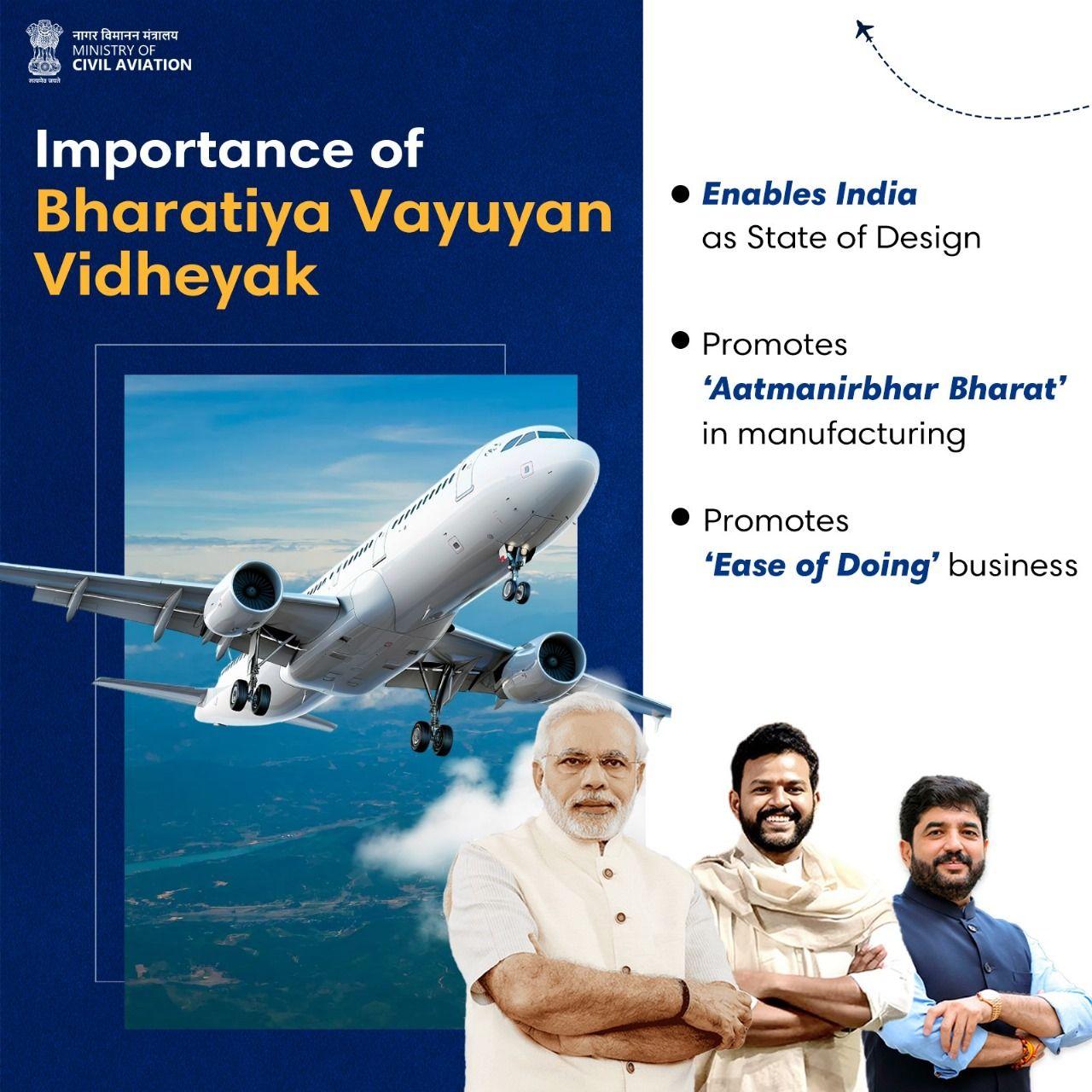
The Government of India has enacted the Bharatiya Vayuyan Adhiniyam, a modern civil aviation law replacing the 1934 Aircraft Act. The legislation updates the statutory powers of the DGCA, simplifies cross-border aircraft leasing, and establishes clear safety parameters for commercial drone integration across Indian airspace.
NEW DELHI — The Government of India has officially enacted the Bharatiya Vayuyan Adhiniyam, establishing a completely modernized, sovereign legal structure for the nation's rapidly scaling civil aviation ecosystem.
This comprehensive legislation formally repeals and replaces the century-old, colonial-era Aircraft Act of 1934. Introduced by the Ministry of Civil Aviation, the new framework targets the bureaucratic complexities that long bottlenecked domestic commercial carriers, regional airport developers, and drone technology manufacturers. The legislation empowers regulatory watchdogs like the Directorate General of Civil Aviation (DGCA) while introducing stringent safety guidelines optimized for modern aerospace engineering.
Deconstructing the Shift from Colonial Regulations to Modern Governance
The legacy Aircraft Act of 1934 was drafted when commercial flight was an exclusive, small-scale luxury. Over the decades, piecemeal amendments created overlapping jurisdictions and regulatory grey zones, particularly regarding digital safety parameters, advanced drone operations, and specialized international aircraft leasing agreements.
According to gazette releases from the Ministry of Civil Aviation, the Bharatiya Vayuyan Adhiniyam provides clear, codified statutory authority to India’s primary oversight bodies. Rather than operating under broad executive rules, the parameters governing the Bureau of Civil Aviation Security (BCAS), the Aircraft Accidents Investigation Bureau (AAIB), and the DGCA are now fully embedded into the central statute. This formal structure shields regulatory enforcement from procedural delays, ensuring swift safety checks and clear legal accountability.
Streamlining Ease of Doing Business for Commercial Carriers
A cornerstone objective of the new law is elevating India's position within international aircraft financing networks. Historically, Indian airlines faced steep lease premiums because overseas lessors lacked seamless domestic mechanisms to reclaim or re-register aircraft assets during corporate bankruptcies.
The new statutory design addresses these structural challenges directly by aligning closely with international aviation protocols:
| Regulatory Pillar | Legacy Provisions (Aircraft Act, 1934) | Modern Framework (Bharatiya Vayuyan Adhiniyam) |
| Aircraft Leasing Moats | Ambiguous re-registration rights; lengthy legal intervention during airline insolvencies | Harmonized with international standards to ensure secure asset asset repossession |
| Drone & eVTOL Policy | Governed via complex, temporary circulars and ad-hoc exemptions | Full legal codification for commercial unmanned aircraft systems (UAS) |
| Manufacturing Red Tape | Cumbersome design and component manufacturing certifications | 'Make in India' provisions targeting rapid aerospace self-reliance |
Technical Safety Frameworks and Drone Integration
The rapid rise of commercial delivery drones and embryonic electric Vertical Takeoff and Landing (eVTOL) aircraft demanded an elastic legal foundation. The Bharatiya Vayuyan Adhiniyam explicitly categorizes all modern unmanned aerial vehicles under a unified regulatory umbrella.
According to senior parliamentary notifications, the law institutes robust digital airspace monitoring protocols. Operating unauthorized drones near critical infrastructure—such as defense sectors, nuclear installations, or main airport approach paths—now triggers criminal penalties instead of standard administrative fines. This transition provides law enforcement and air traffic management with the legal teeth necessary to counter modern airborne security threats.
Official Sources Section
The implementation data and regulatory targets are compiled from official filings:
Expert Assessments on Industry Impact
Aviation analysts suggest that removing systemic red tape will lower costs for consumers and encourage long-term foreign direct investment into Indian maintenance, repair, and overhaul (MRO) facilities.
"The passing of the Bharatiya Vayuyan Adhiniyam marks a monumental pivot for Indian aviation safety and corporate confidence," stated an expert legal brief published in Lex ad Coelum (Bhat, 2025). "By replacing archaic definitions, India has cleared a pathway for transparent asset tracing, which will directly encourage international registries to offer competitive capital rates to domestic airlines."
Why It Matters to Consumers and Investors
For everyday travelers, the law translates to stricter safety accountability and more efficient airline operations. For institutional investors, it removes the legal ambiguities that previously clouded Indian aviation assets. The clear statutory definitions shield airlines from abrupt policy shifts, lowering overall operational risks and making regional routes under connectivity schemes more commercially viable for new operators.
Key Facts at a Glance
Total Replacement: Completely replaces the 90-year-old Aircraft Act of 1934 with an updated legal architecture.
Institutional Empowerment: Provides explicit, individual statutory authority to the DGCA, BCAS, and AAIB.
Financing Protections: Introduces clear protections for international aircraft lessors, reducing asset-reclamation friction.
Drone Safety Rules: Codifies criminal penalties for operating unauthorized unmanned aircraft near restricted zones.
FAQ Section
What is the primary objective of the Bharatiya Vayuyan Adhiniyam?
The primary goal is to replace the outdated 1934 Aircraft Act with a modern, comprehensive law that simplifies business operations, addresses drone technologies, and strengthens institutional safety enforcement.
How does this new legislation affect drone operations in India?
The law incorporates unmanned aerial systems into the central aviation statute, removing temporary rules and setting definitive, strict guidelines for commercial drone registration, usage, and airspace violations.
Will this new framework affect airline ticket prices?
By reducing aircraft leasing friction and supporting local manufacturing and MRO hubs, the law lowers structural overhead costs for airlines, which can lead to more stable ticket pricing for consumers.
References
Bhat, S. (2025). Protection of Interests in Aircraft Objects Act 2025: Indian Skies are Still Murky. Lex Ad Coelum, 5(1), 13–16.