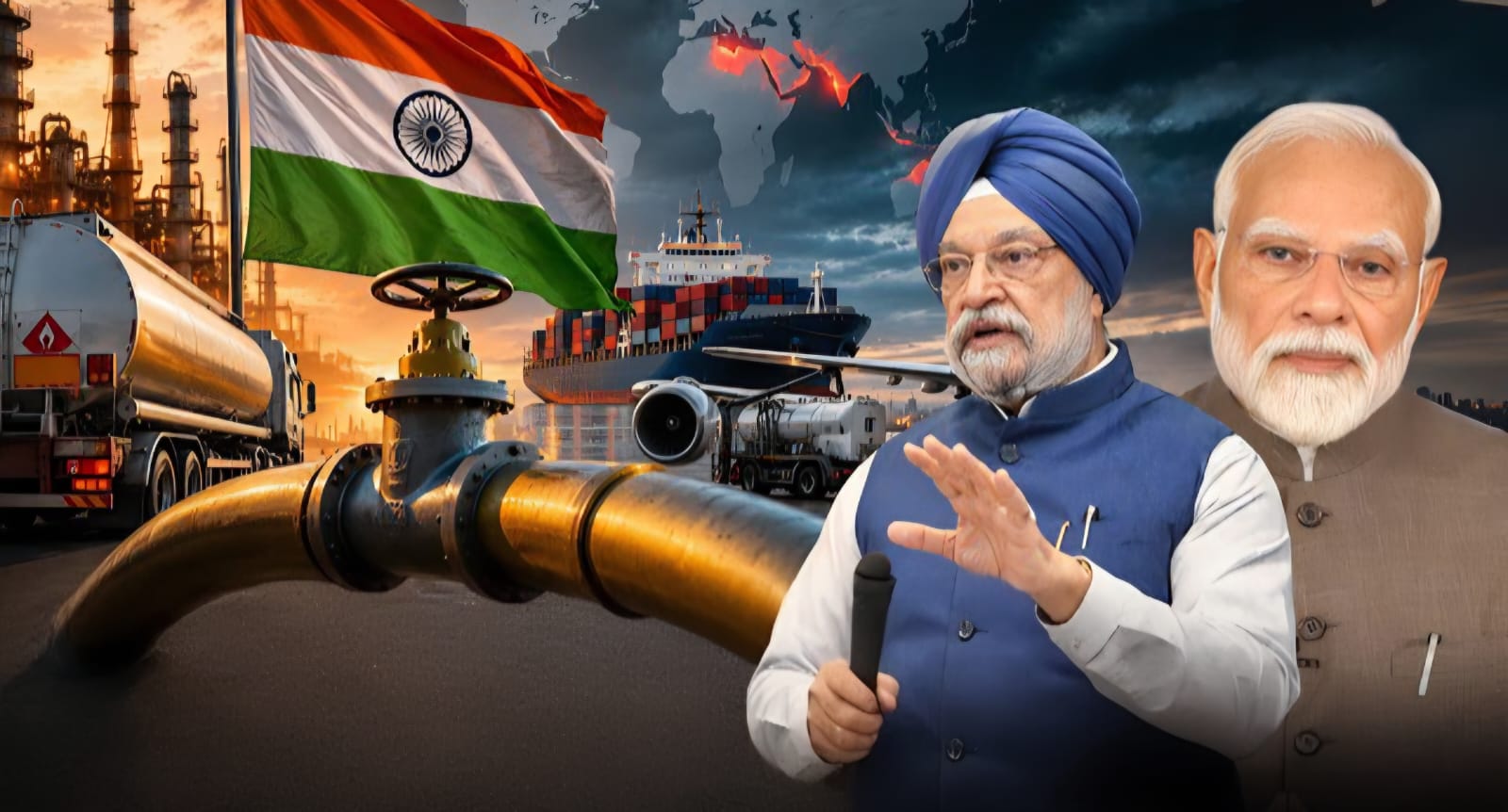
India has raised export duties on petroleum products effective August 3, 2026. Total diesel export duty rose to ₹25.50/litre (including a ₹1.50 Road and Infra Cess), petrol to ₹3.50/litre, and ATF to ₹22.00/litre. Issued by the Ministry of Finance, the order secures domestic supply while leaving retail pump prices unchanged.
NEW DELHI — The Indian government has increased windfall export taxes across major petroleum products, including high-speed diesel, petrol, and Aviation Turbine Fuel (ATF), effective August 3, 2026, according to official notifications issued by the Ministry of Finance. Under the revised duty schedule, the total export levy on diesel has risen sharply to ₹25.50 per litre, petrol export duty has been raised to ₹3.50 per litre, and ATF export duty has surged to ₹22.00 per litre. The decision forms part of the government’s bi-fortnightly tax recalibration aimed at ensuring energy security within domestic markets while absorbing extraordinary profit margins generated by refining entities trading in international markets.
Complete Breakdown of Revised Export Duties
The updated duty framework introduces changes across all major refined fuel categories leaving Indian ports. The total applicable levy on high-speed diesel consists of a Special Additional Excise Duty (SAED) of ₹24.00 per litre alongside the newly reinstated Road and Infrastructure Cess (RIC) of ₹1.50 per litre. Prior to this notification, total duty on diesel exports stood at ₹15.50 per litre.
For motor spirit (petrol), export duty has been adjusted upward from ₹2.50 per litre to ₹3.50 per litre. Aviation Turbine Fuel (ATF) exports faced a significant revision, with the levy jumping to ₹22.00 per litre from the previous rate of ₹14.50 per litre.
Market Implications for Domestic Refiners and Energy Markets
The notification primarily impacts export-oriented refiners operating large complex facilities on the western coast of India. Private sector operators, such as Reliance Industries Limited (RIL) and Nayara Energy, which ship substantial volumes of gasoil, gasoline, and jet fuel to European and Asia-Pacific markets, will experience compressed net realized margins on outbound cargoes.
Private Refiners: Exporters must absorb the increased SAED and cess rates, disincentivizing the diversion of fuel supplies away from domestic fuel stations.
State-Owned Oil Marketing Companies: Public sector enterprises, including Indian Oil Corporation (IOCL), Bharat Petroleum Corporation Limited (BPCL), and Hindustan Petroleum Corporation Limited (HPCL), remain largely insulated as their operations focus overwhelmingly on meeting domestic market demand.
Retail Consumers: Domestic retail prices for petrol and diesel at consumer pumps remain completely unchanged, as the duty adjustments apply exclusively to fuel cleared for overseas export.
Official Sources Section
According to official notifications published by the Central Board of Indirect Taxes and Customs (CBIC) and public announcements released through the Press Information Bureau (PIB), the revised export duty rates became enforceable at midnight on August 3, 2026. The order was issued under the Central Excise Act after a periodic joint evaluation by the Ministry of Finance and the Ministry of Petroleum and Natural Gas.
Statement from Official Sources
"The revision in Special Additional Excise Duty and infrastructure levies on petroleum exports reflects our periodic assessment of international crude prices and product crack spreads," stated officials from the Ministry of Finance. "These measures prioritize domestic fuel availability while ensuring that windfall gains arising from global market volatility are appropriately regulated."
Why It Matters
The recalibration of export taxes carries direct implications across national infrastructure financing, market supply chains, and macroeconomic planning:
Infrastructure Capital Generation: Re-imposing the ₹1.50 per litre Road and Infrastructure Cess on diesel generates dedicated revenue earmarked for state-funded highways and logistical corridors.
National Energy Security: Higher export barriers discourage domestic refiners from prioritizing foreign buyers during periods of elevated global oil prices.
Inflationary Shielding: By stabilizing domestic supply chains without altering retail fuel rates, the policy prevents supply shortages that could otherwise trigger localized price inflation.
Key Facts at a Glance
Diesel Duty: Raised to ₹25.50 per litre (₹24.00 SAED + ₹1.50 Road & Infra Cess) from ₹15.50 per litre.
Petrol Duty: Raised to ₹3.50 per litre from ₹2.50 per litre.
ATF Duty: Raised to ₹22.00 per litre from ₹14.50 per litre.
Effective Date: August 3, 2026.
Consumer Impact: Zero change in retail petrol or diesel prices across domestic fuel pumps.
Frequently Asked Questions (FAQ)
What are the total export duties on fuel in India effective August 3?
Effective August 3, 2026, the total export duty on high-speed diesel is ₹25.50 per litre (including a ₹1.50 Road and Infra Cess), petrol export duty is ₹3.50 per litre, and Aviation Turbine Fuel (ATF) export duty is ₹22.00 per litre.
Will domestic petrol and diesel pump prices go up after this announcement?
No. The official executive order applies strictly to exported petroleum products shipped out of Indian ports. Rates for petrol and diesel cleared for domestic consumption remain unchanged.
What is the purpose of the Special Additional Excise Duty (SAED) on exports?
The SAED acts as a windfall tax mechanism to absorb extraordinary profits made by refiners when international crack spreads surge, while ensuring adequate fuel supplies remain reserved for the domestic economy.
How frequently does the Indian government review these fuel export levies?
The Ministry of Finance reviews export duties, SAED, and related cesses every fortnight based on two-week average international prices of crude oil and refined petroleum products.
Source: Direct gazette notifications and official press updates from the Ministry of Finance, Central Board of Indirect Taxes and Customs, and the Press Information Bureau.