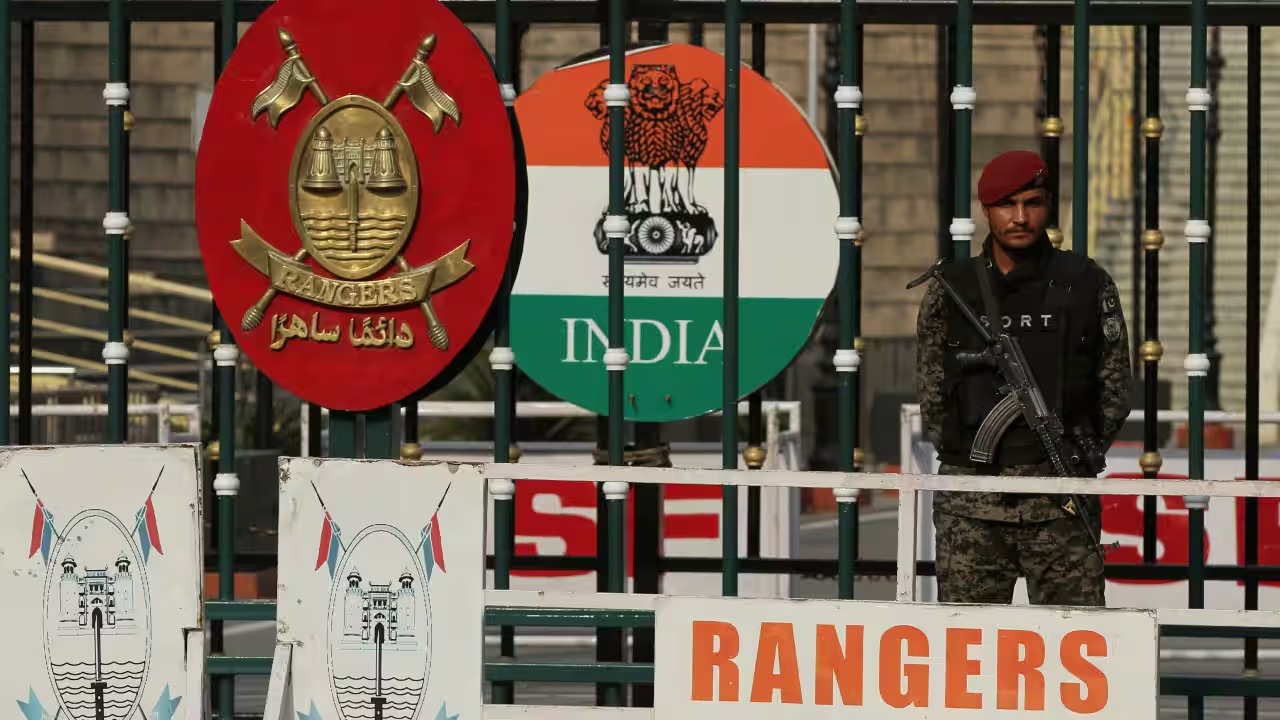
Indian Foreign Secretary Vikram Misri has explicitly rejected reports of active backchannel or Track-2 diplomatic negotiations with Pakistan. Clarifying that recent meetings in Colombo were strictly private academic events, Misri reaffirmed that New Delhi takes no official cognizance of unauthorized forums while cross-border security concerns remain unresolved.
VICTORIA, Seychelles — The Government of India has formally rejected media reports suggesting the revival of backchannel diplomacy and state-sanctioned "Track-2" dialogues with Pakistan. Speaking during an official diplomatic visit, Indian Foreign Secretary Vikram Misri clarified that any recent interactions between retired figures from both nations in Colombo or Bangkok were entirely private initiatives. He stressed that New Delhi attaches no official weight or political cognizance to these unauthorized gatherings.
The categorical denial comes at a critical juncture for South Asian geopolitics. Relations between the nuclear-armed neighbors have remained severely fractured following a major cross-border terrorist attack in Pahalgam in April 2025, which prompted India's retaliatory military campaign, code-named "Operation Sindoor," in May 2025. By maintaining a firm stance, India aims to reinforce its long-standing foreign policy principle that state-level dialogue cannot coexist with cross-border terrorism.
Direct Dismissal of the Colombo Strategic Meetings
The diplomatic clarification follows multiple media accounts asserting that prominent Indian and Pakistani delegates had quietly engaged in conflict-management discussions. The reports alleged that a "Track-1.5" meeting occurred on the margins of the International Institute for Strategic Studies (IISS) annual South Asia Dialogue held at the Hilton Colombo in Sri Lanka. The reported presence of former Indian Army Chief Gen. M.M. Naravane and certain political figures alongside Pakistani foreign ministry official Sajjad Haider Khan led to speculation regarding a quiet diplomatic thaw.
However, addressing journalists directly, Foreign Secretary Misri dismissed the narrative of a coordinated bilateral breakthrough. He noted that dozens of similar strategic seminars take place globally throughout the year without state involvement. Misri confirmed that while citizens, retired military officials, and academics are free to express individual perspectives at international conferences, they do not possess any mandate to represent the official position of the Indian state.
Context of the Stalled Bilateral Landscape
Official archives show that formal ties have faced an intense structural freeze for years. Islamabad originally scaled back bilateral diplomatic channels and halted direct trade links in August 2019 following India’s constitutional abrogation of Article 370, which altered the special status of Jammu and Kashmir. The baseline security situation deteriorated drastically in April 2025 when state-sponsored infiltration led to the deaths of 26 civilians in Pahalgam, systematically derailing subsequent efforts toward regional stabilization.
Following the military escalation of May 2025, India implemented severe economic and administrative countermeasures. This included placing the decades-old Indus Waters Treaty in abeyance under the directive of Prime Minister Narendra Modi, who reiterated that regional water sharing and cross-border militancy are fundamentally incompatible. Currently, the singular functional communication channel between the two capitals is the weekly Tuesday hotline reserved for the respective Directors General of Military Operations (DGMOs).
Impact on Regional Stakeholders and Investors
The ongoing deep freeze shapes clear socio-economic and strategic outcomes for multiple regional groups:
For Defense and Aviation Sectors: Trans-continental airlines continue to navigate restricted overflight rights across Pakistani airspace, preserving elongated routing models for specific Western trajectories out of New Delhi.
For Regional Trade Houses: The continued suspension of direct commercial transit blocks localized supply chains, leaving consumer trade to route inefficiently via third-party hubs like Dubai or Singapore.
For International Geopolitical Investors: The strict separation of private talk shops from official state policy confirms that India's sovereign risk assessments remain heavily anchored to border security matrices.
Official Sources Section
According to updates preserved by the Ministry of External Affairs (MEA) and verified corporate transcripts provided by ANI News, the Indian administration’s baseline diplomatic outlook has not shifted. The documentation outlines that security clearance parameters for retired civil servants participating in global seminars remain independent of federal policymaking core tracks.
Quote Section
"According to officials, the government maintains a clear and unwavering position that terror and talks cannot go together. Unofficial multilateral conferences organized by global think tanks do not represent or alter the sovereign policies of the state."
Why It Matters
The explicit dismissal of backchannel relevance clarifies that India will not permit private dialogues to shape its public diplomatic posture. By minimizing the status of these strategic workshops, New Delhi signals to international observers and regional actors that substantial policy shifts are strictly contingent on a visible, verifiable cessation of cross-border security provocations rather than informal civil society discussions.
Key Facts at a Glance
The Clarification: Foreign Secretary Vikram Misri confirmed that India takes no official cognizance of recent informal meetings involving retired officials.
The Backdrop: Formal bilateral frameworks remain completely frozen following the April 2025 Pahalgam attack and India's subsequent "Operation Sindoor" responses.
The Forum: Rumors originated from a multilateral South Asia security dialogue arranged by a London-based think tank at the Hilton Colombo.
Active Links: Communication remains restricted exclusively to the functional DGMO military hotline operating on a weekly schedule.
Frequently Asked Questions
Q: What is the difference between Track-1 and Track-2 diplomacy? A: Track-1 diplomacy involves official, binding government-to-government negotiations. Track-2 diplomacy refers to unofficial, non-binding interactions between retired diplomats, academics, and civil society members acting in their personal capacities.
Q: Did any serving Indian government officials attend the Colombo meetings? A: No. Indian diplomatic sources confirmed that there was zero serving official participation or state-backed involvement from the Indian side at the event.
Q: What is the current status of the Indus Waters Treaty between the two nations? A: Following the severe geopolitical friction in mid-2025, the Government of India took steps to keep the water-sharing pact in abeyance, tying future modifications directly to border security conditions.
Source: Ministry of External Affairs India Portfolio, ANI Diplomatic Communications Desk, Hindustan Times Strategic Affairs Archive