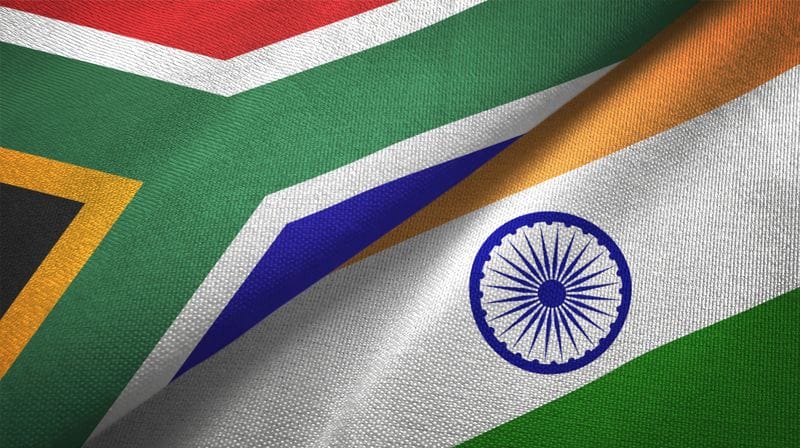
India and the Southern African Customs Union (SACU) signed the Terms of Reference on August 12, 2026, to formally start negotiations for a preferential trade agreement. Talks will commence within a month, with both sides aiming to finalize tariff concessions and boost multi-billion-dollar bilateral trade within one year.
NEW DELHI — India and the Southern African Customs Union (SACU) officially signed the Terms of Reference (ToR) on Wednesday, August 12, 2026, launching formal negotiations for a proposed India SACU preferential trade agreement. The agreement, finalized following high-level bilateral discussions between Indian Union Minister of Commerce and Industry Piyush Goyal and South Africa's Minister of Trade, Industry and Competition Parks Tau, establishes a structured framework to guide tariff reduction discussions over the next twelve months. Signed in the wake of the BRICS trade ministers' meeting, this strategic development seeks to reinvigorate commercial ties, lower trade barriers, and secure vital supply chains between India and the five Southern African nations.
Framework for Negotiations and Operational Timelines
The signed Terms of Reference serve as the foundational blueprint for the upcoming round of trade negotiations. Under the agreed framework, formal bargaining sessions for the India SACU preferential trade agreement will commence within one month of the signing date, with both sides committed to concluding the final pact within a year.
The five-member customs union comprises South Africa, Botswana, Namibia, Eswatini, and Lesotho. Previous attempts to establish an India SACU preferential trade agreement began in 2008 but faced prolonged delays due to complex tariff structures, domestic industry sensitivities, and market access disagreements. The renewed commitment establishes clear deadlines and institutional mechanisms to resolve lingering trade issues.
Under a preferential trade agreement, participating nations grant mutual tariff concessions on specific tariff lines, reducing import duties on agreed lists of goods to spur cross-border volume without requiring a total removal of duties across all sectors.
Bilateral Trade Dynamics Across Southern Africa
The Southern African Customs Union represents a vital trading regional bloc for New Delhi, though commercial exchange varies significantly across member nations.
South Africa: Serves as India’s largest trading partner within the SACU group. Bilateral trade between India and South Africa totaled $15.56 billion in the 2025–26 fiscal year, down from $18 billion in 2024–25, leaving India with a $1.55 billion trade deficit. Major Indian exports include vehicles, pharmaceuticals, machinery, textiles, and organic chemicals, while imports from South Africa consist primarily of gold, steam coal, copper ores, and manganese.
Botswana: Trade expanded by 21.26 percent to reach $614 million in fiscal year 2025–26. Botswana remains a crucial supplier of rough diamonds to India's cutting and polishing industry, while importing pharmaceuticals, iron, steel, and electrical equipment.
Namibia: Two-way trade reached $593 million in 2025–26, driven by Indian exports of refined products and imports of critical raw materials. Namibia holds rich deposits of uranium, diamonds, phosphate, and copper.
Eswatini and Lesotho: Combined trade with Eswatini ($23.69 million) and Lesotho ($8.47 million) accounts for a smaller share, focused mainly on agricultural goods, textiles, and machinery.
Strategic Impact on Businesses, Investors, and Industrial Sectors
The rollout of an India SACU preferential trade agreement carries strategic implications for exporters, manufacturers, and energy firms across both regions.
For Indian manufacturers, lower tariffs into Southern Africa present expanded market opportunities for automotive components, generic pharmaceuticals, medical devices, agricultural machinery, and digital technologies. Conversely, Southern African producers stand to benefit from reduced import duties on raw materials, minerals, and industrial inputs entering the Indian market.
Concurrently, during bilateral meetings between Indian representatives and Namibian delegates, both nations identified critical minerals—including lithium, cobalt, graphite, copper, and rare earth elements—as primary pillars for future industrial joint ventures. This critical mineral alignment aligns directly with India's clean energy transition and high-tech manufacturing goals.
Official Sources Section
According to official statements issued by the Ministry of Commerce and Industry of India and public updates from the Southern African Customs Union Secretariat, the two sides signed the Terms of Reference on August 12, 2026, to formally launch negotiations. Further confirmation was provided during joint press briefings following the BRICS trade ministers' summit and meetings of the India-Namibia Joint Trade Committee.
Quote Section
According to officials from the Ministry of Commerce and Industry:
"We discussed the signing of ToRs for the India-SACU PTA and early conclusion of negotiations, strengthening the India-South Africa trade engagement and exploring opportunities for cooperation in the critical minerals, pharmaceuticals, and manufacturing sectors".
Officials further stated that:
"Negotiations for the trade pact will commence within one month of signing the terms of reference and are targeted for conclusion within a year".
Why It Matters
The signing of the ToRs transforms years of stagnant discussions into an active negotiating pipeline. For India, securing preferential entry into Southern Africa strengthens supply chain resilience for essential industrial minerals and precious metals. For the five SACU nations, reduced trade friction with India unlocks affordable access to essential medicines, technological equipment, and capital goods, driving regional infrastructure and economic growth.
Key Facts at a Glance
Milestone Signed: Terms of Reference signed on August 12, 2026, to negotiate an India SACU preferential trade agreement.
Negotiation Timeline: Official talks begin by September 2026 and are set to wrap up within 12 months.
SACU Member States: South Africa, Botswana, Namibia, Eswatini, and Lesotho.
Key Sectors Targeted: Critical minerals, pharmaceuticals, automotive components, machinery, green energy, and textiles.
Historical Context: Negotiations originally stalled after 2008 due to market access differences.
Frequently Asked Questions (FAQ)
What is the India SACU preferential trade agreement?
It is a proposed bilateral trade pact between India and the five Southern African Customs Union member states aimed at offering mutual duty concessions and reducing trade tariffs on selected goods.
Which countries belong to the Southern African Customs Union (SACU)?
SACU consists of five nations: South Africa, Botswana, Namibia, Eswatini, and Lesotho.
When will trade negotiations for the deal officially start?
Formal negotiations are scheduled to begin within one month of the Terms of Reference signing, targeting full conclusion within one year.
What goods does India primarily trade with SACU nations?
India exports automobiles, generic pharmaceuticals, textiles, machinery, and organic chemicals, while importing gold, diamonds, coal, copper, manganese, and phosphoric acid.
Source: Ministry of Commerce and Industry, Government of India, Southern African Customs Union (SACU) Official Portal, Department of Trade, Industry and Competition, South Africa