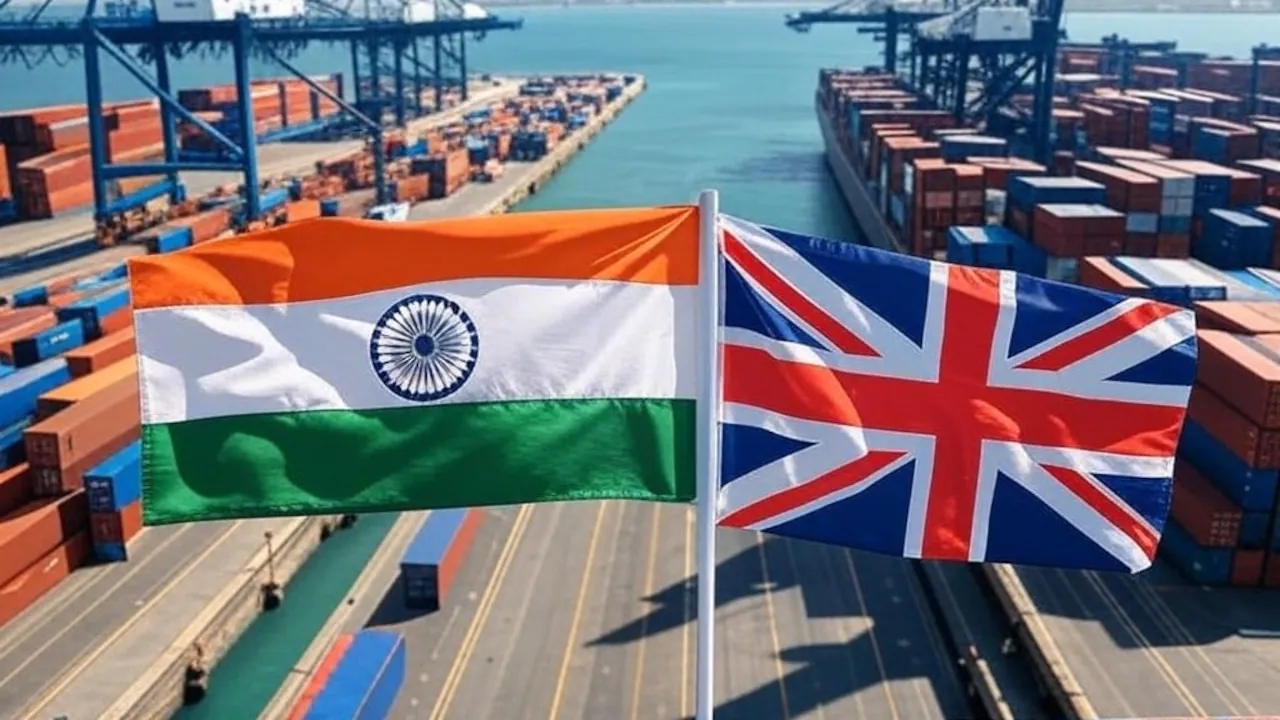
India is pressing the United Kingdom for a dedicated $900-million tariff-free steel export quota to resolve a critical deadlock delaying their 2025 free trade agreement. New Delhi seeks to protect its MSME engineering clusters from an upcoming British safeguard regime that threatens to slash import quotas by 60% starting July 1.
LONDON, United Kingdom — India has launched an aggressive diplomatic push to secure an annual tariff-free steel export quota worth nearly $900 million from the United Kingdom, aiming to break a sudden regulatory logjam holding up the implementation of their bilateral free trade agreement. Commerce Secretary Rajesh Agrawal confirmed on Monday, June 15, 2026, that a high-level Indian delegation has arrived in London for emergency negotiations with British counterparties. The interventions come just weeks before the UK's newly revised steel safeguard regime takes effect on July 1, 2026, which threatens to slash existing tariff-free volumes by 60% and slap a steep 50% penalty duty on any shipments exceeding the revised thresholds.
The Roadblock to Operationalizing the CETA Pact
The sudden trade friction emerges at a highly delicate juncture for both nations. India and the United Kingdom successfully concluded and signed their landmark Comprehensive Economic and Trade Agreement (CETA) on July 24, 2025. Billed as a historic framework to unlock a $120 billion bilateral trade corridor, the pact has remained non-operational for nearly a year due to persistent technical disagreements.
According to senior commerce ministry officials, the immediate crisis was triggered when the UK’s Department for Business and Trade announced structural reductions to its global import quotas to shield local steel production clusters. The Indian steel industry immediately flagged that these strict baseline limits would artificially suppress India's current export volumes, completely erasing the market-access benefits negotiated under the core trade agreement.
In response, New Delhi is formally demanding a carved-out product quota equivalent to India's three-year export average. Government data highlights that India’s exports of iron, steel, and related industrial products to the United Kingdom reached $893.4 million in the 2025–26 fiscal year, representing a critical chunk of India's $13.4 billion total merchandise export basket to the British market.
Impact on MSMEs and the 88 Steel Tariff Lines Sticking Point
The scope of India’s trade demand spans approximately 88 distinct steel tariff lines. Rather than focusing solely on raw, commodity-grade steel slabs, the dispute primarily impacts value-added, specialized components where Indian Micro, Small, and Medium Enterprises (MSMEs) maintain a commanding export market share. The targeted categories include:
Stainless steel wire rods and hot-rolled steel sheets.
Gas pipes, structural welded tubes, and specialized merchant bars.
Stainless steel bars and light industrial sections serving niche engineering fields.
Domestic manufacturing bureaus argue that these value-added goods directly complement rather than compete with the UK's limited domestic steelmaking ecosystem. "Our quota needs to be at least the average of the last three years' exports," a senior source familiar with the negotiations stated. "The industry will end up taking a massive hit in at least six structural categories where we have significant export interest if these limits are not amended."
Double Regulatory Hurdles: Safeguards and the 2027 Carbon Tax
Compounding the immediate July 1 quota threat, Indian industrial metals face a secondary, medium-term regulatory barrier. The British government has reaffirmed its timeline to execute its independent Carbon Border Adjustment Mechanism (CBAM) starting January 1, 2027.
Under this upcoming environmental framework, the UK will impose an import carbon pricing tax on emissions-intensive industrial sectors including aluminum, cement, fertilizer, hydrogen, and iron and steel. Estimates compiled by the Global Trade Research Initiative (GTRI) project that the upcoming British carbon tax could heavily penalize up to $775 million worth of core Indian industrial goods, adding an import tariff ranging between 14% and 24% as free domestic pollution allowances phase out.
Faced with this dual-layered protectionist framework, Indian officials have quietly signaled potential retaliatory mechanisms. If a structural compromise on the $900-million steel quota is not reached, New Delhi has indicated it may consider balancing the trade deficit by introducing reciprocal tariffs or import curbs on high-value British commodities, including Scotch whisky and automotive logistics components.
Practical Implications for Industrial Supply Chains and Investors
The ongoing trade stalemate carries immediate real-world consequences across several corporate networks:
Engineering Exporters and MSMEs: Small-scale manufacturing clusters in states like Punjab, Gujarat, and Maharashtra face order placement halts and inventory backlogs until the July 1 tariff thresholds are clarified.
British Infrastructure Projects: With the UK maintaining tight local steelmaking capacities, a prolonged supply disruption or a 50% penalty duty on Indian structural components could escalate construction budgets for domestic UK rail and housing contracts.
Global Commodities Traders: Metal markets are bracing for localized price volatility as shipping networks adjust to avoid entering British ports with over-quota cargo after the fast-approaching end-of-month deadline.
Bilateral Corporate Investors: Multinational firms planning cross-border expansions under the signed CETA framework are delaying capital expenditures until the operational guidelines are fully ratified by both parliaments.
Official Sources Section
The financial indicators, export parameters, and treaty timelines cited throughout this report are sourced directly from the following official institutions:
Quote Section
"According to officials, UK Secretary of State for Business and Trade Peter Kyle and Indian Commerce Minister Piyush Goyal have engaged in direct consultations to engineer a 'creative solution' capable of protecting British labor sectors without diluting the core market concessions promised within the comprehensive trade deal."
Why It Matters
The $900-million steel quota dispute exposes the complex friction between green-energy transition goals, domestic job protection, and global free-trade ambitions. For India, defending its steel manufacturing base is vital to protecting thousands of MSME jobs. For the UK’s governing Labour Party, safeguarding local steel production remains a high-stakes political commitment tied heavily to industrial heartland labor unions. The resolution of this deadlock will reveal whether modern mega-trade deals can successfully withstand local protectionist measures or if unyielding regulatory policies will stall global economic integration.
Key Facts at a Glance
Core Demand: India is seeking a guaranteed $900-million tariff-free steel export quota to match its three-year average shipment levels to the UK.
The Impending Deadline: On July 1, 2026, the UK is scheduled to cut tariff-free import allowances by 60% and introduce a 50% penalty duty on over-quota steel.
Sectoral Exposure: The dispute endangers 88 specific steel tariff lines, directly squeezing specialized engineering components manufactured by Indian MSMEs.
Secondary Threat: The UK's separate Carbon Border Adjustment Mechanism (CBAM) carbon tax is set to target $775 million in Indian goods starting in 2027.
Signed History: The overarching Comprehensive Economic and Trade Agreement (CETA) was signed in July 2025 but remains un-operationalized due to these persistent deadlocks.
FAQ Section
Q1: Why is the UK cutting back on its steel import quotas right as a free trade agreement is supposed to start?
A: The UK government is introducing tighter safeguard measures to protect its domestic steelmaking plants from global overcapacity and sudden trade diversion caused by similar high steel tariffs recently enacted across the European Union and the United States.
Q2: What specific types of Indian businesses are most at risk from this trade deadlock?
A: While large primary steel producers are impacted, the micro, small, and medium enterprises (MSMEs) making high-value downstream goods—such as stainless steel wire rods, gas pipes, and welded tubes—face the highest financial risk due to limited alternative export markets.
Q3: Will the implementation of the India-UK trade pact be canceled if the steel dispute is not solved by July 1?
A: No, the treaty will not be canceled, but its actual implementation will remain stalled. Both nations are highly incentivized to locate a compromise to protect the wider benefits of the deal, which include major tariff cuts for British automotive exports and Indian textile lines.
Source: Ministry of Commerce and Industry, UK Parliament Hansard Repository.