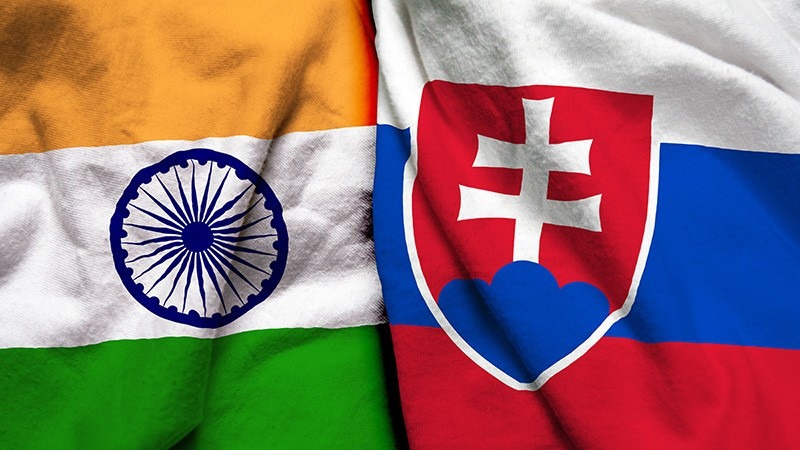
Slovak Ambassador Robert Maxian confirmed Prime Minister Narendra Modi will make a historic first visit to Slovakia on June 15, 2026. The high-level talks will focus on expanding defense co-production and technology ties, building upon a trade relationship that doubled to €1.6 billion between 2023 and 2025.
NEW DELHI, India — Slovak Ambassador to India Robert Maxian has highlighted expanding trade, defence, and technology cooperation between the two nations ahead of an upcoming diplomatic milestone. Speaking in an interview on June 9, 2026, Maxian outlined the primary objectives of Prime Minister Narendra Modi’s historic official visit to Slovakia, scheduled for June 15, 2026.
The visit marks the first time a sitting Indian Prime Minister will travel to the Central European nation since the establishment of the independent Slovak Republic in 1993. The envoy confirmed that the highest-level talks, to be held in Bratislava, will focus heavily on formalizing new strategic defense production frameworks, expanding civil nuclear energy research, and capitalizing on the newly finalized India-European Union Free Trade Agreement.
Unprecedented Trade Acceleration and Economic Integration
Economic relations between India and Slovakia have experienced a massive structural shift over the past three fiscal cycles. According to data released by the Slovak Statistical Office, bilateral trade doubled from €800 million in 2023 to an all-time high of approximately €1.6 billion in 2025.
This rapid trade expansion establishes India as one of the fastest-growing commercial partners for Slovakia in the Indo-Pacific zone. The current trade balance is heavily driven by Indian exports of motor vehicle components, electrical apparatus, and mobile phones. Conversely, Slovak exports to India are led by industrial machinery, rubber goods, and high-end consumer automobiles, matching the Central European nation's robust automotive manufacturing base.
To sustain this momentum, diplomatic teams finalized two key agreements on June 1, 2026. Signed in Bratislava by State Secretary Marek Eštok, the instruments include a mutual visa exemption for diplomatic passport holders and a structural agreement allowing the employment of family members of diplomatic mission staff.
Expanding Defence Production and High-Tech Innovation
The upcoming bilateral discussions between Prime Minister Modi and Slovak leadership will focus extensively on deep defense industry integration. Slovakia possesses advanced manufacturing capabilities in heavy artillery, armored vehicles, and specialized ammunition production.
According to briefing documents from India's Ministry of External Affairs (MEA), the two governments plan to move beyond standard buyer-seller transactions toward joint industrial engineering and technology transfer initiatives. These upcoming agreements are structured to align directly with India's domestic defense manufacturing policies, creating cross-border production channels for heavy mechanical components and artillery tracking systems.
The strategic partnership also extends into futuristic technology. Following a bilateral meeting between Prime Minister Modi and Slovak President Peter Pellegrini at the India–AI Impact Summit in New Delhi earlier this year, both nations have prioritized joint development in artificial intelligence, digital public infrastructure, and secure renewable energy systems.
The India-EU Free Trade Agreement Factor
A key driver behind the optimistic economic outlook is the successful conclusion of the landmark India-EU Free Trade Agreement (FTA). Ambassador Maxian characterized the multi-nation accord as the "mother of deals," projecting that the trade pact will easily double current bilateral investment figures over the next five years.
The FTA reduces long-standing tariff barriers, providing Indian manufacturers with open access to Central European supply networks. Furthermore, the agreement establishes clear legal frameworks to support professional workforce mobility. Indian technology and engineering experts have already grown to become the second-largest foreign workforce operating within Slovakia, helping to bridge critical labor shortages inside the country's expanding digital and industrial corridors.
Official Sources Section
The trade volumes, treaty signatures, historical contexts, and prime ministerial travel schedules detailed in this report are verified by regulatory press releases from the Ministry of Foreign and European Affairs of the Slovak Republic, official diplomatic briefings from India's Ministry of External Affairs (MEA), and legislative announcements issued by the Press Information Bureau (PIB) Delhi.
Quote Section
"According to officials from the Slovak Embassy, the upcoming highest-level talks in Bratislava represent a major turning point that will transition decades of traditional political goodwill into an ambitious, modern partnership focused on defense co-production and joint technological research."
Why It Matters
For international trade desks and industrial manufacturing businesses, the deepening relationship between India and Slovakia opens a highly secure, low-tariff gateway into the broader European Union market. For citizens and professional job seekers, the implementation of relaxed mobility rules under the India-EU FTA makes it significantly easier for Indian software engineers, technicians, and academic researchers to secure long-term employment contracts inside Central Europe's high-tech industrial hubs.
Key Facts at a Glance
Historical Milestone: Prime Minister Narendra Modi's travel itinerary on June 15 marks the first-ever official visit by a sitting Indian PM to Slovakia.
Trade Trajectory: Total trade volume doubled in just 36 months, jumping from €800 million to €1.6 billion.
Strategic Focus: The bilateral agenda highlights heavy defense joint production, artificial intelligence integration, and civil nuclear energy research.
Mobility Milestones: Recent treaty signings include visa exemptions for diplomatic officials and a framework to support professional family placement.
Workforce Profile: Indian professionals have successfully expanded to become the second-largest foreign workforce within the Slovak Republic.
FAQ Section
1. What are the primary goods traded between India and Slovakia?
India's primary exports to Slovakia consist of motor vehicle parts, mobile phones, garments, and machinery components. Slovakia's exports to India are heavily concentrated in finished passenger cars, industrial engineering equipment, and specialized rubber products.
2. How does the newly concluded India-EU FTA impact everyday businesses?
The Free Trade Agreement significantly lowers import duties on both sides, reducing supply chain costs for manufacturing businesses. It also standardizes intellectual property protections and establishes clear legal frameworks for cross-border investments.
3. When did India and Slovakia first establish official diplomatic relations?
While India formally recognized the independent Slovak Republic on January 1, 1993, following the peaceful dissolution of Czechoslovakia, formal ties date back to 1921 with the opening of the Czechoslovak Consulate in Mumbai (then Bombay).
Source: Ministry of Foreign and European Affairs of the Slovak Republic, Ministry of External Affairs India Unclassified Bilateral Briefs.