India has approved up to 654 MW of daily electricity exports to Nepal for 18 hours a day through December 31, 2026. The emergency power supply serves as a critical lifeline, helping Nepal stabilize its grid after severe flash floods damaged vital domestic hydropower infrastructure.
NEW DELHI — In a major move to assist neighboring Nepal, the Indian Ministry of Power has approved the export of up to 654 megawatts (MW) of electricity to the Nepal Electricity Authority (NEA) for 18 hours a day. Effective from September 13, 2026, through December 31, 2026, the cross-border power transmission is designed to stabilize Nepal's grid following catastrophic infrastructure damage caused by late-August flash floods.
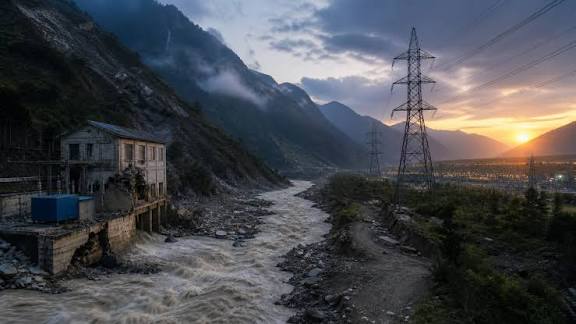
The intervention follows widespread destruction triggered by an ice-rock avalanche and heavy monsoon torrents near the Nepal-Tibet border, which severely compromised more than a dozen domestic hydropower installations. With local generation capacity slashed significantly, New Delhi's swift regulatory clearance ensures that the Himalayan nation maintains vital daytime and evening power supplies.
Transmission Corridors and Operational Framework
Under the newly approved framework, electricity transfers will occur daily between midnight and 6:00 PM (00:00 hours to 18:00 hours). The allocation divides transmission across two primary cross-border links to maximize grid stability and quantum delivery.
According to official Ministry of Power releases, up to 600 MW will be channeled through the high-capacity Muzaffarpur-Dhalkebar 400 kV double-circuit transmission line. An additional 54 MW will be supplied via the Tanakpur-Mahendranagar 132 kV single-circuit line. Federal energy authorities noted that the export quantum from January 2027 onward will be evaluated during a formal review scheduled for December 2026.
According to Ministry of Power notifications, Indian grid dispatch data, and bilateral energy frameworks:
Approved Quantum: Up to 654 MW of total daily power transfer.
Daily Time Window: 18 hours daily, active from midnight to 6:00 PM.
Primary Transmission Line: Up to 600 MW via the Muzaffarpur-Dhalkebar 400 kV corridor.
Secondary Transmission Line: Up to 54 MW via the Tanakpur-Mahendranagar 132 kV link.
Official Sources Section
Quote Section
"According to the Ministry of Power, the approval will help Nepal meet its power requirements during this difficult period and further strengthen the close and longstanding energy cooperation between India and Nepal."
Why It Matters
For citizens, essential services, and commercial enterprises across Nepal, a reliable 18-hour daily power supply prevents total grid collapse while extensive reconstruction work takes place on washed-out domestic hydro projects. For regional diplomacy, the prompt energy support highlights deepening economic resilience and infrastructure interdependence between New Delhi and Kathmandu.
Key Facts at a Glance
Effective Date: September 13, 2026.
Expiration / Review Date: December 31, 2026.
Primary Catalyst: Severe domestic generation deficits following August 2026 flash floods.
Participating Utilities: Nepal Electricity Authority (NEA) and Indian nodal transmission agencies.
FAQ Session
Why is India supplying emergency electricity to Nepal?
Devastating flash floods in late August severely damaged more than 12 hydropower plants in Nepal, drastically cutting domestic electricity generation capacity.
How many hours a day will India supply power to Nepal under this agreement?
India has approved power exports for 18 hours a day, running from midnight to 6:00 PM through December 31, 2026.
What is the total volume of electricity approved for export?
The approved framework permits up to 654 MW of power transmission across two dedicated cross-border lines.
Where can stakeholders review official announcements regarding cross-border power allocations?
Detailed policy statements and transmission schedules are accessible via the Ministry of Power Government of India Portal.
Source: Ministry of Power India, The Times of India, Hindustan Times, The Indian Express