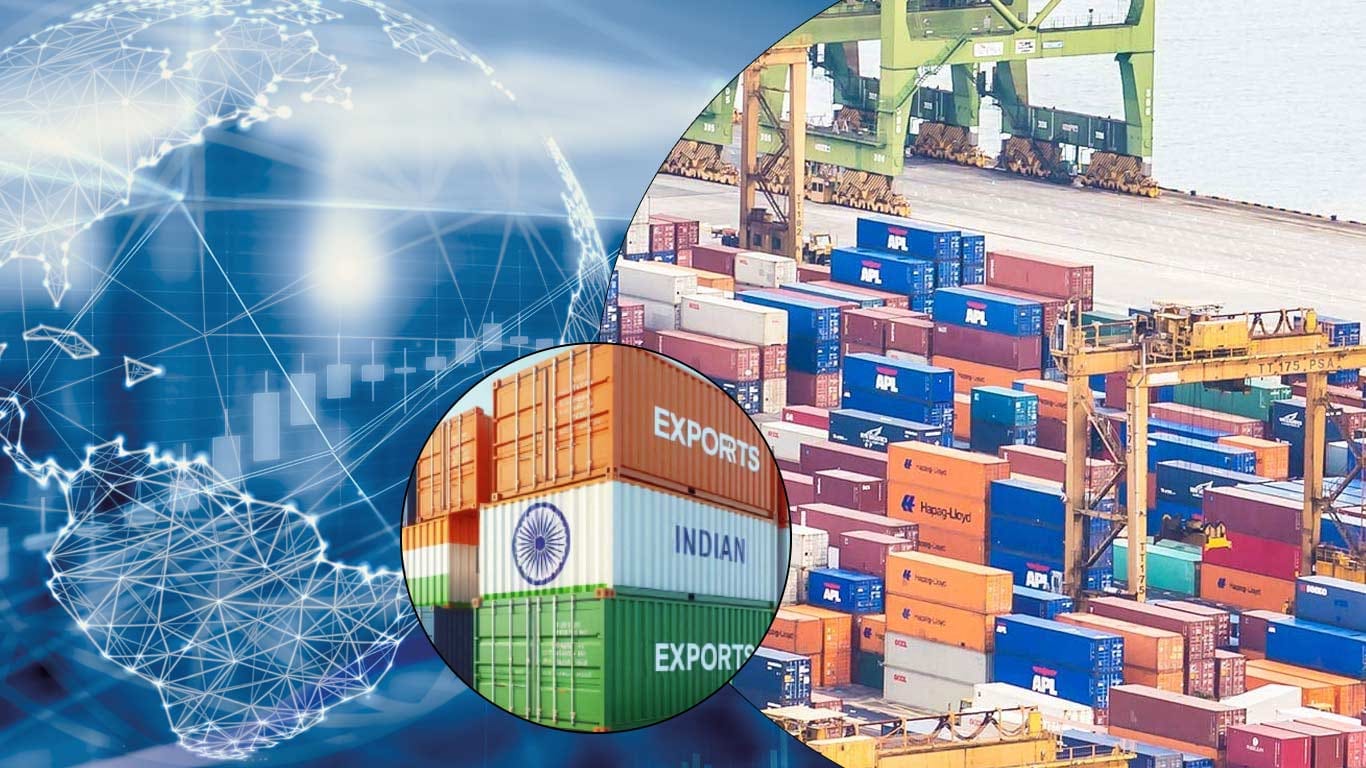
India's Trade Minister, Piyush Goyal, announced an expected 16 to 17 percent increase in annual goods exports for the current fiscal year. The growth is backed by an initial 15 percent surge in merchandise trade and an 11 percent rise in services exports during the April–June quarter, driven by strategic trade agreements.
NEW DELHI — India’s Union Minister of Commerce and Industry, Piyush Goyal, announced that the government expects the country's annual goods exports to expand by 16 to 17 percent over the current financial year. Speaking on the nation’s shifting trade dynamics, the minister revealed that merchandise outbound shipments during the April–June quarter maintained a strong growth rate of approximately 15 percent. Concurrently, services exports logged an estimated 11 percent increase over the same three-month window, underscoring the resilient cross-border demand for Indian enterprise despite continued disruptions in international shipping routes.
Expanding Horizons for International Shipments
The projected 16 to 17 percent annual expansion marks a strategic push by the administration to capture market share across emerging consumer economies. This trajectory follows a historical performance in the preceding 2025–26 fiscal year, where India's cumulative outbound trade hit an all-time high of $863.11 billion.
According to data compiled by the Ministry of Commerce and Industry, the recent April–June acceleration was powered largely by manufacturing sectors, with engineering goods, electronics, and organic chemicals leading the quarterly surge.
To sustain this 15 percent quarterly momentum, the government is leaning heavily on newly minted Free Trade Agreements (FTAs). Trade pacts with key global partners—including the European Free Trade Association (EFTA) bloc, the United Arab Emirates, and Australia—are actively being leveraged to reduce tariff barriers for domestic micro, small, and medium enterprises (MSMEs).
Parallel Strength in Services and Structural Macro Impact
While physical merchandise spearheaded the trade narrative, India’s services sector demonstrated parallel stability. The recorded 11 percent quarterly uptick in services exports highlights the robust positioning of the country's technology consulting, global capability centers (GCCs), and financial service units operating across international zones.
For domestic businesses and institutional investors, this elevated export velocity provides significant macro-economic buffers. Increased foreign capital inflows from trade receipts help stabilize the local currency against global interest rate fluctuations.
However, market analysts note that while outbound shipments remain strong, a corresponding rise in industrial raw material imports continues to exert pressure on the country's aggregate trade balance, demanding a sustained focus on domestic value addition.
Official Sources Section
The baseline trade statistics, quarterly percentages, and annual growth targets were detailed during ministerial interactions and official data distributions managed by the Ministry of Commerce and Industry and the Press Information Bureau (PIB) of the Government of India.
Quote Section
"According to officials from the commerce ministry, the double-digit expansion achieved during the early months of the fiscal year validates the ongoing diversification strategy, allowing Indian goods to successfully penetrate competitive markets despite elevated freight costs and regional geopolitical uncertainties."
Why It Matters
A consistent 16 to 17 percent growth trajectory moves India closer to its long-term ambition of reaching $1 trillion in merchandise exports. For domestic manufacturers, this signifies reliable long-term order books and increased capacity utilization. For employment, sustained demand across manufacturing hubs translates into stable industrial job creation and higher capital expenditure by private enterprises.
Key Facts at a Glance
Annual Growth Target: The Union Trade Minister expects annual goods exports to rise by 16 to 17 percent in the current fiscal year.
Quarterly Merchandise Surge: Outbound goods shipments grew by approximately 15 percent during the April–June quarter.
Services Sector Stability: Services exports registered a robust increase of around 11 percent over the same period.
FTA Catalysts: Operational trade pacts with the EFTA bloc, UAE, and Australia are actively driving down international entry barriers for domestic goods.
FAQ Section
1. Which specific industries are driving India's 15 percent goods export growth?
The primary growth drivers include engineering goods, electronics manufacturing, pharmaceuticals, and organic chemicals, which have seen enhanced demand across European and Asian markets.
2. How do Free Trade Agreements help domestic Indian businesses?
FTAs reduce or entirely eliminate customs duties on Indian products entering partner nations, making domestic manufacturing much more price-competitive against global rivals.
3. Will the rising trade deficit impact these export projections?
While higher imports for manufacturing inputs expand the trade deficit, the 16 to 17 percent target for outbound shipments focuses specifically on maximizing the total volume of goods sold internationally.
Source: Ministry of Commerce and Industry, Press Information Bureau (PIB)